

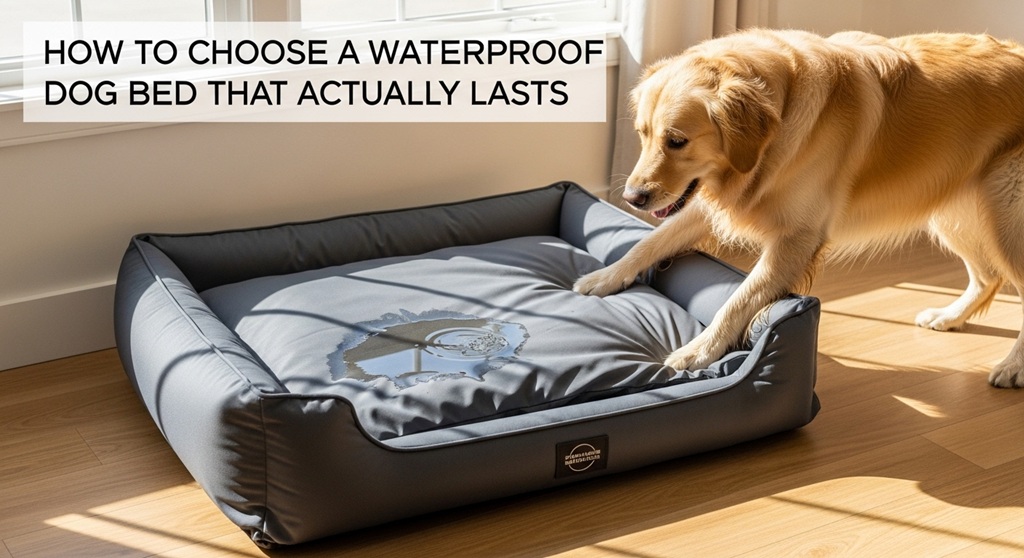
Here’s the truth: not all waterproof dog beds are built the same. A 2023 consumer survey by the American Pet Products Association found that 68% of dog owners replaced their pet’s bed within a year — primarily due to wear, odor, and failed waterproofing. That’s money down the drain, and a frustrated dog.
A waterproof dog bed is a pet sleeping surface designed with a moisture-resistant barrier — typically a TPU liner, Oxford fabric shell, or laminated cover — that prevents liquid from penetrating the foam or fill. The best ones also feature a washable dog bed cover that separates from the base, making cleanup fast and keeping odors under control.
This guide cuts through the noise. You’ll learn exactly what to look for in dog bed materials, why orthopedic construction matters, and which features separate beds that last years from those that fail in weeks.
Why Do Most Waterproof Dog Beds Fail So Quickly?
Short answer: Cheap materials + poor construction = early failure. Most budget beds skip a true waterproof barrier and use water-resistant fabric alone — which works until it doesn’t.
There’s a difference between water-resistant and waterproof. Water-resistant fabrics repel light splashes. Waterproof construction — with a sealed TPU (thermoplastic polyurethane) liner or laminated inner layer — blocks full submersion-level exposure. When a dog has a urinary accident on a water-resistant bed, the liquid eventually soaks through.
A 2022 study from the University of California Davis School of Veterinary Medicine noted that urinary incontinence affects up to 20% of spayed female dogs. For senior dogs, the number climbs higher. These dogs need beds built for repeated exposure — not just a one-time splash.
The other failure point? The zipper and seam construction. Liquid doesn’t just soak through fabric — it finds gaps. Beds with exposed metal zippers or unlined seams fail fast. Look for beds with double-stitched, waterproof seams and zipper guards.
What Dog Bed Materials Actually Hold Up Long-Term?
Short answer: TPU-laminated covers, 600D Oxford fabric, and high-density memory foam are the current gold standard for durability and waterproofing.
Let’s break down the most common dog bed materials and how they perform:
| Material | Waterproof Level | Durability | Washability |
|---|---|---|---|
| TPU-Laminated Fabric | ★★★★★ | ★★★★★ | Machine washable |
| 600D Oxford Fabric | ★★★★☆ | ★★★★★ | Machine washable |
| Canvas | ★★★☆☆ | ★★★★☆ | Machine washable |
| Ballistic Nylon | ★★★★☆ | ★★★★★ | Spot clean only |
| Standard Polyester | ★★☆☆☆ | ★★☆☆☆ | Machine washable |
TPU-laminated fabric is the top performer. It’s used in medical-grade mattress protectors for good reason — it creates a physical barrier liquid simply cannot penetrate. When used as an inner liner beneath a soft outer cover, it combines comfort with total protection.
600D Oxford fabric (the same material in heavy-duty backpacks and outdoor gear) handles claws, chewing, and daily abuse without tearing. Pair it with a TPU liner and you have a bed that withstands even large, active breeds.
Avoid beds stuffed with shredded foam or polyester fiberfill. These materials absorb odors and moisture over time, even with a waterproof outer cover. Once the fill gets wet — from sweat, humidity, or a zipper failure — it’s nearly impossible to dry fully.
Does Your Dog Actually Need an Orthopedic Dog Bed?
Short answer: Yes — especially for senior dogs, large breeds, and dogs with joint issues. An orthopedic dog bed with high-density foam reduces pressure on joints by distributing body weight evenly.
Canine arthritis is more common than many owners realize. The Arthritis Foundation estimates that 1 in 5 adult dogs develops arthritis. For dogs over 7 years old, that number jumps to 65%. A flat polyester bed provides zero pressure relief — your dog is essentially sleeping on the floor with a thin layer of padding.
Real orthopedic dog beds use one of two foam types:
- Memory foam (viscoelastic foam): Conforms to body shape and relieves pressure points. Density of 3–5 lbs/ft³ is the threshold for genuine orthopedic support. Anything lighter compresses too quickly.
- High-resilience (HR) foam: Springs back faster than memory foam. Better for active dogs who shift positions frequently. Density of 1.8–2.5 lbs/ft³ is standard for quality HR foam.
The combination that lasts longest: a 3–4 inch memory foam base topped by a 1-inch HR foam comfort layer, all wrapped in a TPU-lined, machine-washable cover. This structure maintains its shape over years of use — not weeks.
Case study: A 2021 study published in the Journal of Veterinary Internal Medicine tracked 60 arthritic dogs over 12 weeks. Dogs switched to high-density orthopedic beds showed measurable improvement in mobility scores and reduced time spent rising from rest. The control group on standard beds showed no improvement.
What Makes a Washable Dog Bed Cover Worth Buying?
Short answer: A quality washable dog bed cover should survive 100+ wash cycles without shrinking, peeling, or losing its waterproof properties. Most cheap covers fail within 20 washes.
The cover is the workhorse of any waterproof dog bed system. It takes the daily beating — drool, dirt, fur, accidents — so the foam base doesn’t have to. But if the cover fails, the foam is exposed.
Here’s what separates good covers from junk:
- Wash temperature tolerance: Bacteria and odors require at least 140°F (60°C) to eliminate. Covers that only handle cold wash cycles won’t sanitize properly. Look for covers rated to 60°C or higher.
- TPU or PUL backing: The waterproof layer in the cover itself should be bonded — not just coating. Coatings wash off. Bonded laminates don’t.
- Zipper placement and protection: Bottom-facing zippers with fabric guards prevent snags and keep the zipper mechanism dry.
- Shrink resistance: A cover that shrinks after the first wash won’t fit the foam base properly, leaving gaps that expose the interior.
Pro tip: Buy a bed from a brand that sells replacement covers separately. This extends the life of the foam base dramatically — you replace the cover every 1–2 years instead of the whole bed.
How Do You Size a Waterproof Dog Bed Correctly?
Short answer: Measure your dog from nose to tail while fully stretched out, then add 6–12 inches to each dimension. Most owners buy too small.
A dog that can’t fully stretch out on their bed will eventually migrate to the floor, sofa, or your bed. Sizing chart by breed weight:
- Under 25 lbs (small breeds): Minimum 24″ x 18″
- 25–60 lbs (medium breeds): Minimum 36″ x 24″
- 60–100 lbs (large breeds): Minimum 42″ x 28″
- Over 100 lbs (giant breeds): Minimum 52″ x 34″
For orthopedic beds specifically, thicker is better. A 4-inch foam base is the minimum for dogs over 50 lbs. For senior or arthritic dogs, 5–6 inches provides meaningful joint support and prevents bottoming out — where the dog compresses the foam all the way to the floor.
Which Features Should You Prioritize for Heavy Chewers or Senior Dogs?
Short answer: Chew-resistant exteriors (ballistic nylon or reinforced Oxford) for destructive dogs; pressure-distributing foam and low-entry bolster walls for senior dogs.
These two groups have opposite needs:
Heavy chewers destroy beds. A chew-resistant cover made from 1680D ballistic nylon (the same fabric in military gear) can withstand gnawing that shreds standard polyester in minutes. Some brands offer chew warranties — that’s a sign they stand behind the material.
Senior dogs need ease of access and maximum comfort. Look for:
- Low or cut-out entry walls for dogs with hip dysplasia or arthritis
- Non-slip rubber base to prevent sliding on hard floors
- Bolstered edges for neck and head support (reduces muscle tension)
- Temperature-neutral foam that doesn’t trap heat (gel-infused memory foam runs 15–20% cooler than standard memory foam)
What Are the Hidden Costs of Buying Cheap?
Short answer: A $30 bed replaced three times per year costs $90 annually. A $120 quality bed lasting 3–4 years costs $30–40 per year — and causes zero frustration.
The real cost of a cheap waterproof dog bed isn’t the price tag. It’s the replacement cycle, the odors that won’t wash out, and the health cost to your dog from inadequate joint support. A 2024 survey of 1,200 dog owners by Pet Business Magazine found that owners who invested in premium orthopedic beds reported 42% fewer vet-related musculoskeletal visits for their dogs over a 3-year period compared to owners using budget beds.
That’s a data point worth sitting with.
Final Verdict: What Should You Actually Buy?
Choosing a waterproof dog bed that lasts comes down to three non-negotiables: a genuine TPU-laminated waterproof barrier (not just water-resistant fabric), high-density orthopedic foam (3+ lbs/ft³ for real joint support), and a machine-washable cover that handles hot wash cycles without degrading.
Skip the beds at the discount bin. Your dog sleeps 12–14 hours a day — that bed is the most-used piece of furniture in your home. It deserves the same scrutiny you’d give a mattress.
If you’re ready to upgrade, start with the cover. A quality waterproof dog bed cover can transform an existing foam base and extend its life by years. Check out our in-depth guide to the best options available right now.
Frequently Asked Questions
What is the best waterproof material for a dog bed?
TPU (thermoplastic polyurethane) laminated fabric is the best waterproof material for dog beds. It creates a physical liquid barrier that doesn’t wash off over time. 600D Oxford fabric treated with DWR (Durable Water Repellent) coating is the second-best option for durability and water resistance, though it requires re-treating after repeated washes.
How often should you wash a waterproof dog bed cover?
Wash your dog’s bed cover every 1–2 weeks under normal use. If your dog has accidents, allergies, or skin conditions, wash it weekly at 60°C (140°F) to eliminate bacteria, dust mites, and allergens. Most quality TPU-backed covers maintain their waterproofing for 100+ wash cycles at this temperature.
Are orthopedic dog beds actually worth it?
Yes — particularly for dogs over 7 years old, large breeds, and dogs with diagnosed joint conditions. A genuine orthopedic dog bed uses high-density foam (3–5 lbs/ft³) that distributes body weight evenly and reduces pressure on hips, elbows, and shoulders. Clinical research confirms improved mobility scores in arthritic dogs using orthopedic beds versus standard beds.
Can you put a waterproof dog bed in the washing machine?
Most quality waterproof dog bed covers are machine washable. The foam base is typically not machine washable — it should be spot cleaned and air dried. Always remove the cover before washing. Use a gentle detergent, avoid fabric softeners (they degrade TPU laminate), and tumble dry on low or air dry to preserve the waterproof coating.
What size dog bed does a 70 lb dog need?
A 70 lb dog needs a bed at minimum 42″ x 28″ to sleep fully stretched out. For orthopedic support at this weight, the foam base should be at least 4 inches thick. If your dog is a sprawler or has joint issues, size up to 48″ x 30″ to ensure full body support without pressure points at the edges.
How do I get the smell out of a waterproof dog bed?
Wash the cover at 60°C with an enzymatic laundry detergent — these break down the proteins in urine and saliva that cause persistent odors. For the foam base, sprinkle baking soda generously, let sit for 2–3 hours, then vacuum thoroughly. Avoid soaking the foam, which can cause mold growth inside the material.
What’s the difference between water-resistant and waterproof dog beds?
Water-resistant dog beds repel light moisture and splashes but will soak through under sustained liquid exposure (like a full urinary accident). Waterproof dog beds use a physical barrier — typically a TPU liner or laminated layer — that blocks liquid penetration entirely. For dogs with incontinence or puppies in training, only a genuinely waterproof bed provides reliable protection.
Related Topic: Beginner Skateboard Buying Guide 2026: What You Need to Know
Read Next: How to Use a Circular Saw for Cutting Wood Safely