

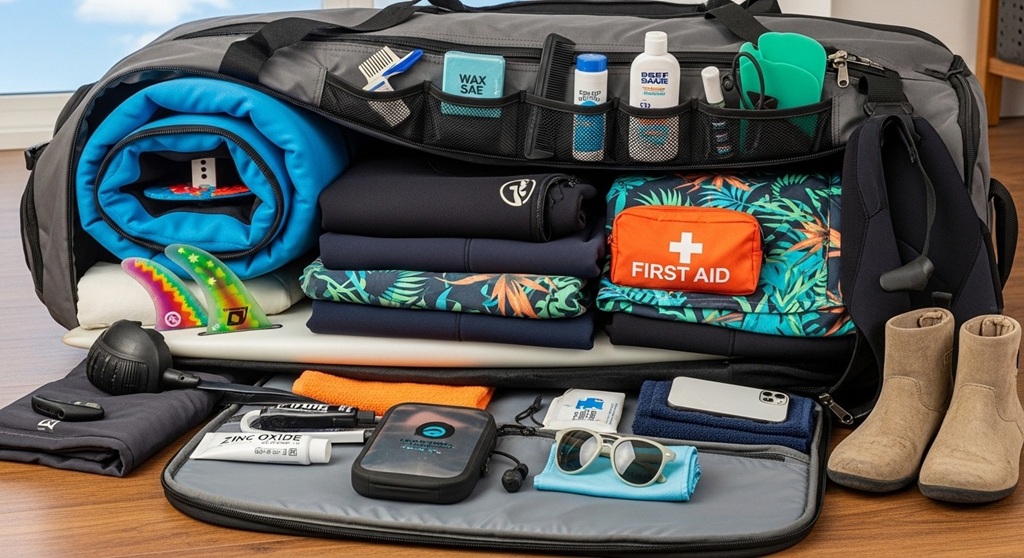
A surf trip should start with excitement, not stress at the airport. Yet many surfers arrive at their destination with damaged boards, missing fins, or gear scattered across bags. The problem is simple: surf gear is bulky, fragile, and expensive. If it’s not packed correctly, even a short flight can turn into an expensive mistake.
Learning how to pack surf gear for a surf trip protects your equipment, saves money, and ensures you spend more time surfing instead of fixing broken gear. A properly packed surfboard bag, combined with the right surfboard travel accessories, reduces the risk of damage during transport and keeps everything organized.
Surf travel has grown significantly over the past decade. According to data from the Global Surf Industry Report, surf tourism contributes billions annually to coastal economies, with thousands of surfers flying internationally every year with boards and gear. However, airline mishandling and improper packing remain the main causes of equipment damage.
This guide explains exactly how to pack your surf gear for travel. You’ll learn which accessories matter, how to protect your surfboard, how to organize gear efficiently, and how experienced surfers minimize travel risk. By the end, you’ll have a practical system you can reuse for every surf trip.
What Is the Best Way to Pack Surf Gear for a Surf Trip?
Short answer: The best way to pack surf gear is to remove fragile components, wrap your board with protective padding, organize accessories in compartments, and use durable surfboard travel accessories like board bags, fin cases, and leash storage.
Packing surf gear requires a system. Surfboards are long, thin, and sensitive to pressure. Airports, luggage belts, and airline handlers do not treat them gently. That’s why experienced surfers rely on protective layering and smart packing techniques.
The process usually involves three core steps:
- Disassemble all removable parts.
- Protect the board using padding and travel accessories.
- Organize small gear separately to prevent damage.
Using proper surfboard travel accessories such as padded board bags, fin organizers, and rail guards helps distribute pressure and prevent cracks. Without these items, boards are more likely to get pressure dents or rail damage.
A practical example comes from a 2022 surf travel survey conducted by a major surf retailer. The survey found that surfers who used double-padded board bags and rail protection experienced 38% fewer board damages during flights compared to those who packed boards without padding.
That statistic highlights a simple reality: smart packing reduces travel risk.
Why Are Surfboard Travel Accessories Important for Surf Trips?
Short answer: Surfboard travel accessories protect equipment, improve organization, and reduce the risk of damage during transport.
Surfboards alone are not enough for a surf trip. Accessories help maintain performance and protect gear during transport. Without them, even a minor impact can crack fiberglass or bend fins.
Key travel accessories include:
- Surfboard travel bags
- Fin organizers
- Leash holders
- Rail protection guards
- Wax containers
- Board socks
Each accessory serves a purpose. For example, a fin organizer prevents fins from pressing against the board. Rail guards protect the board’s edges from compression during stacking.
Experienced surfers often pack soft items like wetsuits or towels around the board to create an additional protective layer. This technique acts like shock absorption inside the bag.
Surf travel experts recommend choosing accessories based on durability and weight. Airlines often impose baggage limits, so lightweight accessories can reduce extra fees.
How Should You Prepare Your Surfboard Before Packing?
Short answer: Before packing, remove fins, clean the board, protect the rails, and wrap the board with padding.
Preparation prevents damage. A board packed without preparation can easily crack or warp under pressure.
Step 1: Remove the Fins
Fins are rigid and can puncture board bags or damage the board itself. Always remove them and store them in a fin case.
Step 2: Clean the Board
Salt, sand, and wax debris can damage the board surface over time. Cleaning ensures better protection during travel.
Step 3: Protect the Rails
Rails are the most fragile part of a surfboard. Many surfers wrap towels or foam around rails before placing the board into the bag.
Step 4: Wrap the Board
Bubble wrap, foam sheets, or soft clothing can provide shock absorption. Even simple padding can reduce impact damage during flights.
A well-prepared board is less likely to suffer travel damage.
What Should You Pack Inside a Surfboard Travel Bag?
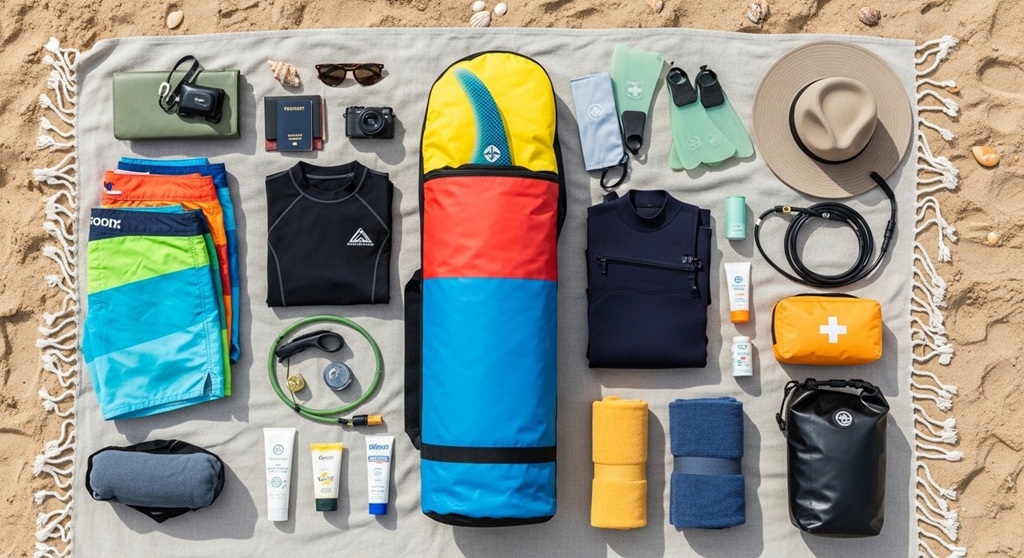
Short answer: A surfboard travel bag should contain the board, padded protection, fins in a case, leashes, wax, and compact accessories.
A surfboard travel bag acts as the primary protection for your gear. Organizing items properly inside the bag keeps weight balanced and prevents internal damage.
| Item | Purpose |
|---|---|
| Surfboard | Main equipment for surfing |
| Fin case | Protect fins from bending or breaking |
| Leashes | Safety connection between surfer and board |
| Wax container | Keeps wax organized and prevents mess |
| Soft padding (towels/wetsuits) | Additional protection for board surface |
Packing accessories alongside the board also helps distribute weight evenly inside the bag.
However, avoid placing heavy items directly on the board surface. Always place padding between them.
How Do You Protect Surfboards During Flights?
Short answer: Use double-padded board bags, rail guards, internal padding, and avoid overpacking to protect surfboards during flights.
Air travel is the biggest risk for surfboard damage. Luggage handling systems involve heavy stacking and mechanical belts that apply pressure to bags.
To minimize risk:
- Use a high-quality surfboard travel bag with thick padding.
- Add foam or clothing around the nose and tail.
- Protect rails using foam tubes or towels.
- Avoid overpacking heavy items.
The nose and tail are especially vulnerable because they absorb most impacts. Padding these areas is essential.
Some surfers also label bags with “Fragile – Surfboard.” While this doesn’t guarantee special treatment, it sometimes encourages careful handling.
What Surf Gear Should You Pack Separately?
Short answer: Pack wetsuits, tools, sunscreen, and personal items in a separate bag to prevent pressure damage on the surfboard.
Not everything belongs inside the board bag. Separating gear improves organization and reduces weight.
Items commonly packed separately include:
- Wetsuits
- Surf repair kits
- Surf clothing
- Sunscreen and surf accessories
- Surf ponchos
Many surfers also pack a compact surf repair kit. Minor board dings can occur during travel or at the surf destination, and quick repairs can prevent water damage.
How Many Surfboards Should You Bring on a Surf Trip?
Short answer: Most surfers bring two boards for a surf trip to prepare for different wave conditions.
Wave conditions vary widely between destinations. Having multiple boards increases flexibility.
A typical surf travel setup includes:
- A primary performance board
- A backup board for different wave conditions
Professional surfers often travel with three boards. However, for most travelers, two boards offer a balance between performance and baggage weight.
What Common Packing Mistakes Should Surfers Avoid?
Short answer: Common mistakes include leaving fins attached, using thin board bags, overpacking heavy items, and skipping padding.
Even experienced surfers make packing mistakes. These errors often lead to board damage.
Avoid these common problems:
- Leaving fins attached
- Using single-layer board bags
- Overloading bags with heavy items
- Ignoring rail protection
- Packing wax without containers
Small mistakes can create pressure points that damage fiberglass during transport.
Conclusion: How Can You Travel with Surf Gear Safely?
Packing surf gear correctly can make the difference between a smooth surf trip and an expensive repair. Surfboards are fragile, and airports are unpredictable environments. A few simple steps—removing fins, padding the board, organizing accessories, and using reliable surfboard travel accessories dramatically reduce the risk of damage.
Experienced surfers treat packing as part of their travel routine. They rely on protective board bags, structured gear organization, and smart padding techniques to safeguard their equipment.
The goal is simple: arrive with your gear ready to surf.
Before your next trip, review your packing setup and invest in quality travel accessories that protect your boards and gear. The time you spend preparing now will save money, prevent stress, and ensure you can focus on what matters most—catching waves.
Ready for your next surf adventure? Start organizing your surfboard travel accessories today and pack your gear like a pro.
Frequently Asked Questions
Do airlines allow surfboards as checked baggage?
Yes, most airlines allow surfboards as checked baggage, but they usually charge an oversized luggage fee. Policies vary by airline, so checking size and weight limits before traveling is recommended.
What size surfboard bag should I use for travel?
Choose a surfboard bag that is slightly longer than your board. This allows space for padding and accessories without bending the board.
How do surfers prevent surfboard damage during flights?
Surfers protect boards by removing fins, wrapping boards with padding, using thick travel bags, and cushioning the nose and tail with soft materials.
Should I remove wax before traveling?
Removing old wax is recommended because it prevents dirt buildup and makes it easier to inspect the board for cracks or damage.
Can you travel internationally with surf gear?
Yes. Many surfers travel internationally with boards and accessories. However, airline fees, baggage limits, and surfboard policies vary between carriers.
What are essential surfboard travel accessories?
Essential accessories include padded surfboard bags, fin cases, leash organizers, rail protection, wax containers, and repair kits.
Read More Also: Top Australian Casinos Offering No-Wagering No-Deposit Spins
Find out: Tips to keep a white couch like the first day