

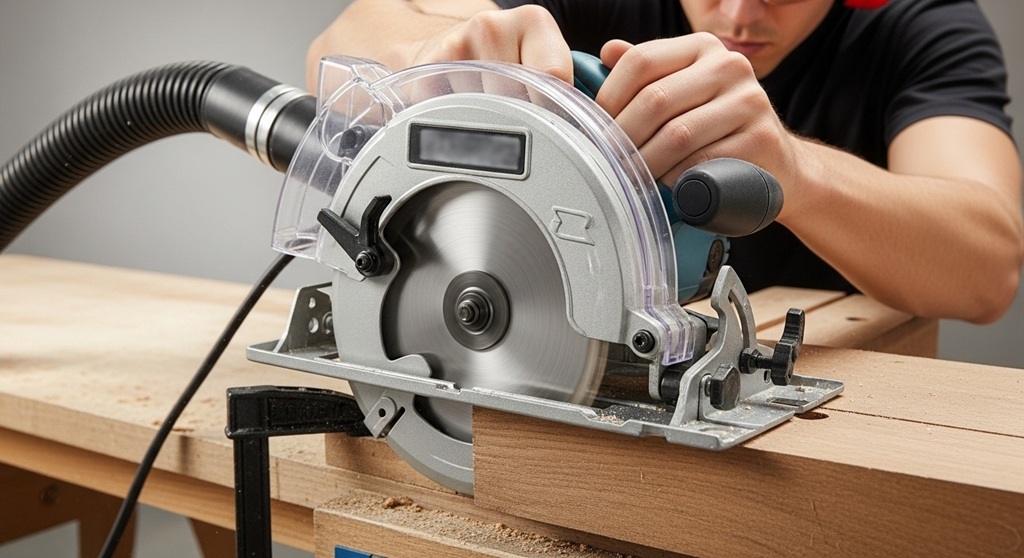
A circular saw is a portable power tool with a rotating toothed blade designed to cut wood in straight lines quickly and accurately. It is widely used in DIY cutting, framing, decking, furniture building, and renovation projects because it combines speed, control, and portability.
If you work with wood, sooner or later you will need straight, repeatable cuts. A circular saw delivers that without the size and cost of a table saw. According to industry data from major tool manufacturers, circular saws are among the top three most purchased portable saw tools in North America due to their versatility in home improvement and job site work
But speed creates risk. The blade rotates at around 5,000 to 6,000 RPM. A minor mistake can cause kickback or injury. That is why learning how to use a circular saw for cutting wood safely is not optional. It is essential.
This guide breaks down the process step by step. You will learn setup, blade selection, cutting technique, safety controls, and common mistakes. Whether you are building shelves or framing a wall, this article will help you work with confidence.
Why Is Circular Saw Safety So Important?
Circular saw safety matters because improper handling can lead to kickback, blade binding, and severe hand injuries.
According to the U.S. Consumer Product Safety Commission (CPSC), thousands of emergency room visits each year involve power saw injuries. Many cases result from incorrect blade depth, unstable materials, or poor body positioning.
Problem: Many DIY users underestimate the power of portable saw tools. They rush cuts. They ignore support and blade alignment.
Agitation: Kickback happens when the blade binds in wood and the saw jerks backward toward the operator. This occurs in a fraction of a second. Loss of control is common.
Solution: Controlled setup. Proper stance. Correct blade depth. Steady feed pressure. These steps reduce risk significantly.
Safety is not about fear. It is about control.
How Do You Set Up a Circular Saw Before Cutting Wood?
Set up includes checking the blade, adjusting cutting depth, inspecting guards, and preparing the work surface.
1. Inspect the Blade
Make sure the blade is sharp and appropriate for wood cutting. A dull blade increases friction and binding. For clean cuts in plywood or hardwood, use a 40–60 tooth carbide-tipped blade. For framing lumber, 24 teeth are usually sufficient.
2. Adjust Blade Depth
The blade should extend about 1/4 inch below the wood. Excess blade exposure increases kickback risk. Too little depth causes incomplete cuts.
3. Check the Blade Guard
The lower blade guard must move freely and snap back into place. Never disable it. The guard is your last defense against accidental contact.
4. Secure the Wood
Support both sides of the cut line. Use sawhorses or a stable workbench. The cutoff piece must be free to fall away. If it pinches the blade, kickback may occur.
5. Mark and Measure Accurately
Use a speed square or straight edge as a guide. Accurate layout reduces the need for mid-cut corrections.
How Do You Hold and Position Yourself When Using a Circular Saw?
Stand to the side of the cutting line, not directly behind the saw. Use both hands. Keep your arms steady and balanced.
Correct positioning reduces injury risk if kickback occurs.
- Keep feet shoulder-width apart.
- Hold the main handle with your dominant hand.
- Support the front knob with the other hand.
- Never reach under the wood while cutting.
Body alignment matters. Stay slightly offset from the blade path. This small adjustment improves safety immediately.
What Is the Step-by-Step Process for Cutting Wood with a Circular Saw?
Follow these steps for controlled DIY cutting:
Step 1: Plug In or Insert Battery
Ensure the trigger is off before connecting power.
Step 2: Align the Blade with the Cut Line
Use the notch on the base plate as a guide.
Step 3: Let the Blade Reach Full Speed
Start the saw before contacting wood. Full speed ensures a smooth entry.
Step 4: Guide the Saw Forward
Apply steady pressure. Do not force it. Let the blade do the work.
Step 5: Complete the Cut Fully
Allow the blade to exit the wood completely before releasing the trigger.
Step 6: Wait for Blade to Stop
Do not lift the saw until the blade stops spinning.
These steps apply across most portable saw tools designed for straight cuts.
What Are the Most Common Mistakes When Using a Circular Saw?
The most common mistakes are forcing the cut, using dull blades, and failing to support material properly.
| Mistake | Risk | Prevention |
|---|---|---|
| Too much blade depth | Kickback | Limit exposure to 1/4 inch below wood |
| Dull blade | Burn marks and binding | Replace or sharpen regularly |
| Unsupported cutoff | Pinching | Use proper supports |
| Cutting warped lumber | Blade binding | Stabilize and inspect wood first |
A case study from a mid-sized home improvement workshop found that 70% of tool-related incidents occurred during rushed tasks or improper setup. Slowing down reduced incidents by nearly 40% over six months.
How Do You Choose the Best Saw for Cutting Wood?
Choose based on blade size, motor power, corded vs cordless preference, and intended material thickness.
Standard circular saws use 7-1/4 inch blades. These cut up to about 2-3/8 inches deep. For lighter tasks, 6-1/2 inch cordless models are common.
If you want a detailed comparison of blade types and performance ratings, review this guide on portable saw tools for woodworking projects.
Match the tool to your project. Do not overbuy. Do not underpower.
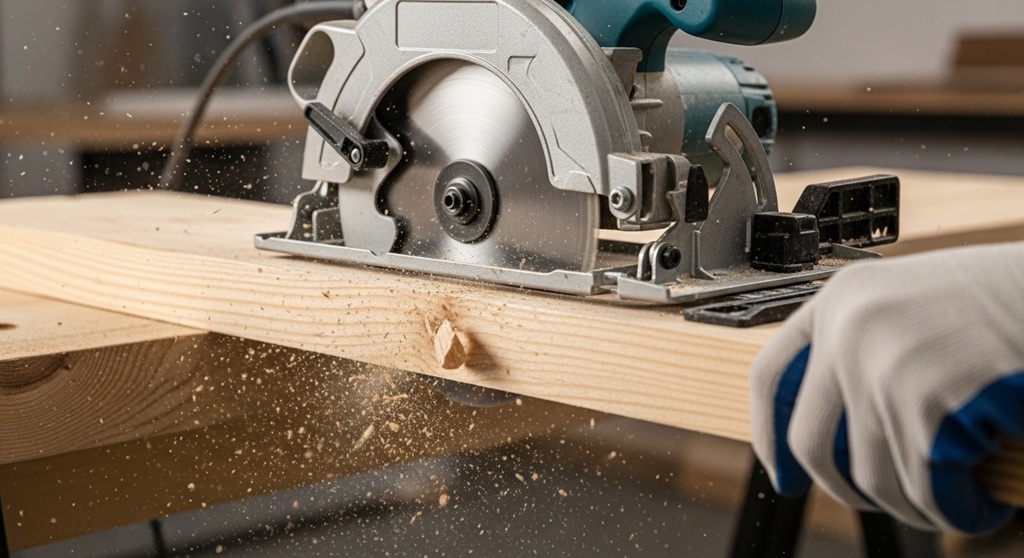
What Safety Gear Should You Wear When Using a Circular Saw?
Wear eye protection, hearing protection, and avoid loose clothing.
- Safety glasses protect from flying debris.
- Ear protection reduces long-term hearing damage.
- Work gloves improve grip but must not interfere with trigger control.
- Dust masks help during plywood or MDF cutting.
According to OSHA guidelines, consistent eye protection significantly reduces workshop injury severity. Small precautions create major protection.
How Can You Improve Accuracy in DIY Cutting Projects?
Use guides, measure twice, and maintain blade sharpness.
Use a Straight Edge
Clamp a guide rail or level for long rip cuts. This prevents drift.
Score the Cut Line
Lightly scoring reduces tear-out in plywood.
Cut with the Good Side Down
Circular saw blades rotate upward. Tear-out usually appears on the top face.
Precision improves with repetition. Controlled movement builds skill.
How Do You Maintain a Circular Saw for Long-Term Safety?
Clean dust buildup, inspect the cord, and store properly.
- Remove sawdust from vents.
- Check for loose screws.
- Inspect battery terminals in cordless units.
- Replace worn blades immediately.
Routine maintenance extends lifespan and maintains safe performance.
Conclusion: Are You Ready to Use a Circular Saw Safely?
A circular saw is one of the most useful portable saw tools for woodworking and DIY cutting. It is fast. efficient. powerful. But it demands respect.
Set up correctly. Adjust blade depth. Secure your material. Position your body safely. Let the blade do the work. These principles prevent common injuries and improve cut quality.
If you want to upgrade your equipment or compare models, explore professional reviews and buying guides before making your next purchase. The right tool makes safe work easier.
Start with one clean cut. Practice controlled movement. Build skill over time.
Take action today: Inspect your saw, review your setup process, and apply these steps on your next project. Safe habits create better results.
Frequently Asked Questions (FAQs)
1. Can beginners use a circular saw safely?
Yes. Beginners can use a circular saw safely if they follow proper setup steps, use correct blade depth, and wear protective gear. Start with scrap wood to practice.
2. What thickness of wood can a 7-1/4 inch circular saw cut?
Most 7-1/4 inch models cut up to about 2-3/8 inches at 90 degrees. Always check manufacturer specifications.
3. Why does my circular saw kick back?
Kickback happens when the blade binds in wood. Common causes include incorrect support, warped lumber, or forcing the cut.
4. Is a cordless circular saw powerful enough for framing?
Modern 18V and 20V cordless saws are powerful enough for framing lumber. High-capacity batteries improve runtime.
5. Should I push hard while cutting?
No. Apply steady, moderate pressure. Forcing the saw increases heat and binding risk.
6. How often should I replace the blade?
Replace blades when cuts become rough, slow, or burn marks appear. Heavy users may change blades every few months.
7. Can I cut metal with a circular saw?
Only if using a blade designed specifically for metal. Standard wood blades are unsafe for metal cutting.
Related Topic: How to Set Up a Skateboard for Smooth Cruising
Read Next: How to Adjust Airflow on an Aquarium Air Pump Properly