

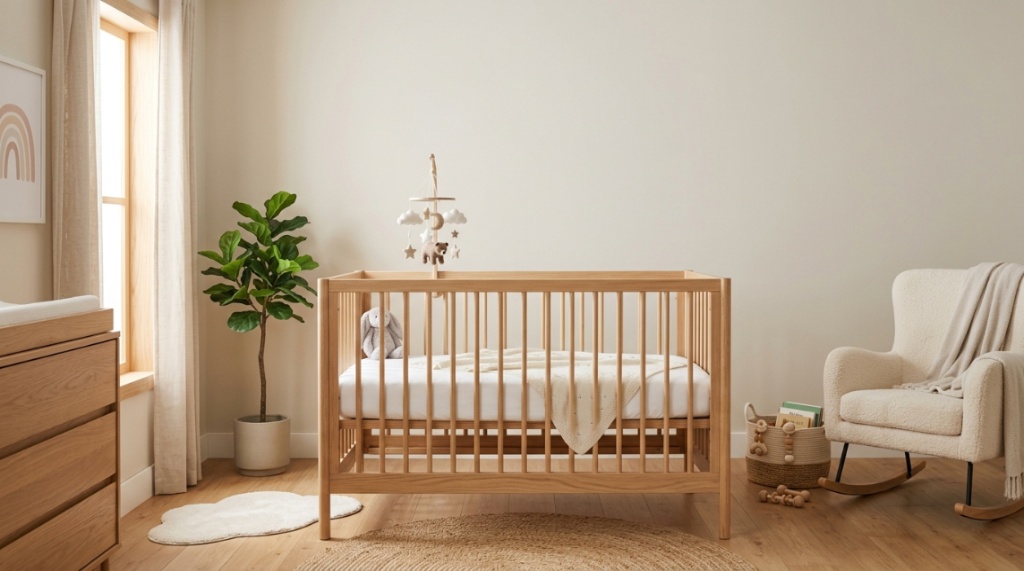
One of the smallest gaps in a nursery can create one of the biggest safety risks for a sleeping baby. That’s why parents who want to choose the right mattress for their baby crib should focus first on proper fit, firmness, and safety certifications before considering comfort or style. A crib mattress must fit snugly inside the crib, provide a firm sleeping surface, and work seamlessly with appropriate crib bedding to support safe infant sleep.
Why Is Choosing the Right Baby Crib Mattress So Important?
A baby crib mattress directly affects sleep safety, comfort, and healthy development. Selecting the correct mattress reduces potential sleep hazards while creating a secure sleeping environment.
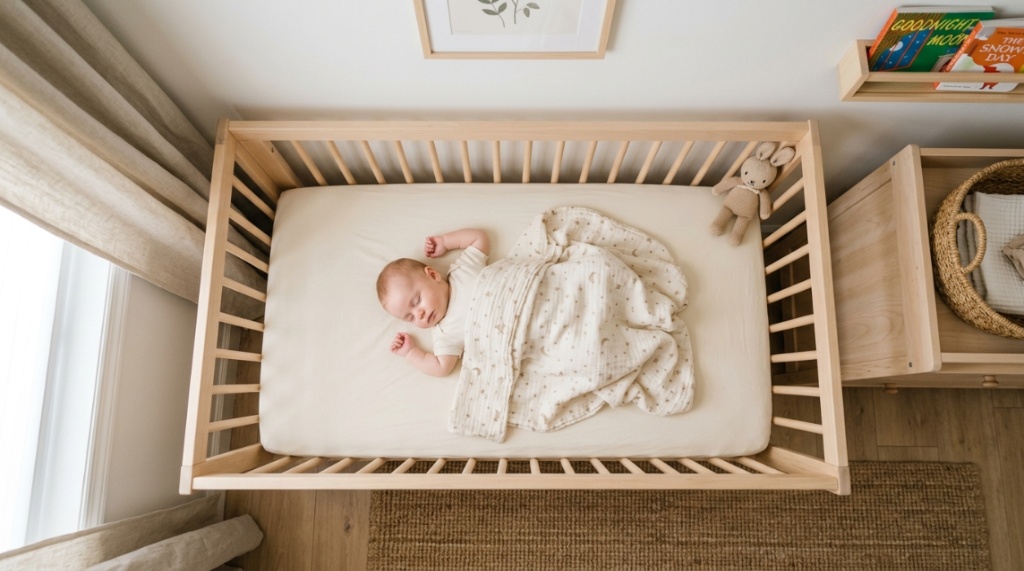
Many parents spend weeks comparing cribs but only minutes evaluating the mattress. Unfortunately, an unsuitable mattress can increase risks associated with unsafe sleep environments. According to guidance from the American Academy of Pediatrics (AAP), infants should sleep on a firm, flat surface without soft bedding, pillows, or loose blankets.
The mattress serves as the foundation of safe sleep. Even the highest-quality crib cannot compensate for poor mattress compatibility or an improperly fitted mattress. Parents should consider dimensions, firmness levels, breathable materials, waterproof protection, and durability before purchasing.
Families preparing for a new arrival often research infant sleep patterns and developmental changes. Understanding topics such as common baby movement and positioning behaviors can help parents better create a safe sleep setup that supports healthy development.
Investing in the right mattress from the beginning can provide years of safe and reliable use through infancy and toddlerhood.
What Makes a Baby Crib Mattress Safe?
A safe crib mattress is firm, flat, properly fitted, and manufactured using materials that meet recognized safety standards.
Safety should always outweigh convenience or marketing claims. Many mattresses advertise luxury features, but the essentials remain unchanged.
Key Safety Features to Look For
- Firm sleeping surface
- Flat and level construction
- Snug fit inside the crib frame
- Certified non-toxic materials
- Water-resistant or waterproof cover
- Durable edge support
- No soft pillow-top layers
- Meets federal safety requirements
A firm mattress prevents excessive sinking and helps maintain a safe sleeping position. Babies lack the strength and coordination to reposition themselves effectively, making firmness a critical factor.
Parents should also inspect stitching quality, seam integrity, and cover durability. Even small tears can compromise hygiene and mattress performance over time.
How Firm Should a Baby Crib Mattress Be?
A baby crib mattress should feel significantly firmer than an adult mattress. Firmness supports safe sleep and helps prevent excessive body indentation.
Many new parents mistakenly assume softer equals more comfortable. For infants, the opposite is true. A firm surface provides better support for a developing spine and reduces risks associated with overly soft sleep environments.
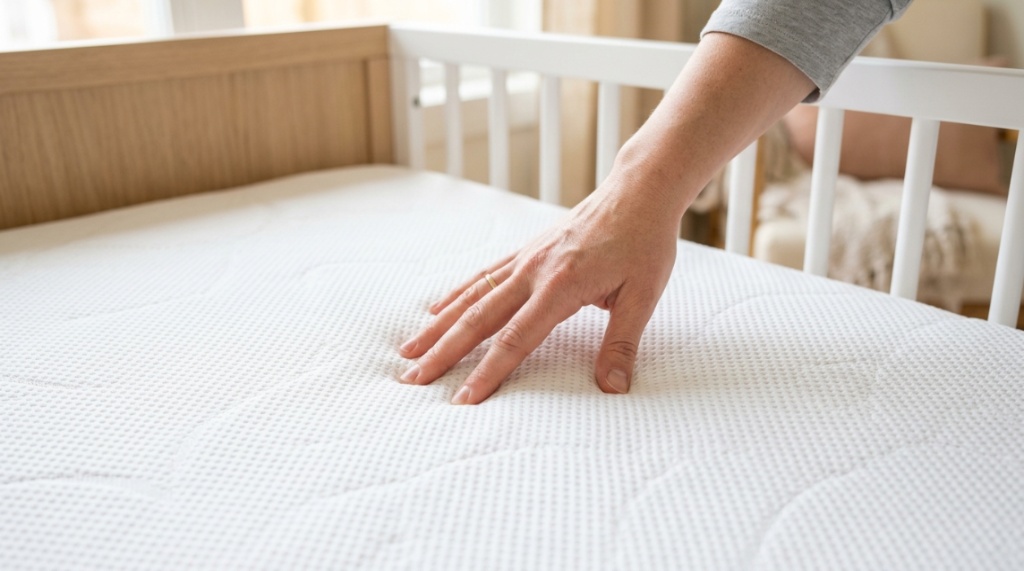
A simple firmness test involves pressing your hand into the mattress surface. Once pressure is removed, the mattress should immediately return to its original shape without noticeable indentations.
High-density foam mattresses and quality innerspring models often provide excellent firmness while maintaining durability.
Can a Mattress Be Too Soft for a Baby?
Yes. If a mattress compresses deeply under pressure or creates visible body impressions, it may be too soft for safe infant sleep.
Always prioritize firmness over plushness during the first years of life.
How Do You Check Mattress Compatibility With a Crib?
Mattress compatibility means the mattress fits securely inside the crib without dangerous gaps around the edges.
This is one of the most overlooked buying factors. Even a high-quality mattress becomes unsafe if it does not fit properly within the crib frame.
Industry safety recommendations generally suggest that gaps between the mattress and crib sides should be minimal. A properly fitted mattress leaves little room for movement.
Nutrition and overall infant wellness also contribute to healthy sleep routines. Parents interested in prenatal health can benefit from learning about nutrient-rich foods that support pregnancy and fetal development while preparing for their baby’s arrival.
Mattress Compatibility Checklist
- Verify crib dimensions before purchase
- Measure mattress length and width
- Check mattress thickness recommendations
- Confirm compatibility with convertible cribs
- Review manufacturer guidelines
- Ensure fitted sheets fit tightly
Never assume all crib mattresses are universally compatible. Slight dimensional differences can affect safety.
What Size Should a Baby Crib Mattress Be?
Most standard crib mattresses measure approximately 52 inches long by 28 inches wide, but exact dimensions vary by manufacturer.
Before purchasing, measure the interior dimensions of your crib and compare them against the mattress specifications.
| Mattress Type | Typical Dimensions | Best For |
|---|---|---|
| Standard Crib Mattress | 52″ x 28″ | Most full-size cribs |
| Mini Crib Mattress | Varies by brand | Compact nurseries |
| Portable Crib Mattress | Brand-specific | Travel and temporary setups |
| Convertible Crib Mattress | Depends on model | Long-term nursery use |
Always verify measurements rather than relying solely on category labels.
Should You Choose Foam or Innerspring Crib Mattresses?
Both foam and innerspring crib mattresses can be safe choices when they provide adequate firmness and meet safety standards.
Foam Crib Mattresses
Foam mattresses are lightweight, making sheet changes easier. They are often more affordable and easier to lift during routine cleaning.
Advantages
- Lightweight design
- Budget-friendly options
- Easy maintenance
- Simple sheet replacement
Innerspring Crib Mattresses
Innerspring models use steel coils for support and often provide exceptional durability.
Advantages
- Strong edge support
- Long lifespan
- Excellent firmness retention
- Good weight distribution
| Feature | Foam | Innerspring |
|---|---|---|
| Weight | Lighter | Heavier |
| Durability | Moderate to High | High |
| Price Range | Lower to Mid | Mid to Higher |
| Ease of Handling | Excellent | Moderate |
The best choice depends on budget, crib design, and long-term use plans.
Which Mattress Materials Are Best for Babies?
The best crib mattress materials are durable, non-toxic, breathable, and easy to clean.
Modern crib mattresses may contain:
- High-density polyurethane foam
- Organic cotton covers
- Coconut coir support layers
- Natural latex alternatives
- Polyester waterproof barriers
- Steel innerspring systems
Parents concerned about indoor air quality often prefer products certified by organizations such as GREENGUARD Gold or CertiPUR-US. These certifications help verify lower chemical emissions and safer manufacturing standards.
Waterproof surfaces are particularly valuable because babies experience frequent diaper leaks, spit-ups, and accidents.
What Role Does Crib Bedding Play in Mattress Safety?
Crib bedding should complement the mattress by maintaining a secure and uncluttered sleep environment.
Many nursery designs emphasize decorative bedding, but safe sleep guidelines prioritize simplicity.
Recommended Crib Bedding Essentials
- Tightly fitted crib sheet
- Properly sized mattress protector
- Waterproof mattress cover
Items to Avoid
- Loose blankets
- Bumper pads
- Pillows
- Stuffed animals
- Quilts
- Heavy comforters
Choosing fitted crib bedding designed specifically for your mattress dimensions helps maintain mattress compatibility and reduces shifting.
Should You Buy an Organic Crib Mattress?
An organic crib mattress can be a good option, but safety, firmness, and fit remain more important than organic labeling alone.
Organic mattresses often use certified cotton, wool, or plant-based materials. Some parents prefer them because they reduce exposure to certain synthetic materials.
However, certification labels should never replace evaluation of firmness, structural support, waterproofing, and mattress compatibility.
Focus first on safe sleep performance, then consider additional preferences such as organic materials.
How Long Does a Baby Crib Mattress Last?
A quality crib mattress typically lasts through infancy and toddlerhood when properly maintained.
Durability depends on construction quality, usage frequency, moisture exposure, and cleaning practices.
Signs It May Need Replacement
- Visible sagging
- Permanent body impressions
- Torn cover material
- Broken springs
- Water damage
- Loss of firmness
Many convertible crib owners choose dual-sided mattresses that offer an infant side and a toddler side, extending overall usability.
What Mistakes Should Parents Avoid When Buying a Crib Mattress?
The biggest mistakes include prioritizing softness, ignoring dimensions, and overlooking safety certifications.
Common Buying Mistakes
- Choosing a mattress solely based on price
- Ignoring mattress compatibility
- Selecting overly soft surfaces
- Using secondhand mattresses with unknown history
- Buying oversized or undersized fitted sheets
- Skipping waterproof protection
- Focusing on appearance over safety
Parents who carefully evaluate safety features, fit, materials, and crib bedding requirements generally avoid the most common nursery setup problems.
Conclusion: How Can Parents Choose the Best Mattress for Their Baby Crib?
The best baby crib mattress is firm, safe, properly sized, durable, and fully compatible with the crib frame. Mattress compatibility should always be verified first, followed by firmness, material quality, waterproof protection, and appropriate crib bedding.
When comparing products, focus on safety performance rather than marketing claims. Measure carefully, review certifications, and choose fitted bedding designed specifically for your mattress dimensions.
Parents researching nursery essentials may also find value in this detailed guide to top-rated baby cribs and nursery buying considerations when building a complete safe sleep environment.
A well-chosen mattress supports safer sleep, easier maintenance, and greater peace of mind. Take time to compare options carefully, and you’ll create a stronger foundation for your baby’s comfort and well-being from day one.
Frequently Asked Questions About Choosing a Baby Crib Mattress
How firm should a crib mattress be for a newborn?
A crib mattress for a newborn should be very firm and flat. It should quickly regain its shape after pressure is applied and should not create deep indentations.
Can I use a regular mattress in a baby crib?
No. Regular mattresses are not designed for crib dimensions or infant sleep safety requirements. Always use a mattress specifically manufactured for crib use.
How do I know if mattress compatibility is correct?
A compatible mattress fits snugly inside the crib with minimal gaps along the sides. The mattress should not slide or shift significantly within the frame.
Are organic crib mattresses safer?
Organic materials may reduce exposure to certain chemicals, but safety depends primarily on firmness, fit, construction quality, and compliance with safety standards.
How often should a crib mattress be replaced?
Replace a crib mattress if it develops sagging, structural damage, torn covers, water damage, or loss of firmness. Many quality mattresses last through toddlerhood.
Do babies need waterproof mattress covers?
Waterproof covers are highly recommended because they protect against spills, diaper leaks, and moisture buildup while extending mattress lifespan.
What crib bedding is safest for infants?
A fitted crib sheet and properly fitted waterproof mattress protector are typically sufficient. Avoid pillows, blankets, bumpers, stuffed animals, and loose bedding.