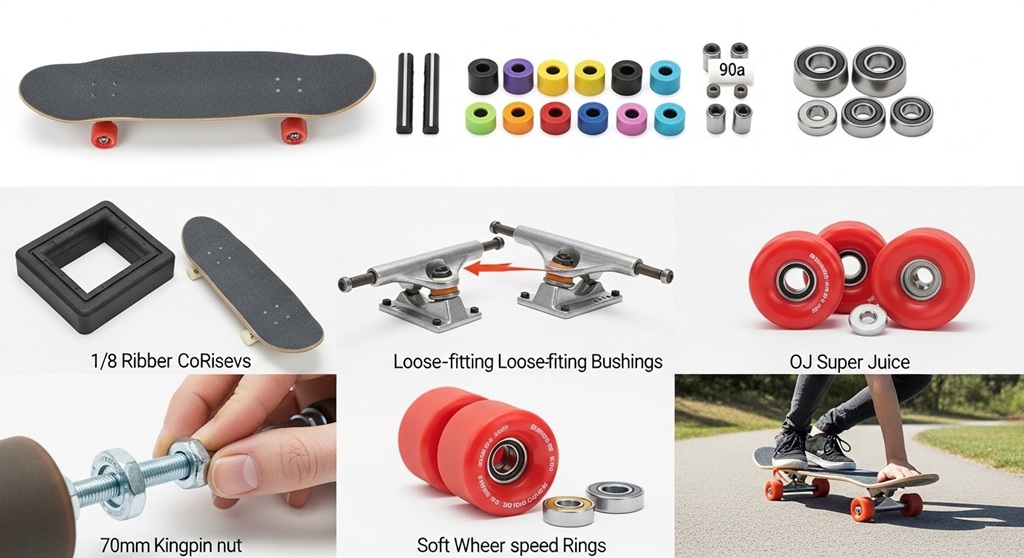

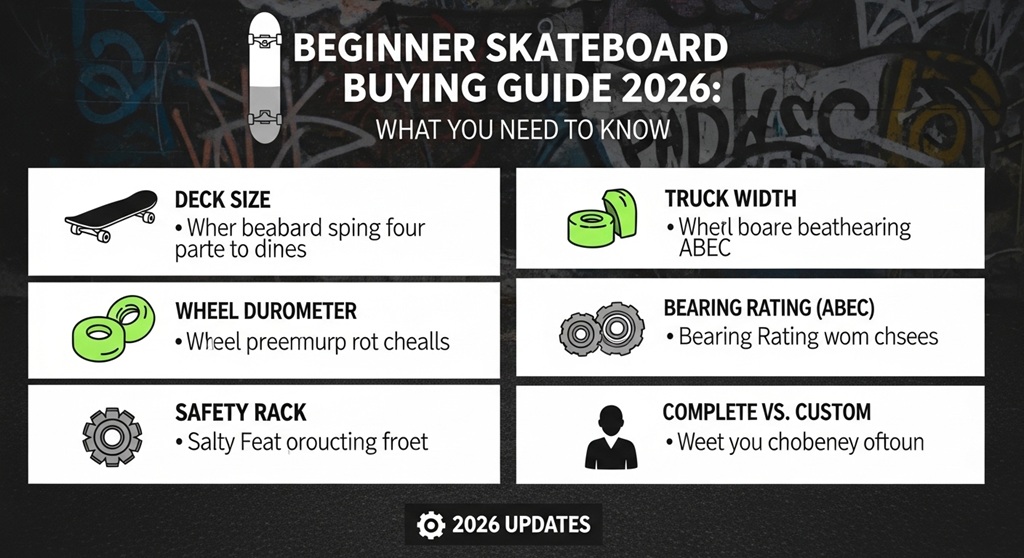
Beginners should focus on deck size, truck quality, wheel hardness, and complete board reliability. In 2026, skateboard trends favor durable maple decks, mid-width setups (7.75”–8.25”), and beginner-friendly completes designed for stability and control.
You’ve decided to buy your first skateboard. Good move. Skateboarding participation has grown steadily since the Tokyo Olympics introduced the sport to a wider audience. According to industry reports from the last few years, global skateboard sales continue to expand due to youth adoption and urban mobility trends. That means more options—and more confusion—for beginners.
Problem: Walk into a skate shop or browse online, and you’ll see hundreds of decks, trucks, wheels, and completes. Prices vary from budget models to pro-level setups. Marketing claims can blur what actually matters.
Agitation: Buy the wrong board and you risk slow progress, unstable rides, or even injuries. Too small? It feels unstable. Too hard wheels? Rough ride. Cheap trucks? Poor turning and weak durability.
Solution: This beginner gear guide breaks everything down using real-world insights and current skateboard trends 2026. You’ll learn exactly what to look for, what to avoid, and how to invest smartly in your first setup.
What Are the Latest Skateboard Trends 2026 Beginners Should Know?
Short answer: In 2026, beginners are choosing wider decks, softer wheels for street comfort, sustainable maple construction, and pre-assembled complete skateboards.
The biggest skateboard trends 2026 reflect accessibility and durability.
- Wider decks (8.0”–8.25”) for stability.
- Softer wheels (90A–95A) for smoother city riding.
- Sustainable 7-ply Canadian maple decks.
- Complete setups for first-time riders.
- Hybrid skate styles (street + cruising).
Case example: Retail analysis from major skate distributors shows beginner buyers now prefer mid-width boards over narrow 7.5” decks. Why? Stability improves learning speed. More surface area equals better balance during ollies and kick turns.
If you’re unsure where to start, explore this detailed list of best affordable beginner skateboards for current entry-level options.
Should You Buy a Complete Skateboard or Build One?
Short answer: Beginners should buy a complete skateboard. Custom builds are better for intermediate riders.
Why Complete Skateboards Make Sense for Beginners
- Pre-assembled and ready to ride
- Balanced components matched for learning
- Lower overall cost
- No compatibility mistakes
Building a custom skateboard requires understanding truck sizing, wheel durometer, and bearing ratings. A mismatch can cause wheel bite or unstable turning. Beginners often overspend on parts that don’t improve learning speed.
Industry data shows most first-time skateboard buyers choose completes priced between $70 and $120. That range typically offers solid maple decks and aluminum trucks suitable for early progression.
What Deck Size Is Best for Beginners?
Short answer: Most beginners should choose an 8.0” deck. Smaller riders may prefer 7.75”, while larger riders benefit from 8.25”.
Deck Width Guide
| Rider Type | Recommended Deck Width |
|---|---|
| Kids (under 10) | 7.25”–7.5” |
| Teens / Smaller Adults | 7.75”–8.0” |
| Average Adults | 8.0” |
| Larger Riders | 8.25”+ |
Wider decks increase balance. Narrow decks flip faster but feel unstable for beginners. Since early progression focuses on balance, pushing, and basic tricks, stability matters more than flip speed.
Most skate essentials checklists recommend starting with 8.0” because it fits common truck sizes and supports versatile riding.
What Type of Wheels Should Beginners Choose?
Short answer: Choose wheels between 52mm–54mm with a durometer of 90A–99A.
Understanding Wheel Size
- 52mm: Street tricks, lower center of gravity
- 54mm: Better for rougher pavement
Understanding Durometer (Hardness)
- 78A–87A: Cruising
- 90A–95A: Beginner-friendly hybrid
- 99A–101A: Skatepark
Case data from urban skate schools shows beginners riding softer wheels (around 92A–95A) report fewer falls caused by small pavement cracks. Hard wheels roll faster in parks but feel rough on city streets.
If you plan to ride sidewalks and parking lots, slightly softer wheels improve comfort and control.
How Important Are Trucks for a Beginner Setup?
Short answer: Very important. Trucks control turning, stability, and durability.
Cheap trucks often bend or break under repeated impact. For beginners practicing ollies and curb drops, truck durability affects long-term cost.
What to Check:
- Aluminum construction
- Proper size matching deck width
- Responsive bushings
Example: An 8.0” deck pairs best with 139mm trucks. Mismatched sizing can cause wheel misalignment or unstable landings.
Don’t ignore trucks. They are the steering system of your skateboard.
What Bearings Should Beginners Look For?
Short answer: ABEC-5 or ABEC-7 bearings are more than enough for beginners.
Many marketing campaigns push ABEC-9 ratings. In reality, bearing maintenance and cleanliness affect speed more than rating alone.
Independent tests show minimal performance difference for casual riders between ABEC-5 and ABEC-9. For beginners, focus on durability rather than high-speed ratings.
What Safety Gear Is Essential for Beginners?
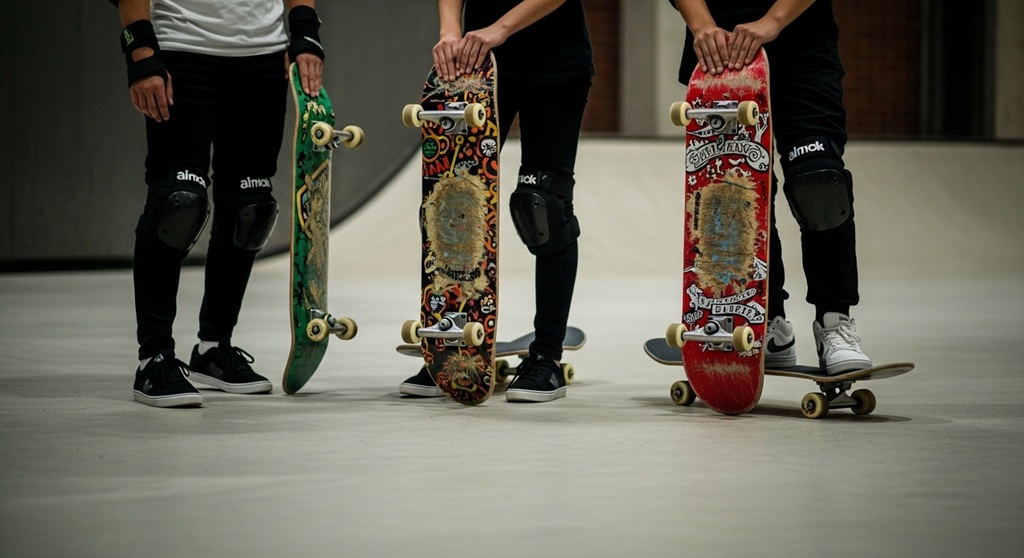
Short answer: Helmet, wrist guards, knee pads, and elbow pads are essential.
Data from emergency departments consistently shows wrist fractures are the most common skateboard injury among beginners. Wrist guards reduce impact force significantly.
- Certified skate helmet (CPSC standard)
- Wrist guards
- Knee pads
- Elbow pads
Safety is part of skate essentials. Progression improves when riders feel protected.
How Much Should a Beginner Spend on a Skateboard in 2026?
Short answer: Expect to spend $80–$150 for a reliable beginner setup.
Boards under $50 often use lower-quality wood or plastic decks. These can warp or snap under stress. Spending slightly more ensures proper maple construction and stable trucks.
Cost breakdown:
- Complete beginner board: $80–$120
- Helmet and pads: $40–$80
Total investment: Around $120–$200 for full beginner gear guide compliance.
What Common Mistakes Do Beginners Make?
Short answer: Buying based on graphics, choosing wrong deck size, and ignoring safety gear.
Top Errors:
- Choosing narrow decks for style
- Buying toy-store boards
- Ignoring wheel hardness
- Skipping protective gear
Case study from local skate training programs shows beginners using low-quality boards take longer to learn ollies compared to those using stable 8.0” maple completes.
The board doesn’t make you a pro. But the wrong board slows you down.
Conclusion: How Do You Choose the Right Beginner Skateboard in 2026?
Buying your first skateboard in 2026 doesn’t need to be complicated. Focus on fundamentals. Choose an 8.0” maple deck. Pick mid-range wheels. Match trucks correctly. Wear safety gear.
The real goal isn’t owning the most expensive board. It’s building confidence and skill from day one.
If you want a curated starting point, review the recommended options in this updated list of skateboard trends 2026 beginner picks. Compare features. Choose wisely. Then start riding.
Now it’s your move. Pick your setup. Gear up. Step on the board. The sooner you start, the faster you improve.
Frequently Asked Questions (FAQs)
Is skateboarding hard for beginners?
Skateboarding has a learning curve, but beginners can learn balancing and pushing within a few sessions. Consistent practice improves progress.
What size skateboard should a 12-year-old use?
Most 12-year-olds fit comfortably on a 7.75”–8.0” deck depending on height and shoe size.
Are cheap skateboards good for beginners?
Very low-cost boards often use weaker materials. Investing in a quality beginner complete improves durability and safety.
Do beginners need soft or hard wheels?
Beginners riding on streets benefit from medium-soft wheels (90A–95A) for better control.
How long does a beginner skateboard last?
With proper care, a maple deck can last several months to a year depending on frequency of use.
Should beginners learn tricks immediately?
Beginners should first master balance, pushing, and turning before attempting ollies or flip tricks
Related Topic: How to Use a Circular Saw for Cutting Wood Safely
Read Next: How to Set Up a Skateboard for Smooth Cruising