
You finally decide to ditch the bulky backpack. You want freedom of movement, quick access to your phone, and a streamlined look. But as you start shopping, you hit a wall. One bag looks like a small purse, and the next could swallow a tablet whole. The problem? Nobody explains how sling bag sizes actually work. You don’t know which capacity fits your life until you waste money on the wrong one. This confusion stops you from enjoying the perfect everyday sling bag compact sling bag that truly works for your routine.
What Is the Standard Capacity Range for Sling Bags?
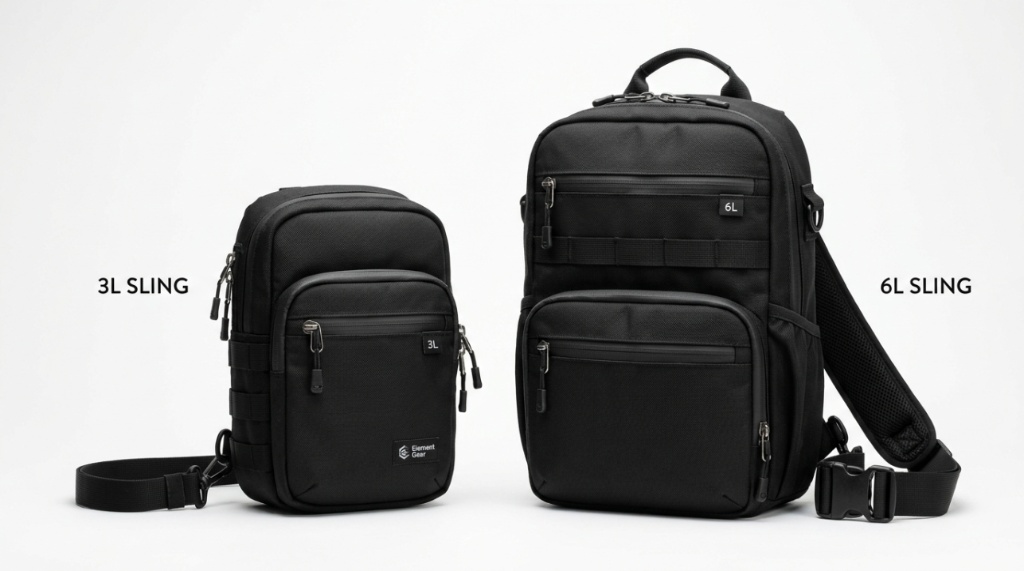
Sling bags typically range from 1 liter to 20 liters in capacity. For everyday carry, most people need between 3 liters and 8 liters. Anything under 3 liters works for just a phone and keys, while over 8 liters begins to feel like a small backpack worn on one shoulder.
Understanding sling bag capacity starts with liters. This measurement tells you how much volume the internal space holds. Here is how common sizes break down:
- 1–3 liters: Tiny crossbody pouches. Fit a phone, cardholder, keys, and lip balm. No room for a water bottle or sunglasses case.
- 3–5 liters: Perfect for minimalists. Carry a phone, power bank, wallet, sunglasses, small notebook, and keys. This is the sweet spot for most urban users.
- 5–8 liters: Great for adding a small tablet, light jacket, or extra snacks. Suitable for travel days or longer commutes.
- 8–12 liters: Approaching backpack territory. Can hold a tablet, water bottle, change of clothes, and lunch. Heavy when fully loaded.
- 12–20 liters: Essentially a backpack in sling form. Only useful for photographers, hikers, or people carrying laptops.
| Capacity | Best For | Example Items |
|---|---|---|
| 1–3 L | Ultra-minimal carry | Phone, cards, keys, lip balm |
| 3–5 L | Daily essentials | Phone, wallet, power bank, sunglasses, notebook |
| 5–8 L | Extended EDC | Adds small tablet, light jacket, water bottle |
| 8–12 L | Travel or work | Tablet, lunch, water bottle, extra layers |
| 12–20 L | Specialist carry | Camera gear, laptop, hiking supplies |
Why Does Sling Bag Size Matter More Than Style?
Size directly affects comfort, usability, and your likelihood of actually carrying the bag daily. A bag that is too large becomes heavy and awkward. A bag that is too small frustrates you when you cannot fit a simple water bottle. Getting the size right ensures the bag integrates seamlessly into your routine rather than becoming a burden.
Most first-time sling buyers make the mistake of choosing based on appearance alone. They see a fashionable everyday sling bag compact sling bag that looks great in photos, but when it arrives, the bag either bulges unattractively or lacks the organization they need.
Consider these real-world consequences of wrong sizing:
- Too small: You constantly leave things at home. You carry items in your pockets because the bag cannot hold them.
- Too large: The bag bounces against your hip while walking. You fill it with unnecessary items just because there is space.
- Just right: You reach for it every day. It feels weightless. You have everything you need and nothing you do not.
How Do You Measure Your Actual Daily Carry Needs?
To measure your needs, empty your pockets and any bag you currently use. Lay every item on a flat surface. Group items into three categories: essentials, nice-to-haves, and occasional items. The essentials group determines your minimum capacity. The full group determines your recommended capacity.
Here is a simple step-by-step process to measure what you actually carry:
- Dump everything: Empty your current bag, pockets, and work desk into a pile.
- Categorize: Sort items into essentials (must have every day), secondary (most days), and occasional (once a week).
- Measure volume: Use a small box or measuring cup to estimate total space your items occupy. For reference, a standard smartphone occupies about 0.3 liters. A power bank adds 0.2 liters.
- Add 20% buffer: Always add extra capacity for unexpected items like a snack, a mail envelope, or a hat.
- Test against size chart: Compare your total volume against the sling bag capacity ranges above.
Most people find their essentials take up 2–3 liters. With buffer, the ideal bag size lands between 3 and 5 liters.
Which Sling Bag Size Works Best for Men vs. Women?
Body frame and typical carry items differ, but the fundamental answer is the same for both men and women: choose based on what you carry, not your gender. However, women often carry slightly larger items like a makeup pouch or extra personal care items, while men may carry a larger tablet or tool kit. The difference usually means women prefer 4–6 liters and men prefer 3–5 liters for standard daily use.
Here is how typical carry patterns break down:
Typical men’s daily carry: Phone, wallet, keys, AirPods, small power bank, sunglasses, pen, small notebook. This fits comfortably in a 3–4 liter bag.
Typical women’s daily carry: Phone, wallet, keys, makeup pouch, hand sanitizer, tissues, sunglasses, small water bottle, feminine products. This fits well in a 4–6 liter bag.
The key insight is that body shape matters more than gender. Taller people can wear larger bags proportionally. Petite individuals should stick to smaller capacities to avoid the bag looking oversized.
Can a Compact Sling Bag Replace a Backpack for Work?
Yes, but only if your work carry is minimal. A compact sling bag of 5–8 liters can replace a backpack if you carry only a tablet, phone, wallet, keys, lunch, and a light jacket. If you need a full-sized laptop, gym clothes, and multiple notebooks, stick with a backpack for dedicated work use.
The trade-off comes down to two things: weight distribution and volume. A backpack spreads weight across both shoulders, making 8 kilograms feel manageable. A sling puts all weight on one shoulder. Even a 4-kilogram load in a sling bag becomes painful after 30 minutes of walking. Therefore, compact sling bags work best when your total load stays under 3 kilograms.
Test whether a sling works for your work commute by answering these three questions:
- Do you carry a laptop larger than 13 inches? If yes, a backpack is better.
- Do you need to carry a lunch container plus a water bottle? If yes, aim for 7–8 liters minimum.
- Is your commute longer than 30 minutes walking? If yes, keep weight under 3 kilograms.
How Do You Test if a Sling Bag Size Fits Your Body?
You test fit by wearing the bag fully loaded for at least 10 minutes in the store or immediately after receiving it at home. Fill the bag with your actual items, not air or tissue paper. Walk around, bend over, sit down, and reach for items. If the bag slides off your shoulder, digs into your ribs, or swings wildly when you move, the size or strap design is wrong for you.
Here are specific fit checks to perform:
- Strap length: The bag should sit at hip level or slightly above, not at your waist or lower back. Adjust the strap until the bag rests comfortably against your side.
- Body width: The bag should not extend past your torso when viewed from the front. If it protrudes beyond your body, it is too wide for your frame.
- Swing test: Walk briskly and lean forward slightly. The bag should stay mostly against your body. Excessive swinging means poor weight distribution.
- Accessibility: While wearing the bag, swing it to your front. Can you open the main compartment and retrieve your phone without twisting? If not, the layout is wrong.
What Features Matter Most in Different Sling Bag Sizes?
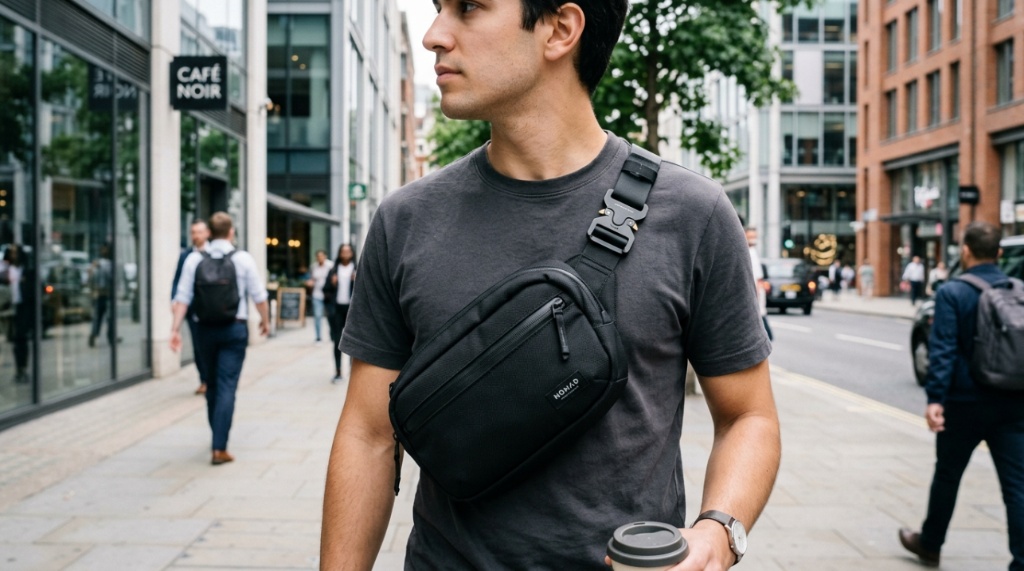
Feature priority changes based on size. In smaller bags (under 4 liters), quick-access organization is critical because you have no space for digging. In medium bags (4–7 liters), comfort padding and strap quality become more important. In large bags (over 7 liters), internal structure and load distribution hardware matter most.
Here is a feature breakdown by size category:
Under 4 liters (mini slings):
- Multiple small pockets for organization
- A dedicated phone slot with easy access
- Key leash or clip
- Thin, non-bulky strap
4–7 liters (standard EDC slings):
- Padded back panel for comfort
- Wider strap with light padding
- At least one internal zip pocket for valuables
- Strap adjuster that stays locked
Over 7 liters (large slings):
- Structured shape to prevent sagging
- Heavy-duty strap with significant padding
- Luggage pass-through for travel
- External water bottle pocket
- Reinforced zippers for heavier loads
When Should You Choose a Smaller vs. Larger Sling Bag?
Choose a smaller sling bag (1–4 liters) when you want maximum freedom and minimal bulk. Choose a larger sling bag (5–8 liters) when you need to carry more items but still want the convenience of a single-strap bag. The inflection point is whether you regularly need to carry a water bottle or a full-sized tablet.
Here are specific scenarios that drive the decision:
Choose smaller when:
- You live in a hot climate and want minimal contact with your body
- You primarily carry a phone, cardholder, and keys
- You attend events where bag size restrictions apply
- You want to wear the bag under a jacket
Choose larger when:
- You commute to work or school and need a tablet
- You want to carry a small water bottle
- You need space for a compact umbrella or light jacket
- You plan to use the bag for short day trips
A practical rule: if you ever wish you had more space in your current bag, go up one size category. If you find yourself leaving the bag at home because it feels too bulky, go down one size category.
Is a 5-Liter Sling Bag Big Enough for Travel?
A 5-liter sling bag is big enough for city travel where you only carry daily essentials, but it is too small to serve as your primary travel bag for everything. For a full travel day, you need 7–10 liters if you also carry a passport, travel wallet, small camera, reusable bottle, and a hoodie.
For context, here is what fits in a 5-liter bag versus an 8-liter bag during travel:
| Item | 5-Liter Bag | 8-Liter Bag |
|---|---|---|
| Passport + wallet | Yes | Yes |
| Phone + charger | Yes | Yes |
| Small camera | Yes | Yes |
| 500ml water bottle | Tight | Yes |
| Light hoodie | No | Yes |
| Souvenir shopping | No | Limited |
For international travel, use the sling bag as your personal item while wearing a backpack. For day excursions, the sling bag works alone as long as you choose the right capacity for the specific outing.
How Does Strap Design Affect Perceived Bag Size?
Strap design significantly changes how a bag feels regardless of its liter capacity. A thin strap makes even a 3-liter bag feel uncomfortable when fully loaded. A wide, padded strap makes a 6-liter bag feel weightless. The strap connection points also matter: straps that attach low on the bag allow the bag to hang more naturally, while straps attaching high on the bag pull the top toward your armpit.
When evaluating sling bag size, never judge solely by dimensions. Feel the strap. Look for these comfort features:
- Strap width: At least 1.5 inches for bags over 4 liters
- Strap padding: Light foam padding that conforms to your shoulder
- Attachment swivels: Allows the bag to rotate instead of twisting the strap
- Quick-release buckle: Makes taking the bag on and off effortless
- Stabilizer strap: A secondary strap that connects the bag to your body reduces swing
Many users return a perfectly sized bag simply because the strap was too thin or slid off their shoulder. Prioritize strap quality equally with bag capacity.
What Common Mistakes Do People Make When Choosing Sling Bag Size?
The most common mistake is choosing a bag that perfectly fits your items when empty, but becomes tighter than expected when filled with your actual daily load. Another frequent error is overlooking the bag’s depth, which can make a small bag bulge awkwardly when packed with bulky items like a power bank or sunglasses case.
Here are five specific sizing mistakes to avoid:
- Guesstimating instead of measuring: People assume their items take less space than they actually do. Always do the physical dump test.
- Ignoring bag shape: A tall, narrow 4-liter bag fits differently than a short, wide 4-liter bag. Consider how your items fit the shape, not just the volume.
- Forgetting about compression: A bag advertised as 5 liters might only achieve that volume when stuffed full. Look at packed dimensions, not empty dimensions.
- Choosing based on a friend’s recommendation: Your friend might carry half what you carry. Their perfect size is your too-small.
- Buying the largest option for versatility: Bigger bags encourage overpacking. You end up carrying weight you never needed.
The best approach is to buy for your current everyday routine, not for the occasional day when you need to carry extra. Have one sling for daily use and a separate, larger bag for travel or heavy days. Looking for a different style? If you love the casual, slouchy look but need significantly more room than a compact EDC pack offers, check out our guide on choosing a Premium Hobo Bag Before You Buy to see if a shoulder bag fits your daily routine better.
Frequently Asked Questions
What size sling bag do I need for a phone, wallet, and keys?
You need a 1.5 to 3 liter sling bag. This size comfortably fits a smartphone, a slim wallet, keys, and a small accessory like earphones or lip balm. Look for a bag with a dedicated phone pocket for quick access.
Can I carry a tablet in a compact sling bag?
Yes, if the compact sling bag is at least 5 liters and has a padded interior compartment. Standard tablets up to 11 inches fit in most 5–6 liter bags. For a 12.9 inch iPad Pro, you need an 8 liter bag or larger.
Is a 3-liter sling bag too small for everyday use?
For minimalists who carry only a phone, cardholder, keys, and earphones, a 3-liter bag is sufficient. However, if you need a power bank, sunglasses, or a notebook, choose a 4–5 liter bag instead. Test your actual items before deciding.
How do I know if a sling bag is too big for my body?
A sling bag is too big if it extends past the width of your torso when viewed from the front, or if you feel the bag pulling your posture out of alignment when fully loaded. The bag should sit against your back or side without forcing you to lean.
Does a larger sling bag always mean more discomfort?
Not always. A larger bag with a well-padded, wide strap and a stabilizing strap can be more comfortable than a smaller bag with a thin, digging strap. The key is choosing the right design for the size, not just the smallest option available.
What is the best sling bag size for a woman’s daily carry?
For most women, a 4–6 liter sling bag is ideal. This size fits a phone, wallet, keys, makeup pouch, hand sanitizer, sunglasses, and a small water bottle while remaining compact enough to wear comfortably all day.
Can I use a sling bag as a travel personal item on flights?
Yes, sling bags under 8 liters typically fit under the seat or inside a larger backpack. Airlines allow personal items up to approximately 10–12 liters depending on dimensions. Check your airline’s specific size limits for personal items before flying.
Conclusion
Choosing the right sling bag size comes down to one simple truth: know what you carry before you choose what carries it. The perfect size is neither the largest nor the smallest, but the one that holds your daily essentials without extra room that tempts you to overpack. Start with the dump test, measure your volume, add a 20% buffer, and match that number to the 3–8 liter sweet spot most people need.
Remember that strap quality, body fit, and organizational layout matter just as much as raw capacity. A 5-liter bag with a great strap and smart pockets outperforms a 7-liter bag with poor design every single day. Trust your testing over marketing claims. Your ideal everyday sling bag is the one you want to grab every morning because it serves your exact needs without extra weight or hassle.
Now that you know exactly how to measure and choose your perfect sling bag size, take your list of daily items and shop with confidence. Your shoulders will thank you.