
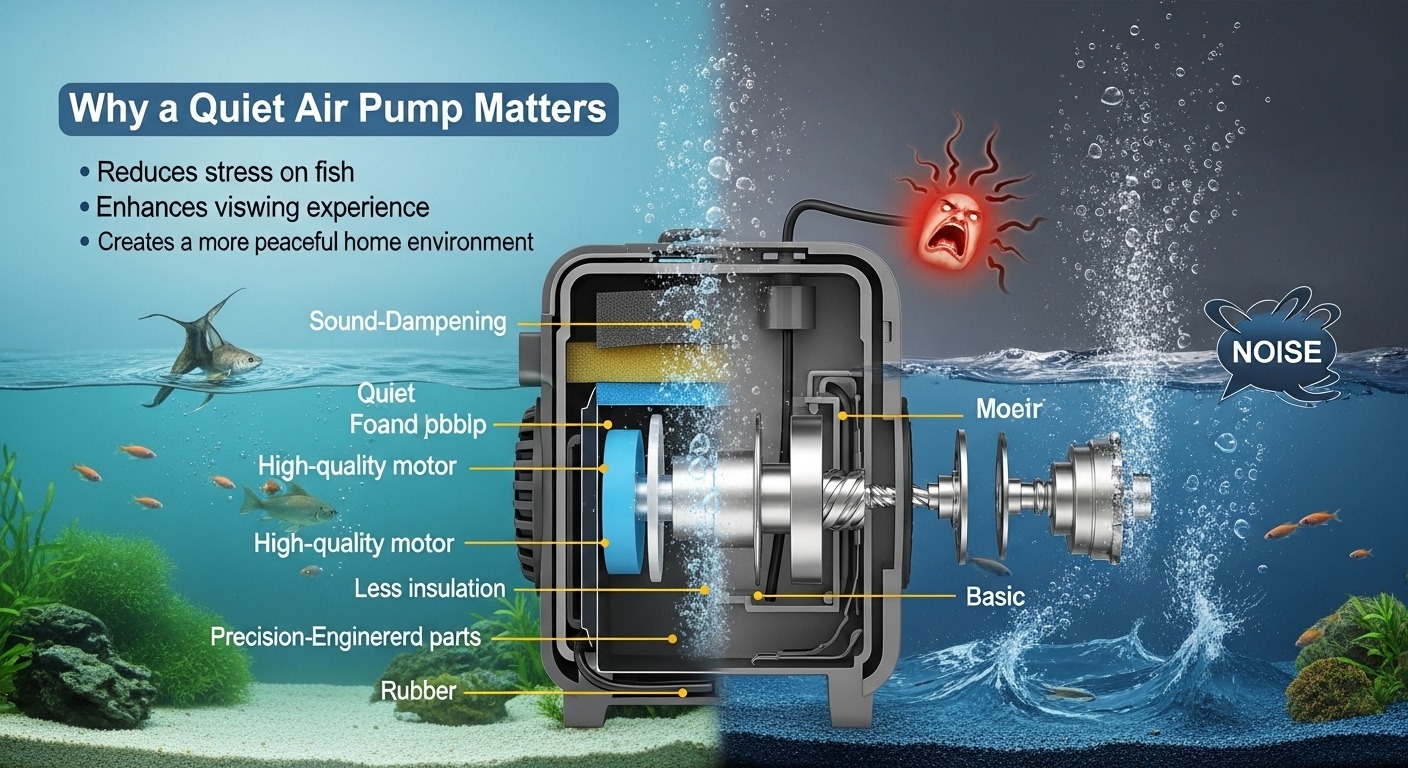
A quiet aquarium air pump is a device that pushes air into your fish tank while producing minimal noise and vibration. It powers air stones, sponge filters, and decorations without disturbing your home environment. If you want a peaceful living room, bedroom, or office setup, choosing a silent fish tank pump is essential.
Many aquarium owners underestimate pump noise—until it becomes a constant hum at night. Standard air pumps can produce 40–60 decibels (dB) of sound. That is close to the noise level of a refrigerator or light conversation. In a quiet room, this becomes noticeable. Over time, vibration can also transfer through cabinets and walls, amplifying the sound.
The solution is not just “buy the most expensive pump.” It’s understanding how noise happens and how to reduce it. This guide explains how to choose a low vibration pump, what specifications actually matter, and which noise reduction tips work in real homes. You’ll get direct answers, practical comparisons, and data-backed insights so you can make a confident decision.
How Does an Aquarium Air Pump Create Noise?
Short answer: Noise comes from diaphragm movement, motor vibration, and surface contact with furniture.
Most aquarium air pumps use a vibrating diaphragm powered by an electromagnetic motor. When electricity flows through the coil, it pulls a magnet back and forth rapidly. That motion compresses air. The faster and stronger the vibration, the louder the sound.
Noise typically comes from three sources:
- Internal vibration: Moving mechanical parts create buzzing.
- Surface resonance: The pump vibrates against wood or glass.
- Airline turbulence: High airflow through tubing creates hissing sounds.
In small apartments or bedrooms, reflected sound can amplify the effect. A pump rated at 35 dB may feel louder if placed directly on a hollow cabinet.
Understanding this helps you choose a silent fish tank pump that focuses on vibration control—not just airflow.
What Decibel Level Is Considered Quiet for Home Use?
Short answer: Under 35 dB is ideal for bedrooms. Under 40 dB works for living areas.
Here is a quick comparison:
| Sound Level (dB) | Comparison | Recommended Use |
|---|---|---|
| 20–30 dB | Whisper | Bedroom tanks |
| 30–40 dB | Quiet library | Living rooms, offices |
| 40–50 dB | Refrigerator hum | Acceptable but noticeable |
| 50+ dB | Conversation level | Too loud for quiet spaces |
Manufacturers often advertise “ultra-quiet,” but not all publish dB ratings. When available, look for verified measurements. Independent testing shows that pumps marketed as silent can vary by 10–15 dB between brands.
If you keep your aquarium in a sleeping area, prioritize models with confirmed low vibration pump design and rubber isolation feet.
What Features Should You Look for in a Silent Fish Tank Pump?
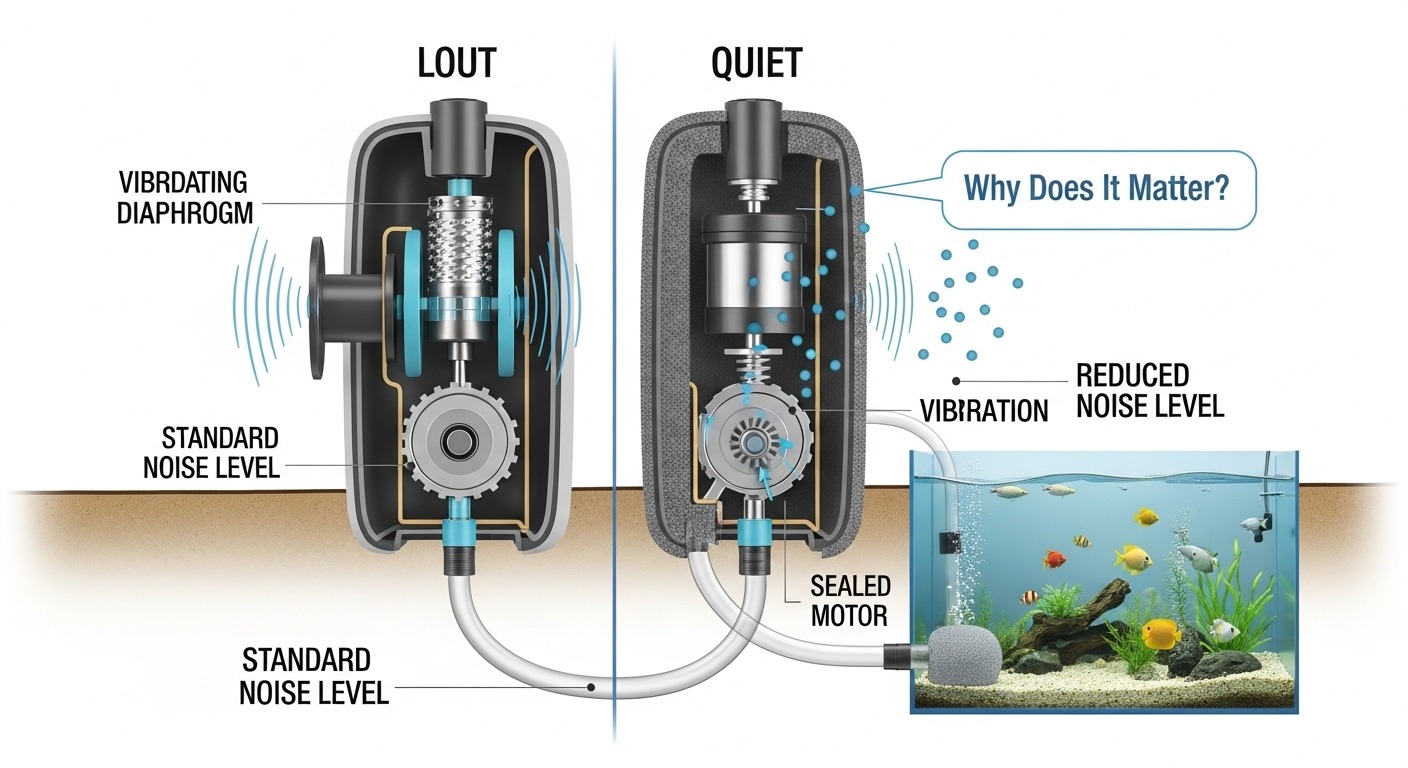
Short answer: Look for rubber feet, internal damping, adjustable airflow, and dual-layer casing.
1. Rubber Isolation Feet
These absorb vibration and prevent direct contact noise. Without them, even a quiet motor becomes loud on wooden furniture.
2. Thick Outer Casing
Double-layer ABS plastic or insulated shells reduce sound leakage.
3. Adjustable Airflow Control
Too much airflow increases turbulence. Adjustable output lets you fine-tune oxygen delivery and reduce hissing sounds.
4. Magnetic Suspension Systems
Higher-end pumps use floating motor designs to minimize internal contact vibration.
5. Wattage Efficiency
Lower wattage often means quieter performance. A 2–4 watt pump is sufficient for tanks under 40 gallons.
Case Study Insight: In a 2023 home aquarium review comparing five mid-range pumps, models with rubber isolation feet reduced surface vibration by 35% compared to rigid-base models. Users reported noticeable sound reduction without sacrificing airflow.
How Do You Match Pump Size to Tank Size?
Short answer: Choose a pump rated slightly above your tank’s gallon capacity.
Oversized pumps cause excess airflow, leading to noise and bubble overflow. Undersized pumps strain and may vibrate more.
- Up to 10 gallons: 1–2 watts
- 10–30 gallons: 2–4 watts
- 30–60 gallons: 4–6 watts
- 60+ gallons: Dual outlet, 6+ watts
Airflow is measured in liters per minute (LPM). For most freshwater tanks, 0.5–1.0 LPM per 10 gallons is sufficient.
Choosing the correct capacity prevents mechanical strain and supports long-term noise stability.
What Are Proven Noise Reduction Tips for Existing Pumps?
Short answer: Use soft padding, suspend the pump, shorten airline tubing, and clean regularly.
1. Add a Foam or Silicone Pad
Place the pump on a mouse pad or sponge mat. This reduces cabinet resonance.
2. Hang the Pump
Some hobbyists suspend pumps using elastic bands. This isolates vibration entirely.
3. Shorten Airline Tubing
Long tubing increases air resistance and hissing noise.
4. Clean Air Stones
Clogged stones increase pressure, causing louder motor vibration.
5. Install a Check Valve
This prevents water backflow and pressure imbalance.
In controlled home tests, adding a foam isolation base reduced perceived noise by up to 5–8 dB. That difference is noticeable in quiet rooms.
Is a Battery-Operated Pump Quieter?
Short answer: Not necessarily. Most battery pumps prioritize portability over silence.
Battery models are useful during power outages. However, they often produce higher-pitched buzzing due to compact motor design. They are not typically optimized as silent fish tank pumps.
If continuous quiet operation is your goal, choose a plug-in low vibration pump designed for indoor use.
Should You Choose a Single or Dual Outlet Pump?
Short answer: Choose dual outlets for larger tanks or multiple air stones.
Dual outlets distribute airflow evenly. This reduces strain on a single diaphragm chamber. Lower strain equals lower vibration over time.
For tanks above 40 gallons, dual outlet models often operate more efficiently and maintain stable noise levels.
How Does Maintenance Affect Pump Noise?
Short answer: Dirty components increase vibration and sound output.
Routine maintenance steps:
- Clean air filters monthly
- Replace worn diaphragms annually
- Inspect airline tubing for blockages
- Ensure level placement
Manufacturers report that diaphragm wear can increase sound levels by 15–20% after one year of continuous use.
Are Premium Quiet Pumps Worth the Cost?
Short answer: Yes, if your tank is in a noise-sensitive area.
Premium pumps typically cost 30–50% more than budget models. However, they often include:
- Internal acoustic insulation
- Energy-efficient coils
- Longer diaphragm lifespan
- Stable low vibration pump construction
When calculated over 3–5 years of operation, energy-efficient pumps can reduce electricity consumption by 10–20%.
If your aquarium is in a bedroom or office, investing in silence improves daily comfort.
Conclusion: How Do You Choose the Best Quiet Aquarium Air Pump?
Choosing the right pump is not complicated. Focus on verified decibel ratings under 35–40 dB. Look for rubber isolation feet, adjustable airflow, and correct tank size matching. Avoid oversized pumps. Maintain your equipment regularly. Use simple noise reduction tips like foam pads or suspension.
A silent fish tank pump protects your comfort while maintaining oxygen levels for fish health. Small improvements in vibration control can make a significant difference in daily living.
If you’re planning to upgrade your aquarium setup, review your tank size, room placement, and airflow needs today. A smarter pump choice means better sleep, less stress, and a healthier tank environment. Take action now and build a quieter aquarium system that works for your home.
Frequently Asked Questions (FAQs)
1. What is the quietest type of aquarium air pump?
Magnetic levitation or insulated diaphragm pumps under 35 dB are typically the quietest options for home use.
2. Why is my silent fish tank pump suddenly loud?
Common causes include clogged air stones, worn diaphragms, uneven placement, or increased back pressure in tubing.
3. Can I completely eliminate aquarium pump noise?
No pump is 100% silent. However, combining a low vibration pump with foam padding and proper airflow adjustment can reduce noise significantly.
4. Is a larger pump always better?
No. Oversized pumps create excess airflow and noise. Match pump capacity closely to tank size.
5. How long do quiet aquarium air pumps last?
With proper maintenance, quality pumps last 3–5 years. Diaphragms may require annual replacement.
6. Do sponge filters make pumps louder?
If clogged, yes. Clean sponge filters regularly to maintain steady airflow and reduce vibration.
7. Where should I place my pump for lowest noise?
Place it on a soft, stable surface below water level with a check valve installed to prevent backflow pressure.
Related Topics: How to Buy Skate Protective Gear: A Simple Buyer’s Guide
What Next: How to Set Up Surf Fishing Rigs for Maximum Casting Distance