
Summer weddings punish the wrong shoe choice harder than any other season — hot pavement, outdoor grass ceremonies, and hours of standing turn stiff formal shoes into a guaranteed meltdown for any boy under 12. Boys wedding shoes for summer events need to balance formal appearance with breathability, lightweight construction, and soles that won’t sink into soft ground or slip on polished dance floors. Most parents discover this too late, after their son has already kicked off his shoes during the reception or developed blisters before the ceremony ends.
Boys wedding shoes are formal or semi-formal footwear designed for young boys (toddlers through pre-teens) to wear at weddings and special events. The best options combine elegant boys footwear aesthetics — polished leather, oxford or loafer silhouettes, and classic colors — with child-friendly comfort features like cushioned insoles, flexible soles, and breathable linings.
This guide focuses specifically on summer wedding shoe selection — where heat, outdoor venues, and extended wear create challenges that standard “dress shoe” advice doesn’t address. Get this right, and your son looks sharp in photos while actually enjoying the celebration.
What Makes Summer Wedding Shoes Different from Regular Boys Dress Shoes?
Summer wedding shoes need three features regular dress shoes often lack: breathable materials that prevent sweating, lightweight construction under 200g per shoe, and outsoles designed for both indoor and outdoor surfaces common at warm-weather venues.
Standard boys dress shoes are designed for brief indoor wear — a school event or holiday dinner lasting 2–3 hours in climate-controlled spaces. Summer weddings demand more:
- Venue variety: Outdoor ceremonies on grass, stone patios, or sandy beaches followed by indoor receptions on hardwood or tile
- Duration: 4–6 hours minimum, often with limited seating for active children
- Temperature: Feet sweat 2–3x more in summer heat, causing blisters faster in non-breathable shoes
- Activity level: Running, dancing, and playing between formal moments
The shoes that look perfect on a shelf may become unwearable after 90 minutes in July heat. Prioritize function alongside appearance.
Which Shoe Styles Work Best for Summer Weddings?
Loafers and monk strap shoes work best for summer weddings because they combine formal appearance with easy on/off access, breathable construction, and lighter weight compared to traditional lace-up oxfords.
Style breakdown by summer suitability:
| Style | Formality Level | Summer Comfort | Best For |
|---|---|---|---|
| Penny Loafers | Semi-formal to formal | Excellent — no laces, easy ventilation | Garden weddings, beach-adjacent venues |
| Monk Strap | Formal | Very good — adjustable fit, looks polished | Traditional ceremonies, photo-focused events |
| Derby Shoes | Formal | Good — open lacing allows airflow | Church ceremonies, indoor/outdoor combo venues |
| Oxford (Cap Toe) | Most formal | Fair — closed lacing traps heat | Very formal black-tie weddings only |
| Dressy Sandals | Casual to semi-formal | Excellent — maximum airflow | Beach weddings, casual outdoor ceremonies |
For most summer weddings, a quality leather or suede loafer strikes the perfect balance. It photographs as elegant boys footwear while keeping your son comfortable through the entire event.
What Materials Keep Boys’ Feet Cool During Summer Ceremonies?
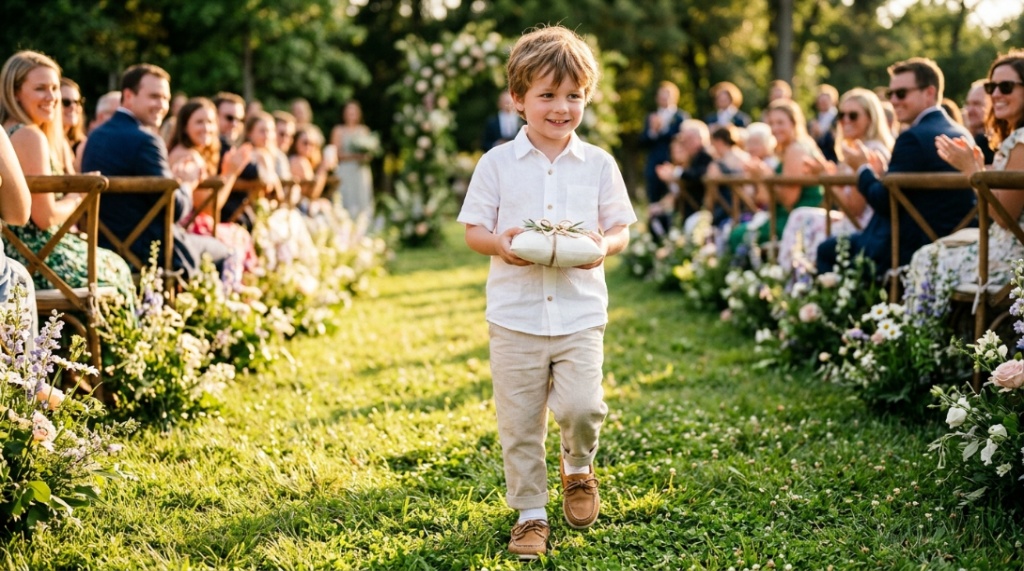
Genuine leather and canvas are the best materials for summer wedding shoes. Leather breathes naturally and molds to the foot, while canvas offers maximum airflow for casual-formal settings. Avoid synthetic patent leather — it traps heat and causes excessive sweating.
Material guide for summer comfort:
- Full-grain leather: Breathes well, develops comfortable flex points over time, looks appropriately formal. The gold standard for elegant boys footwear.
- Suede: Lighter weight than polished leather, excellent breathability, slightly less formal but perfectly appropriate for garden and outdoor weddings.
- Canvas with leather trim: Maximum breathability for casual-formal beach weddings. Won’t work for black-tie events but ideal for relaxed summer celebrations.
- Perforated leather: Small decorative holes (broguing) that also serve a functional purpose — increasing airflow while maintaining formal appearance.
Materials to avoid in summer:
- Patent leather (plastic coating traps heat completely)
- Full synthetic uppers (no breathability, causes sweating within 30 minutes)
- Rubber-lined interiors (moisture trap that accelerates blister formation)
How Do You Size Boys Wedding Shoes Correctly for a Future Event?
Buy shoes 2–4 weeks before the wedding maximum, not months ahead. Children’s feet grow 1–2 sizes per year, and a shoe purchased 3 months early may be tight by the event date. Allow a thumb’s width (about 1cm) between the longest toe and shoe front.
Sizing strategy for wedding shoes:
- Measure both feet: One foot is often slightly larger — size for the bigger foot
- Measure in the afternoon: Feet swell throughout the day; afternoon measurements reflect wedding-day foot size more accurately
- Account for socks: Measure while wearing the dress socks he’ll wear at the wedding
- Break-in period: Have him wear the shoes around the house for 30 minutes daily during the 1–2 weeks before the event
For a detailed breakdown of boys’ shoe sizing across brands and age groups, this guide to kids wedding shoes for boys covers brand-specific sizing charts and fit recommendations.
How Can You Break In Boys Wedding Shoes Before the Big Day?
Have your son wear the shoes indoors for 20–30 minutes daily starting 10–14 days before the wedding. Pair with dress socks and let him walk, not just sit. This softens the leather and identifies pressure points before they become blisters during the event.
Break-in schedule:
- Days 1–3: 15–20 minutes of indoor walking
- Days 4–7: 30 minutes including light activity (going up stairs, walking on different surfaces)
- Days 8–14: 45–60 minutes mimicking wedding conditions (standing, walking on grass if venue is outdoor)
If any rubbing or hot spots appear, apply moleskin padding to the shoe interior at that exact point. This prevents blisters without altering the shoe’s appearance.
Never skip break-in for leather shoes. New leather is rigid and unforgiving — exactly the wrong condition for a child standing and walking for 4+ hours at a summer celebration.
What Color Boys Wedding Shoes Work for Summer Weddings?
Tan, cognac, and light brown shoes complement summer wedding color palettes better than black. Black formal shoes look heavy against summer pastels and light suits. Navy is another versatile option that bridges formal and seasonal aesthetics.
Color matching guide:
- Tan/Cognac: Pairs with khaki, light grey, and navy suits. Perfect for outdoor garden and vineyard weddings.
- Light Brown: Versatile middle ground that works with almost any summer suit color except black.
- Navy: Unexpected but elegant choice with grey or lighter blue suits. Photographs beautifully.
- Black: Reserve only for formal evening weddings or when the dress code specifically requires it. Looks seasonal mismatched at daytime outdoor events.
- White/Cream: Only for ring bearers in specific wedding party coordination. Not recommended for general guest attendance.
Match the shoe color to the belt or outfit accents for a cohesive look in wedding photos. Elegant boys footwear doesn’t mean defaulting to black — it means intentional coordination.
What Sole Type Prevents Slipping at Outdoor and Indoor Venues?
Rubber outsoles with subtle texture provide the best grip across all summer wedding surfaces — grass, stone, hardwood, and tile. Leather soles look more traditional but offer zero grip on wet grass or polished indoor floors, making them dangerous for active children.
Sole recommendations:
- Best choice: Rubber outsole with leather-look appearance — formal aesthetics with practical grip
- Good choice: Leather sole with rubber heel insert — traditional look with some slip prevention
- Avoid: Full leather sole for children — extremely slippery on any smooth or wet surface
Children don’t walk carefully at weddings. They run across dance floors, sprint on grass, and jump off steps. The sole needs to handle sudden movement on unpredictable surfaces without your intervention.
How Much Should You Spend on Boys Wedding Shoes?
Expect to spend $35–$75 for quality boys wedding shoes that combine genuine leather, cushioned insoles, and rubber outsoles. Below $30, you’re getting synthetic materials that won’t breathe. Above $80, you’re paying for brand premium on shoes that may be outgrown within months.
Price-to-quality ranges:
- Under $25: Synthetic materials, no arch support, poor breathability. Acceptable only for very short events under 2 hours.
- $30–$50: Mixed materials (leather upper, synthetic lining), basic cushioning. Good value for one-time wear with adequate comfort.
- $50–$75: Full leather construction, proper insoles, durable rubber soles. Best value tier for comfort and appearance.
- $75–$120: Designer brands and premium craftsmanship. Beautiful but impractical given growth rates — children outgrow these before the quality investment pays off.
Since children outgrow shoes every 4–8 months, investing $50–$75 in a well-made pair that survives one season of formal events delivers the best balance of quality and practicality.
Finding the perfect footwear for young attendees is just one piece of the puzzle when coordinating a beautiful seasonal ceremony. As you prepare for the big day, it helps to look at the bigger picture to ensure everything runs smoothly. Navigate the Wedding Party With Expert Advice and Plan ahead so every member of your celebration looks sharp, stays comfortable in the heat, and feels ready to celebrate.
Conclusion
Choosing boys wedding shoes for summer weddings means prioritizing breathability, lightweight construction, and versatile soles alongside formal appearance. Loafers or monk straps in tan or cognac leather hit the sweet spot for most outdoor and garden ceremonies. Size close to the event, break in properly for two weeks, and choose rubber outsoles over leather for safety. Your son can look polished in photos and still enjoy the celebration comfortably.
For curated recommendations with sizing guides and style options, explore the best kids wedding shoes for boys collection with real parent reviews and seasonal picks.
What style are you leaning toward? Share the wedding venue type and your son’s age in the comments for specific shoe recommendations from parents who’ve been through it.
Frequently Asked Questions
Can boys wear loafers to a formal wedding?
Yes. Leather penny loafers and monk strap loafers are appropriate for most formal weddings when paired with a proper suit or dress pants. Only ultra-formal black-tie events with strict dress codes might require traditional lace-up oxfords. For summer weddings specifically, loafers are the preferred choice.
How do I keep boys wedding shoes clean during an outdoor ceremony?
Apply a leather protector spray 24 hours before the event. For grass stains, wipe immediately with a damp cloth. Bring a small shoe-care kit (damp cloth, brush) in your bag. Suede shoes should be sprayed with suede protector and can be brushed clean after the event with a suede brush.
Should boys wear socks with wedding shoes in summer?
Yes — always. No-show socks or thin dress socks prevent blisters, absorb sweat, and keep shoes hygienic. Going sockless in leather shoes during summer guarantees blisters within an hour and creates odor problems in the shoe. Choose moisture-wicking cotton or bamboo blend dress socks.
What if my son refuses to wear dress shoes at the wedding?
Choose comfort-first designs: soft-soled loafers that feel closer to sneakers, or dressy boat shoes for casual venues. Let him participate in shoe selection — boys who choose their own shoes are significantly more likely to wear them willingly. The break-in period also helps familiarity reduce resistance.
Are there boys wedding shoes that work for both indoor and outdoor venues?
Yes. Leather or suede shoes with rubber outsoles work on grass, stone, hardwood, and tile equally well. The key is avoiding pure leather soles (slip on smooth floors) and avoiding deep-tread rubber (catches on carpets and looks too casual). A flat rubber sole with subtle texture handles all surfaces.
How far in advance should I buy boys wedding shoes?
Buy 2–4 weeks before the wedding. This gives enough time for break-in without risking size changes. Children’s feet grow approximately 1mm per month, so shoes bought 3+ months early may not fit comfortably by the event. If buying online, order early enough to allow exchanges if sizing is off.