

Eight out of ten handbag returns happen because the buyer couldn’t distinguish marketing language from actual quality during the purchase — a $400 bag with “premium Italian leather” on the tag turned out to feel like plastic within two weeks. Spotting a premium hobo bag before you buy means training your hands and eyes to recognize the physical markers of quality construction that exist independently of price tags, brand names, or sales copy.
A premium hobo bag features carefully selected leather (full-grain or top-grain), reinforced stress points, quality metal hardware, precise stitching, and thoughtful interior finishing that collectively ensure years of attractive daily performance. The frustration? Hobo handbag brands across all price ranges use identical marketing vocabulary — “premium,” “luxury,” “artisan-crafted” — making language useless as a quality indicator. You need physical inspection skills that cut through copywriting. This guide gives you the exact checklist professional buyers use when evaluating premium shoulder bags — applicable in any store, at any price point, with zero specialized knowledge required.
What Are the Immediate Visual Indicators of a Premium Hobo Bag?
The immediate visual indicators are even stitching with consistent spacing, clean edge finishing with no roughness, symmetrical proportions, and hardware that sits flush without gaps — all visible within five seconds of focused inspection.
Premium construction announces itself before you even touch the bag. Train your eye for these instant giveaways:
- Stitching uniformity: Look at any seam from 6 inches away. Premium bags show perfectly even stitch spacing — each stitch identical in length and distance from the next. Uneven spacing, loose threads, or skipped stitches indicate corner-cutting regardless of brand prestige.
- Edge finishing: Examine leather edges along the top opening, strap edges, and any visible panel joins. Premium finishing shows smooth, painted or burnished edges with no roughness, fraying, or visible fiber. Unfinished or poorly painted edges are the most common shortcut in mid-range bags trying to appear premium.
- Symmetry: Fold the bag mentally along its center axis. Does everything mirror perfectly? The strap attachment, pocket placement, logo positioning — any asymmetry indicates either careless construction or poor quality control, both disqualifying at premium pricing.
- Hardware seating: Check where metal hardware (clasps, rings, rivets) meets leather. Premium hardware sits flush against the material with no visible gaps, wobble, or exposed screws. The connection should look seamless — as if the hardware grew from the leather rather than being bolted on.
- Overall silhouette: A premium hobo bag maintains an attractive drape even when empty. It shouldn’t collapse completely flat (indicating no internal structure) or hold rigid form (indicating over-stiffening). The hallmark slouch should be graceful, not sloppy.
How Do You Evaluate Leather Quality by Touch?
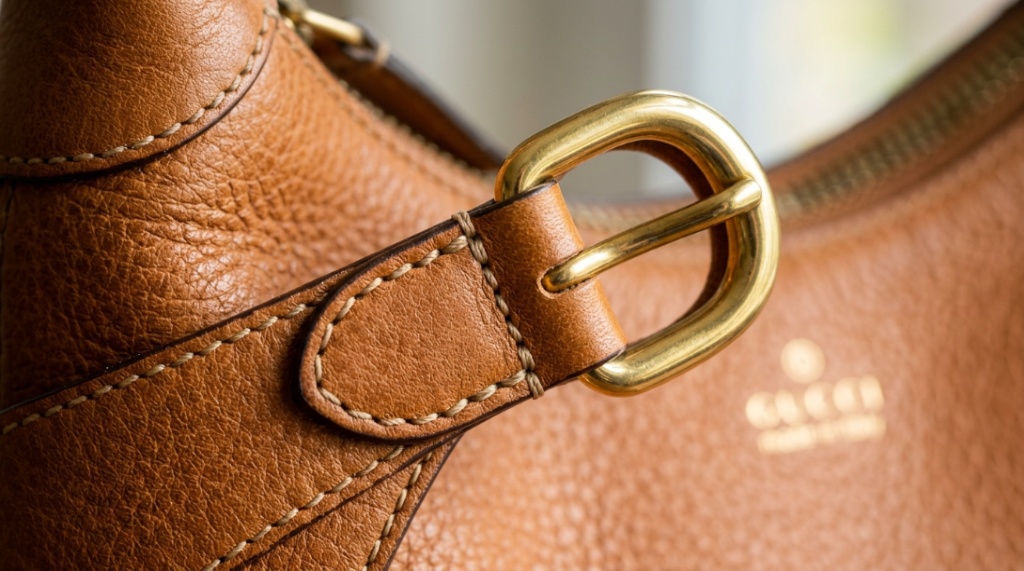
Evaluate leather quality by feeling for natural grain variation under your fingertips, pressing to check resilience (quality leather springs back within seconds), and rubbing gently to detect if any coating flakes or feels plasticky.
Touch tests reveal what eyes cannot — the fundamental material quality beneath surface appearance:
- Grain feel: Run your fingertips across the leather surface. Premium full-grain leather has subtle natural variation — slight textural differences that reflect the animal’s actual skin. Perfectly uniform surfaces indicate either heavy correction (sanding and recoating) or synthetic origin.
- Resilience test: Press your thumb into the leather and release. Quality leather shows momentary compression then springs back to original form within 2–3 seconds. Cheap leather holds the impression longer or develops a permanent dent. This tests internal fiber density.
- Temperature response: Quality leather feels cool initially then warms quickly to your hand temperature. Synthetic materials feel room-temperature immediately (no cool-then-warm transition). This reflects leather’s natural thermal properties.
- Pliability: Gently flex a section of the bag. Premium leather moves fluidly — bending smoothly without audible creaking or visible stress lines. Cheap leather creaks, shows white stress marks, or feels stiff/cardboard-like beneath a thin surface layer.
- Weight assessment: Premium leather has noticeable density and weight proportional to thickness. If a leather bag feels surprisingly lightweight relative to its size, the leather is either very thin (less durable) or has synthetic backing reducing genuine leather content.
These touch tests take under 30 seconds combined and provide more information than any label, price tag, or sales pitch. Practice on bags you know are quality (in luxury stores) to calibrate your touch standards before evaluating unfamiliar brands.
What Hardware Details Separate Premium from Standard?
Premium hardware is identified by substantial weight, smooth operation, consistent finish without bubbling or discoloration, and solid construction (cast metal) rather than stamped or hollow construction that bends under pressure.
Hardware is where manufacturers cut costs first — because most buyers don’t test it. Premium markers:
| Hardware Element | Premium Indicator | Budget Indicator | How to Test |
|---|---|---|---|
| Zipper | YKK or RiRi brand, smooth glide, metal teeth | Unbranded, catching/sticking, plastic teeth | Zip open and closed 5 times — should glide effortlessly |
| Clasp/snap | Solid click, firm hold, no wobble | Weak click, releases too easily, loose fit | Open and close 10 times — should feel identical each time |
| D-rings/O-rings | Welded closed (no visible seam), thick gauge | Open seam visible, thin wire, bends when squeezed | Look for seam gaps; gently squeeze to test flex |
| Buckles | Cast metal, beveled edges, substantial weight | Stamped thin metal, sharp edges, lightweight | Lift the buckle — weight should feel proportional to its size |
| Rivets | Smooth dome, flush against leather, no exposed backs | Rough finish, raised/uneven, visible backing posts | Run finger over rivet — should feel smooth in all directions |
| Finish | Consistent tone, no bubbles/chips, deep color | Uneven plating, bubbling, shallow/thin color | Examine under store lighting for inconsistencies |
The single quickest hardware test: tap the main closure against a hard surface (your fingernail works). Quality metal produces a clear, resonant ring. Cheap metal produces a dull thud. This sound test alone identifies hardware quality in under one second.
How Important Is Interior Finishing in Identifying Premium Quality?
Interior finishing is one of the most reliable premium indicators because it represents work that most buyers never see — manufacturers who invest in invisible quality are almost certainly investing in visible quality too.
What to inspect inside:
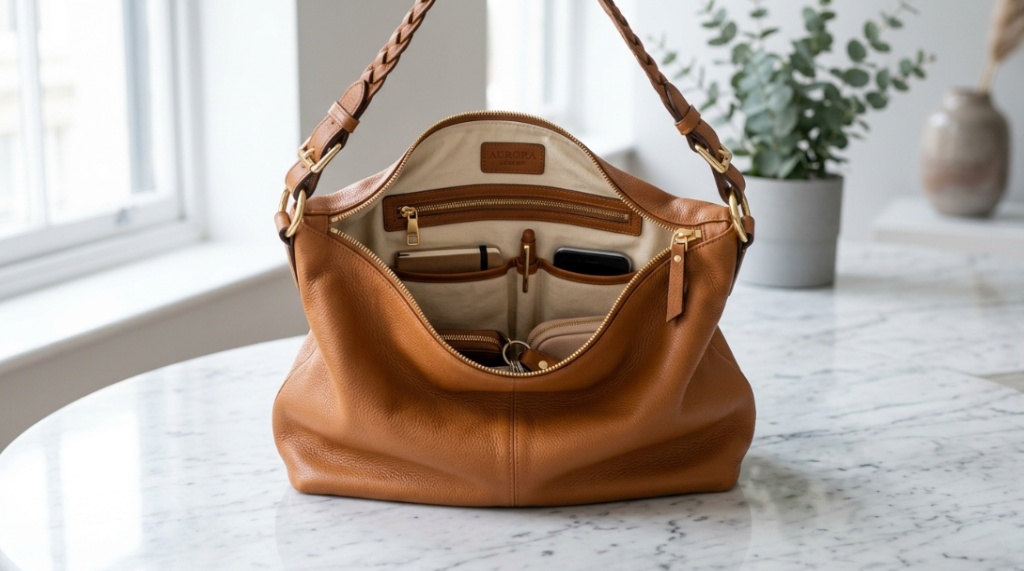
- Lining material: Premium bags use suede, microfiber (like Alcantara), cotton twill, or leather interiors. Budget bags use thin polyester or nylon that snags and tears. Slide your hand inside — premium lining feels soft and substantial against your skin.
- Seam finishing (interior): Look at how interior seams are treated. Premium construction tucks raw edges, overlocks seams, or binds them with leather trim. Budget construction leaves raw, unfinished seam edges that fray over time.
- Pocket construction: Interior pockets should be stitched with the same precision as exterior seams. Reinforced pocket openings (not just cut fabric) indicate attention to durability. Pockets that gap open or feel flimsy signal overall quality shortcuts.
- Branding/stamps: Premium brands heat-stamp their logos cleanly on interior leather patches. The impression should be crisp and even-depth. Blurry, off-center, or inconsistent-depth stamps indicate either counterfeit product or careless quality control.
- Structural elements: Feel along the bottom interior for stiffening material. Premium bags include internal support (leather or cardboard lined with fabric) that maintains base shape. Completely floppy bottoms with no structure indicate missing construction steps.
Interior inspection is particularly valuable at mid-range price points ($200–$500) where exterior quality may appear similar across brands but interior finishing reveals dramatically different quality investment. A $350 bag with suede lining and bound interior seams outclasses a $350 bag with polyester lining and raw seams — despite looking identical from outside.
What Construction Details Indicate Durability?
Durability-indicating construction details include reinforced stress points (strap attachments, closure areas), backstitch at seam ends, consistent thread tension throughout, and multi-layer leather at high-wear zones.
A bag can look beautiful yet fall apart within months if construction shortcuts exist at stress points. Critical durability markers:
- Strap attachment reinforcement: This is the #1 failure point in hobo bags because the single strap bears all weight. Premium construction uses multiple layers of leather, metal reinforcement plates, and sometimes rivets plus stitching at attachment points. Pull firmly at the strap connection — zero flex should occur.
- Backstitch at seam endpoints: Where a seam begins and ends, premium construction reverses direction (backtracks) for 3–5 stitches. This prevents unraveling. If seams simply start and stop without this lockstitch, they’ll loosen over time under daily stress.
- Thread quality: Premium bags use bonded nylon or polyester thread that resists UV degradation and abrasion. Look at thread closely — it should appear slightly waxy or coated. Cotton thread (matte, fuzzy appearance) degrades faster with friction and moisture exposure.
- Stress-point leather thickness: Feel the leather at the top opening, strap, and bottom corners — these areas endure the most wear. Premium construction uses thicker leather at these points (you can feel the difference compared to the body panels). Uniform thin leather throughout indicates single-layer construction without reinforcement.
- Base protection: Premium everyday hobo bags include metal feet or reinforced bottom panels that protect against surface abrasion when set down. Without these, the bottom leather degrades rapidly from repeated contact with floors, chairs, and counters.
How Do You Evaluate a Hobo Bag’s Quality When Shopping Online?
Evaluate online quality through detailed construction photos (zoom into stitching, edges, and hardware), material specifications (specific leather grade, not marketing adjectives), brand transparency (factory information, material sourcing), and long-term owner reviews filtered for 3+ months of use.
Online shopping removes physical inspection — requiring alternative verification approaches:
- Photo analysis: Quality brands provide multiple high-resolution photos including close-ups of stitching, hardware, interior, and leather texture. If a brand only shows distant/lifestyle photos without construction detail, they may be hiding flaws. Request additional photos from customer service if needed.
- Material specificity: Look for exact descriptions: “Italian vegetable-tanned full-grain cowhide” is specific and verifiable. “Premium Italian leather” is vague and unaccountable. The more specific the material disclosure, the more likely the brand stands behind their product.
- Weight disclosure: Reputable brands list bag weight. A medium leather hobo should weigh 1.2–2 lbs empty. Under 1 lb suggests thin leather or synthetic materials. Over 2.5 lbs suggests overly thick construction that will cause carry fatigue.
- Review mining: Search “[brand name] + [product name] + review” on YouTube, blogs, and Reddit. Long-form reviews from real users reveal durability information that star ratings cannot. Look specifically for comments about leather aging, hardware tarnishing, and strap comfort after extended use.
- Return policy confidence: Brands confident in their quality offer 30+ day returns. Restrictive policies (7 days, final sale) protect brands from returns of disappointing products. A generous return policy itself is a quality signal.
What Red Flags Should Immediately Disqualify a Hobo Bag?
Immediate disqualifiers include chemical smell (indicates low-grade synthetic or toxic tanning), visible glue at seams, loose/uneven stitching, hardware that bends under light pressure, and any seller refusing to disclose material composition.
Walk away without hesitation if you encounter:
- Chemical/plastic smell: Genuine quality leather smells natural — warm, earthy, slightly sweet. A strong chemical odor indicates either synthetic material marketed as leather or leather processed with harmful chemicals that will off-gas into your personal space.
- Visible adhesive: Glue showing at seam lines means construction relies on adhesive rather than stitching. Glue degrades with heat, moisture, and UV exposure — these bags literally fall apart within a year of regular use.
- Wrinkled or bubbling surface: Indicates the surface coating is separating from the base material — a sign of bonded leather or extremely low-grade coated splits that will peel extensively with use.
- Hardware that flexes: If you can bend a D-ring, buckle, or clasp with moderate finger pressure, it will deform under daily bag weight. Premium hardware should be rigid under hand pressure.
- Inconsistent color across panels: Different shades between bag panels (body vs. strap vs. flap) indicate leftover materials assembled without regard for visual cohesion — a hallmark of bulk manufacturing without quality control.
- Vague origin claims: “Imported” without country specification, “genuine material” without defining what material, or aggressive deflection when you ask about sourcing. Transparency about origins correlates directly with construction quality.
When you are looking to upgrade your wardrobe, knowing how to spot a premium hobo bag can save you from making a costly mistake. While investing in everyday luxury requires a careful eye for quality stitching and leather grade, your casual, sunny-day wardrobe updates can be a lot more playful. For instance, you can easily pick trendy beach bags for teens that everyone is talking about to add a vibrant, carefree energy to your weekend beach trips without breaking the bank.
Conclusion
Spotting a premium hobo bag before you buy isn’t about having expert credentials — it’s about knowing where to look and what to feel. Five seconds of focused inspection reveal more truth than any product description or sales pitch. Check stitching consistency, feel the leather’s natural grain, test hardware weight and operation, inspect interior finishing, and verify stress-point reinforcement. These physical markers exist independently of price tags and brand names.
Premium quality lives in construction details that most buyers overlook — and that’s precisely why subpar bags sell successfully at premium prices. Now that you know what to examine, you’ll never overpay for false quality again. Use these evaluation skills at every price point, from $100 to $2,000, and you’ll consistently identify hobo handbag brands that deliver genuine craftsmanship rather than marketing-manufactured perception.
When you are looking to upgrade your wardrobe, knowing how to spot a premium hobo bag can save you from making a costly mistake. While investing in everyday luxury requires a careful eye for quality stitching and leather grade, your casual, sunny-day wardrobe updates can be a lot more playful. For instance, you can easily pick trendy beach bags for teens that everyone is talking about to add a vibrant, carefree energy to your weekend beach trips without breaking the bank.
Frequently Asked Questions
Can a $200 hobo bag be truly premium quality?
Yes — particularly from direct-to-consumer brands that eliminate retail markup. At $200, you can find genuine top-grain leather, quality hardware, and competent construction from brands like Madewell, Portland Leather Goods, and Fossil’s higher-end lines. The key is verifying through physical inspection rather than trusting the price tag alone. $200 from the right brand delivers legitimately premium materials.
What’s the single most important quality indicator for hobo bags?
Strap attachment construction. Because hobo bags hang from a single strap bearing all weight, the attachment point endures the most stress. Premium construction shows multiple reinforcement layers, rivets plus stitching (not just one), and zero flex when pulled firmly. If this single point fails — regardless of how beautiful the rest of the bag is — the entire product becomes unusable.
How do you tell real leather from high-quality fake leather?
The most reliable method is the edge test: find a cut leather edge (inside the bag or at strap ends). Real leather shows visible fibrous layers like tree rings. Synthetic shows uniform material or fabric/foam backing. Combined with the smell test (natural vs. chemical) and the thumbnail resilience test (temporary mark vs. no change), these three checks identify genuine leather with near-certainty.
Do premium hobo bags always cost more than $500?
No. The $250–$500 range contains excellent premium hobo bags from quality-focused brands. Above $500, you’re increasingly paying for brand positioning, luxury retail experience, and marketing rather than proportionally better materials. The material quality difference between $300 and $1,200 is real but far smaller than the price gap suggests — perhaps 15–25% improvement for 300% more cost.
What brands are known for consistent quality in hobo bags?
Consistently quality-verified hobo bag brands include: Hobo International (leather specialists), Coach mainline (not outlet), Frye (heritage leather craftsmanship), Polène (Parisian precision), Cuyana (transparent sourcing), and at luxury tier, Bottega Veneta and The Row. Consistency means their quality control maintains standards across production runs — not every individual bag from every brand is perfect, but these demonstrate reliable baseline quality.
Should I trust “handmade” or “artisan-crafted” claims?
Treat these claims as starting points for investigation rather than quality guarantees. Genuinely handmade bags typically come from identifiable workshops, named artisans, or small brands that show their production process transparently. Mass brands using “artisan-crafted” as marketing rarely mean fully handmade — they may reference one hand-finished step in an otherwise machine-produced process. Verify by asking: where specifically is this made, and by whom?