

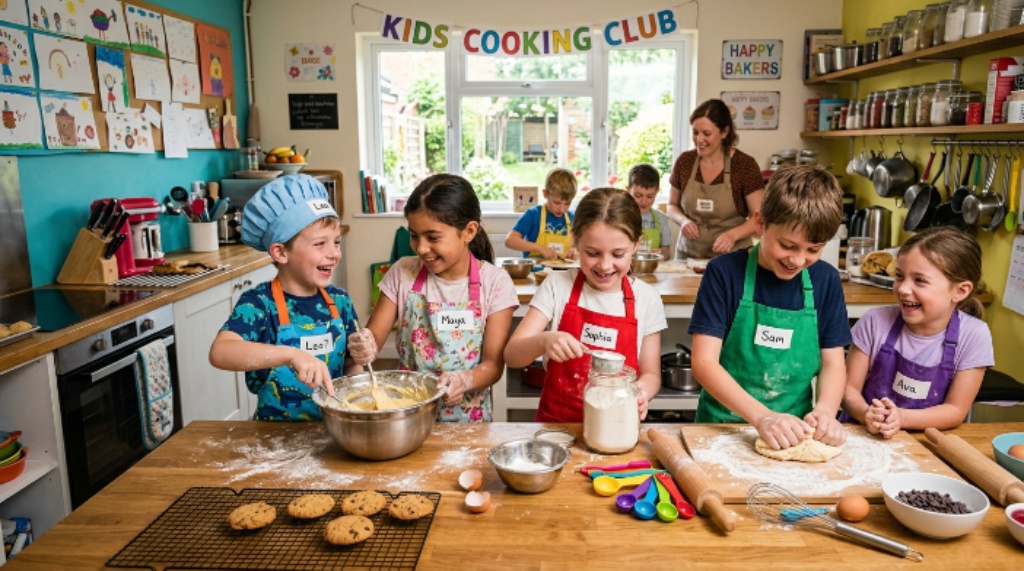
A kids cooking club gives children practical kitchen skills while making learning enjoyable. It combines creativity, teamwork, and healthy eating through engaging hands on activities. Recent youth cooking programs continue reaching thousands of children every year. Studies also show that structured cooking experiences can improve cooking confidence and encourage healthier food choices.
Parents often search for activities that build real life skills beyond the classroom. Cooking clubs meet that goal while creating memorable experiences with friends. Every session introduces fresh recipes, useful techniques, and age appropriate kitchen safety. As a result, children develop confidence that extends beyond preparing meals.
What Is a Kids Cooking Club?
A kids cooking club is a structured program where children learn cooking through guided lessons. Sessions usually include recipe preparation, food safety, nutrition education, and teamwork. Experienced instructors supervise every activity from beginning to completion. Children gradually master new kitchen skills through regular practice.
Many clubs welcome beginners without requiring previous cooking experience. Lessons often match specific age groups to maintain comfort and safety. Younger children complete simple preparation tasks using child friendly tools. Older participants usually handle more advanced cooking methods with supervision.
Benefits of Joining a Kids Cooking Club
Builds Real Life Skills
Cooking teaches practical abilities that children will use throughout adulthood. Every recipe strengthens planning, measuring, reading, and following directions carefully. Meanwhile, children gain confidence by completing meaningful tasks independently. These achievements create lasting pride after every successful meal.
Encourages Healthy Eating Habits
Children often become curious about ingredients while preparing recipes themselves. That curiosity increases willingness to taste unfamiliar fruits and vegetables. Consequently, healthy eating becomes less stressful for many families. Cooking also helps children understand balanced meal planning naturally.
Improves Math and Reading Skills
Recipes require measuring ingredients with precision and attention. Children practice fractions, multiplication, and simple calculations during preparation. Reading instructions also strengthens vocabulary and comprehension skills. Therefore, cooking quietly supports classroom learning through enjoyable experiences.
Develops Social Confidence
Cooking clubs encourage teamwork during recipe preparation and cleanup activities. Members communicate, solve problems, and celebrate shared accomplishments together. Every completed dish strengthens cooperation and respect among participants. These experiences often improve communication beyond the kitchen.
Sparks Creativity
Recipes provide opportunities for personal expression through flavors and presentation. Children enjoy decorating meals with colorful ingredients and thoughtful designs. Furthermore, they learn responsible decision making while experimenting carefully. Creativity grows naturally during each cooking challenge.
Features of a Great Kids Cooking Club
Parents should compare clubs before making a final decision. Every quality program includes several essential features for successful learning.
- Qualified instructors with teaching experience
- Strong food safety standards
- Small class sizes for better supervision
- Age appropriate cooking activities
- Balanced nutrition education
- Hands on participation during every lesson
- Positive and supportive learning environment
- Clearly organized lesson plans
These qualities create enjoyable experiences while maintaining safety and educational value.
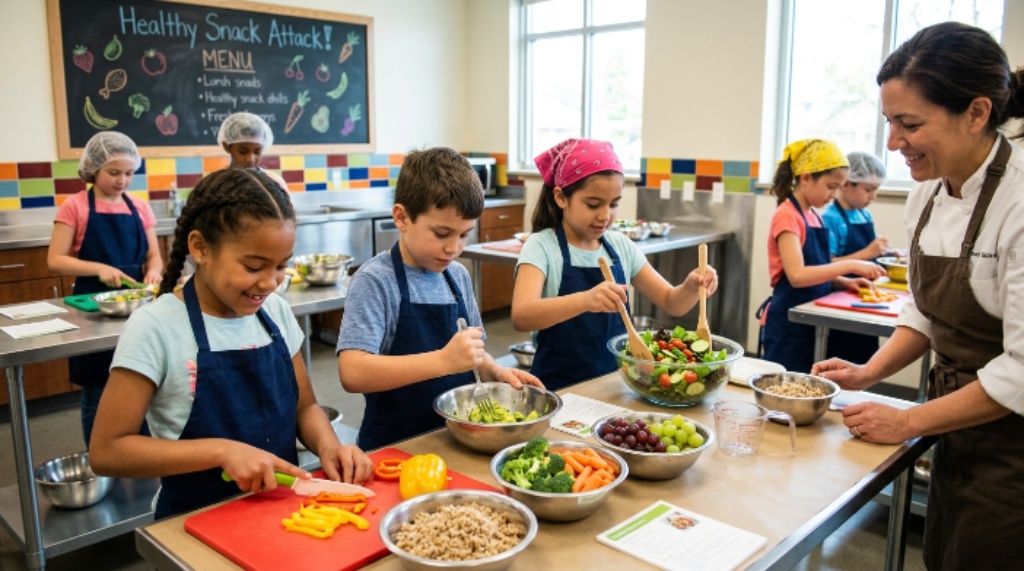
How to Pick the Right Kids Cooking Club
Consider Your Child’s Age
Every cooking club should match activities with developmental abilities. Younger children need simpler recipes requiring limited kitchen equipment. Older participants can safely explore more advanced cooking techniques. Age appropriate instruction improves confidence and enjoyment.
Review Safety Practices
Kitchen safety always deserves careful attention before enrollment. Ask how instructors supervise knives, ovens, and other cooking equipment. Confirm that emergency procedures remain clearly established. Safe learning environments create peace of mind for families.
Check the Curriculum
Look for programs offering more than simple recipe demonstrations. Strong clubs teach nutrition, meal planning, ingredient identification, and kitchen organization. Children should practice every skill through repeated participation. Practical learning delivers greater long term benefits.
Evaluate Class Size
Smaller groups allow instructors to provide personal guidance during activities. Children receive quicker assistance whenever questions arise. Individual attention also reduces distractions throughout each lesson. Better supervision improves learning outcomes significantly.
What Children Learn During Cooking Club
Most clubs organize lessons around progressive skill development. Each session introduces new techniques while reinforcing previous knowledge.
Kitchen Safety
Children learn proper handwashing before handling ingredients. They also practice safe knife handling using age appropriate tools. Instructors explain how to prevent burns, cuts, and cross contamination. Safety becomes an automatic habit through repetition.
Basic Food Preparation
Participants wash vegetables, measure ingredients, and mix recipes correctly. They also practice peeling, stirring, folding, and simple cutting techniques. Every lesson increases independence step by step. Confidence grows with every completed recipe.
Nutrition Basics
Cooking clubs explain why balanced meals support healthy growth. Children discover different food groups and portion awareness naturally. They also explore colorful ingredients with nutritional benefits. Healthy choices become easier through practical learning.
Kitchen Organization
Children learn how organized workspaces improve cooking success. They gather ingredients before beginning every recipe. Cleaning throughout preparation also becomes an important habit. Good organization saves time and reduces unnecessary mistakes.
Popular Activities Inside Kids Cooking Clubs
Cooking clubs include many enjoyable experiences beyond preparing meals. Variety keeps children interested throughout every session.
- Seasonal cooking projects
- Healthy snack competitions
- Fruit and vegetable tasting challenges
- Team recipe contests
- International food exploration
- Holiday themed baking sessions
- Simple science through cooking
- Meal presentation activities
These experiences make every class exciting while reinforcing valuable cooking skills.
Essential Kitchen Tools for Young Cooks
Children do not need expensive equipment to begin learning. Most successful cooking clubs use practical tools designed for safety.
- Child safe knives
- Mixing bowls
- Measuring cups
- Measuring spoons
- Silicone spatulas
- Cutting boards
- Aprons
- Oven mitts
- Whisks
- Rolling pins
Quality tools improve confidence while supporting safe kitchen habits.
Skills Parents Can Reinforce at Home
Parents play an important role after every cooking session. Home practice strengthens classroom learning through regular repetition.
Invite children to help prepare simple family meals weekly. Allow them to wash vegetables or measure ingredients independently. Encourage recipe reading before beginning preparation. Celebrate every successful effort regardless of perfection.
Families should also involve children during grocery shopping trips. Ask them to identify fresh produce and healthy ingredients. Comparing labels builds nutrition awareness naturally. These conversations strengthen everyday decision making.
Common Mistakes Parents Should Avoid
Some parents unintentionally reduce children’s confidence during cooking activities. Small adjustments create much better learning experiences.
Avoid correcting every minor mistake immediately. Instead, encourage problem solving through supportive guidance. Children learn valuable lessons by practicing independently. Confidence grows through experience rather than constant perfection.
Resist choosing overly difficult recipes during early practice. Simple successes build motivation for future challenges. Gradually increase recipe complexity over time. Steady progress creates lasting enthusiasm.
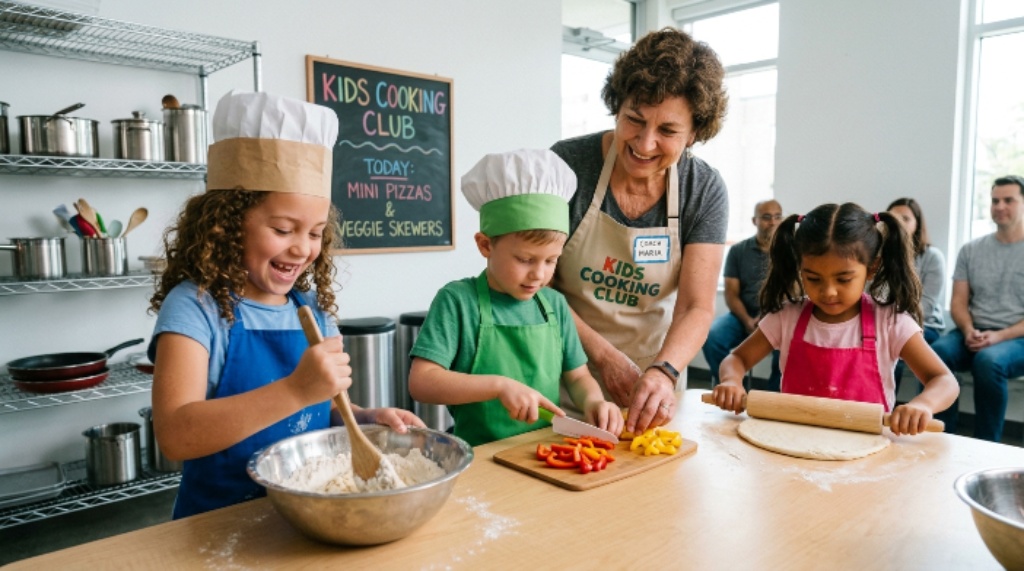
Signs a Cooking Club Is Working
Children usually display noticeable improvements after several weeks of participation. Parents should watch for positive changes beyond cooking ability.
Many children become more willing to taste unfamiliar foods. Others volunteer to prepare snacks independently at home. Confidence often appears during family meal preparation. Responsibility also increases through regular kitchen participation.
Improved communication may become another encouraging sign. Children frequently enjoy explaining recipes they recently learned. Teaching others reinforces their own understanding. These conversations demonstrate growing confidence and enthusiasm.
Making the Most of Every Cooking Club Session
Children benefit most when they arrive prepared and enthusiastic. Comfortable clothing allows safe movement during kitchen activities. Reading recipes before class builds familiarity with upcoming lessons. Positive attitudes also improve learning throughout every session.
Parents should encourage discussion after each class ends. Ask children about new techniques and favorite recipes. Repeating lessons at home strengthens long term memory. Consistent practice creates lasting cooking confidence.
Conclusion
A kids cooking club offers much more than recipe preparation. Children develop confidence, healthy habits, teamwork, creativity, and practical life skills through enjoyable experiences. Every session provides opportunities to grow while having genuine fun in the kitchen. Start exploring a quality kids cooking club today and help your child build skills that will last a lifetime.
FAQs
What is the best age to join a kids cooking club?
Most children can begin age appropriate cooking activities between four and six years with proper supervision.
Do kids need previous cooking experience?
No, most cooking clubs welcome complete beginners and teach every skill gradually.
Are kids cooking clubs safe?
Yes, quality programs follow strict safety procedures with trained instructors supervising every activity.
What should children bring to cooking club?
Most clubs provide equipment, although some recommend bringing an apron and reusable food container.
How often should children attend cooking club?
Weekly sessions usually provide enough practice to build skills while maintaining steady progress.