

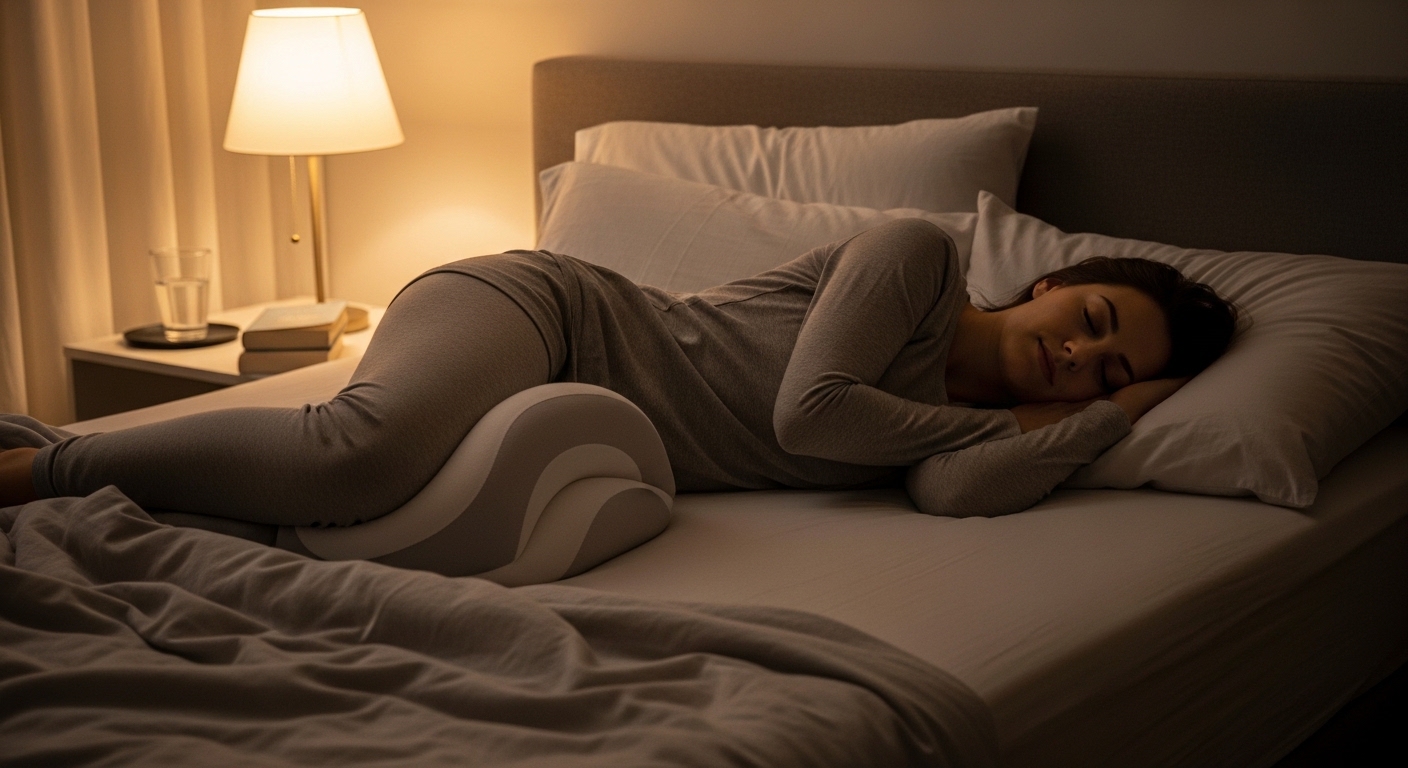
Lower back pain often feels worse at night because poor sleep posture twists the spine and strains muscles for hours. A contour knee pillow for back pain helps keep the hips aligned, reduces pressure on the lumbar spine, and supports natural spinal curvature while sleeping.
If you wake up stiff, sore, or tired despite sleeping 6–8 hours, your sleeping position—not your mattress—may be the real problem. Many side sleepers unknowingly rotate their pelvis forward during sleep. That rotation increases stress on the lower back. Over time, the discomfort becomes chronic.
A contour knee pillow is a simple, low-cost adjustment that helps restore neutral alignment between the hips, knees, and spine. Clinical sleep posture research shows that maintaining spinal neutrality overnight reduces muscle tension and improves recovery time in people with non-specific lower back pain.
This guide explains how a knee pillow for back pain works, who benefits most, and how to use it correctly for measurable relief.
What Is a Contour Knee Pillow and How Does It Relieve Lower Back Pain?
A contour knee pillow is an orthopedic support cushion placed between the knees during sleep to keep the pelvis aligned and reduce strain on the lumbar spine.
When sleeping on your side without support, your top leg drops forward. This shifts your hips and rotates the spine. The rotation creates pressure on discs, ligaments, and surrounding muscles.
A contour knee pillow prevents this shift by:
- Maintaining hip alignment
- Reducing spinal rotation
- Lowering pressure on lumbar discs
- Supporting natural posture overnight
Unlike regular pillows, contour knee pillows are shaped to stay in place. Most are made from memory foam that adapts to leg spacing without collapsing.
According to sleep posture findings referenced by the American Academy of Orthopaedic Surgeons, maintaining neutral spine positioning during sleep helps reduce musculoskeletal stress and improves overnight recovery in patients with persistent back discomfort.
Why Does Lower Back Pain Get Worse at Night Without Proper Knee Support?
Lower back pain increases at night because unsupported hips rotate forward and create tension in spinal joints for several hours continuously.
During the day, your body constantly adjusts posture. At night, it cannot.
When side sleeping without a knee pillow:
- The pelvis tilts forward
- The spine twists slightly
- Muscles remain stretched unevenly
- Ligaments stay under tension
This position lasts 5–7 hours.
Research published in the Journal of Physical Therapy Science found that sleep posture directly influences lumbar muscle activity. Poor alignment increases stiffness the following morning.
A contour knee pillow for back pain prevents this overnight misalignment.
How Does a Knee Pillow Improve Spinal Alignment While Sleeping?
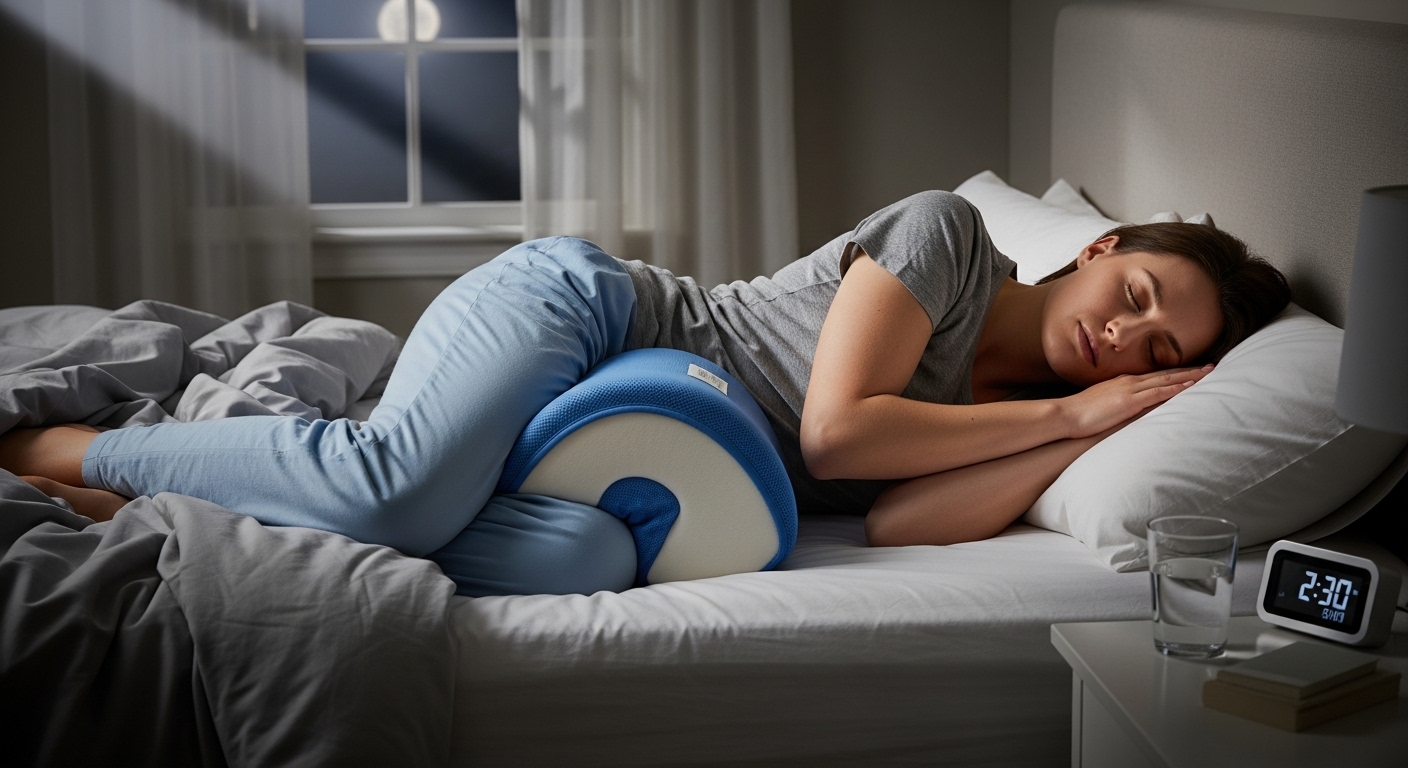
A knee pillow keeps the knees separated at the correct distance, preventing pelvic tilt and maintaining a neutral spinal curve.
Neutral alignment means your:
- Neck stays level
- Shoulders remain stacked
- Hips stay balanced
- Lower back keeps its natural curve
Without knee support, the top leg drops forward by several centimeters. That shift forces the spine to compensate.
A contour pillow restores symmetry between both legs.
Biomechanics studies show that even small improvements in hip positioning reduce compression forces on lumbar discs.
Who Should Use a Knee Pillow for Back Pain at Night?
Side sleepers, people with sciatica, herniated discs, hip pain, pregnancy-related discomfort, or chronic lumbar strain benefit most from using a knee pillow.
It is especially useful if you:
- Wake with stiffness every morning
- Feel pain after sleeping on one side
- Experience radiating leg discomfort
- Sleep with one knee pulled forward
- Spend long hours sitting daily
A clinical review in the European Spine Journal noted that posture-support interventions during sleep improve recovery outcomes in patients with mechanical lower back pain.
What Is the Correct Way to Use a Contour Knee Pillow for Back Pain Relief?
Place the contour knee pillow between your knees while side sleeping so your hips remain stacked and your spine stays straight.
Follow these steps:
- Lie on your side
- Bend both knees slightly
- Insert the pillow between knees
- Keep ankles aligned with hips
- Use a supportive head pillow
Do not pull one knee forward excessively. The pillow should maintain equal spacing between both legs.
Correct placement ensures full lumbar support.
Can a Knee Pillow Help Reduce Sciatica Symptoms at Night?
Yes. A contour knee pillow reduces sciatic nerve pressure by preventing pelvic rotation and lowering stress on the lower spine.
Sciatica often worsens during sleep because:
- Nerve roots become compressed
- Hip joints rotate forward
- Disc pressure increases overnight
Keeping the hips aligned reduces nerve irritation.
Many physical therapists recommend knee pillows as part of conservative sciatica treatment.
Is Memory Foam Better Than Regular Pillows for Back Pain Support?
Memory foam contour knee pillows provide better spinal alignment because they maintain shape and distribute pressure evenly.
| Feature | Memory Foam Knee Pillow | Regular Pillow |
|---|---|---|
| Shape retention | High | Low |
| Hip alignment support | Consistent | Unstable |
| Pressure relief | Effective | Limited |
| Sleep stability | Strong | Moves easily |
This stability makes memory foam the preferred material for orthopedic sleep positioning.
How Long Does It Take to Notice Results Using a Knee Pillow for Back Pain?
Most users notice reduced morning stiffness within 3–7 nights of consistent use.
Improvement depends on:
- Severity of pain
- Sleep position habits
- Mattress quality
- Daily posture patterns
Clinical posture-support trials show measurable comfort improvements within one week when alignment tools are used consistently.
Can a Knee Pillow Replace Physical Therapy for Lower Back Pain?
No. A knee pillow supports recovery but does not replace structured rehabilitation or medical treatment.
It works best when combined with:
- Stretching routines
- Core strengthening exercises
- Proper workstation posture
- Supportive mattress setup
Think of it as nighttime alignment support rather than a complete treatment solution.
What Features Should You Look for in the Best Knee Pillow for Back Pain?
The best knee pillow for back pain should include contour shape, memory foam support, breathable cover, and ergonomic leg spacing.
Look for:
- High-density memory foam
- Washable cover
- Ventilation holes
- Leg strap for stability
- Medium firmness level
These features improve comfort and long-term usability.
Conclusion: Is a Contour Knee Pillow Worth Using for Nighttime Back Pain Relief?
A contour knee pillow for back pain works by improving spinal alignment during sleep. It prevents pelvic rotation, reduces pressure on lumbar discs, and supports natural posture overnight.
Most users experience noticeable improvement within the first week when used consistently with proper sleep positioning.
If your mornings start with stiffness or discomfort, correcting sleep posture may be the simplest solution available.
Start using a contour knee pillow tonight and monitor how your body responds over the next seven days. Small alignment changes can produce meaningful relief.
FAQs About Knee Pillow for Back Pain
Does a knee pillow really help lower back pain?
Yes. It maintains hip alignment and prevents spinal rotation during sleep, reducing pressure on lumbar structures.
Can back sleepers use a knee pillow?
Yes. Placing the pillow under the knees reduces lumbar curve stress and improves spinal positioning.
Is a firm or soft knee pillow better?
Medium-firm memory foam provides the best balance between support and comfort.
How many hours should I use a knee pillow?
Use it throughout the night for maximum alignment benefit.
Can a knee pillow help hip pain?
Yes. It keeps hips level and reduces joint pressure during sleep.
Is a knee pillow safe during pregnancy?
Yes. Many doctors recommend it to support pelvic alignment and reduce strain.
Do orthopedic doctors recommend knee pillows?
Yes. They are commonly suggested as part of posture-support strategies for managing mechanical lower back pain.
Read More Also: How to Buy the Best Budget Wallets for Men That Still Look Expensive
Discover More: How to Pick the Right Home Improvement Tools Easily