

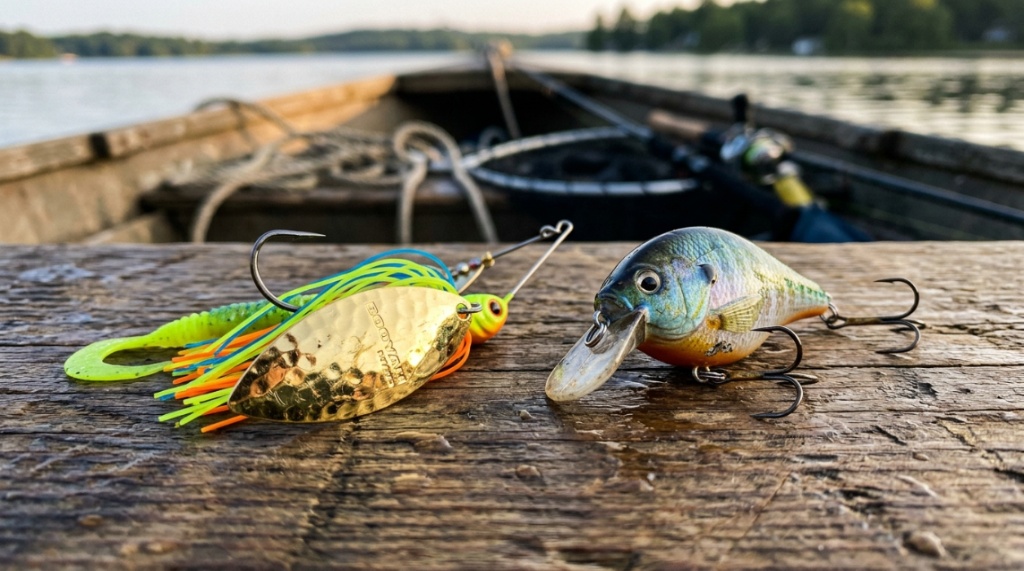
You are standing in the tackle aisle, staring at hundreds of spinner fishing lures crankbait lures, and you feel completely lost. The colors, sizes, blade shapes, and lip angles all blur together. You buy one that looks cool, go fishing, and come home skunked. The real problem isn’t that the fish aren’t biting; it’s that you haven’t matched your tackle to the conditions. This guide transforms you from a confused buyer into an expert selector, teaching you exactly how to choose spinner and crankbait lures based on water clarity, depth, temperature, and fish behavior. Let’s clear up the confusion so you can start fishing with confidence.
What Is the Difference Between Spinner and Crankbait Lures?
A spinner lure creates flash and vibration through a rotating metal blade, while a crankbait uses a plastic lip to dive and wobble. Both are spinner fishing lures crankbait lures that imitate prey, but they work in different parts of the water column.
Spinners typically run near the surface or just below it. They are excellent for covering water quickly and triggering reaction strikes from bass, pike, and trout. Crankbaits dive to specific depths based on the size and angle of their lip. A shallow diver might run 2–4 feet deep, while a deep diver can reach 20 feet. The fundamental difference comes down to presentation. Spinners rely on constant retrieve speed to spin the blade. Crankbaits rely on the lip to create a tight, thumping wobble. Both produce sound and vibration, but they attract fish through different mechanisms.
When to Choose a Spinner Over a Crankbait
Choose a spinner when you need to search water quickly in murky conditions or when fish are suspended near the surface. The blade flash and vibration call fish in from a distance. Crankbaits are better when you need to reach a specific depth or mimic a wounded baitfish with a rolling, erratic action.
How Do You Choose the Correct Spinner Blade Shape?
Blade shape is the single most important feature of a spinner lure because it determines how the lure moves through the water and how much disturbance it creates. Colorado blades are round and wide, creating a thumping pulse that fish feel from far away. This makes them perfect for low visibility conditions, muddy water, or night fishing. Willow leaf blades are long and narrow, spinning at higher speeds with minimal resistance. They produce a bright flash that mimics a fleeing baitfish, making them ideal for clear water and active fish. Indiana blades fall in between, offering a mix of flash and thump that works in slightly stained water or for finicky fish.
- Colorado blade: Maximum thump, slow retrieve, stained water
- Willow leaf blade: Maximum flash, fast retrieve, clear water
- Indiana blade: Balanced thump and flash, moderate conditions
- Tandem blades: One Colorado and one Willow leaf for versatility
How Do You Match Crankbait Lip Size to Fishing Depth?
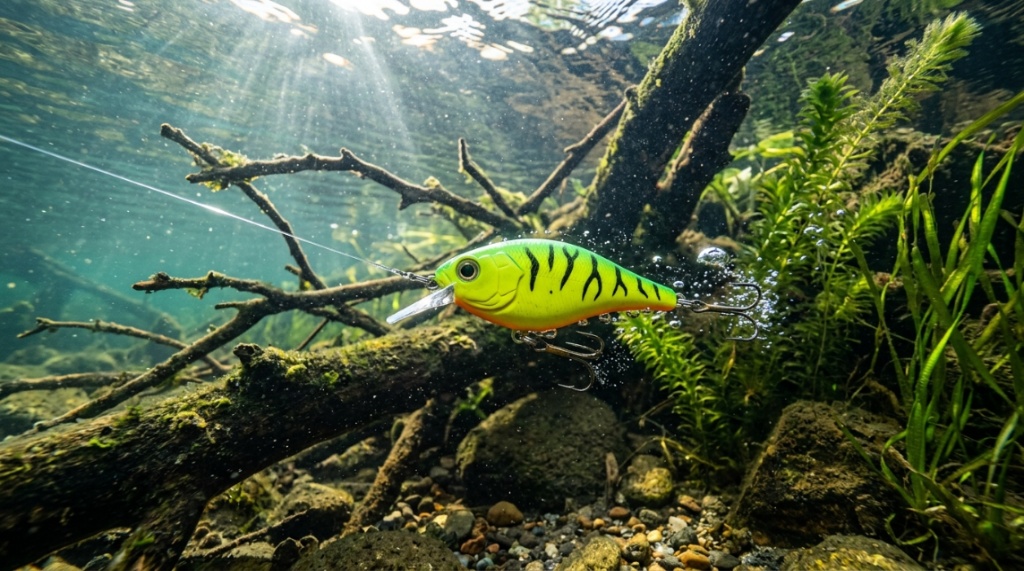
Match the lip size to the depth you want to fish. A square bill runs shallow and deflects off cover. A long, angled bill reaches deep water. Measure the lip angle to estimate diving depth.
The bill is the heart of a crankbait. Square bills are short and wide, causing the lure to wobble aggressively and bounce off rocks, stumps, and logs without getting stuck. These are perfect for fishing around shallow cover. Round bills are more common on medium divers and provide a tighter wobble. The longer and more angled the bill, the deeper the lure dives. A crankbait with a 1-inch bill might dive to 5 feet, while a 2-inch bill could reach 15 feet. Always check the package for the rated diving depth, but remember that line diameter and retrieve speed affect actual depth by up to 20 percent.
| Bill Type | Shape | Typical Depth | Best Use |
|---|---|---|---|
| Square Bill | Short, wide | 2–6 feet | Shallow cover, deflects off wood |
| Medium Bill | Round, moderate | 6–12 feet | Mid-range weed edges |
| Deep Diver | Long, steep angle | 12–25 feet | Deep channels, structure |
Which Color Patterns Work Best in Different Water Conditions?
Use bright, high-contrast colors in murky water. Use natural, realistic colors in clear water. Match your lure color to the local forage whenever possible.
Water clarity dictates color selection. In stained or muddy water, you need maximum visibility. Chartreuse, fire tiger, hot orange, and white combinations stand out best. These colors create a bright silhouette that fish can see from a distance. In clear water, go subtle. Natural shad, bluegill, perch, and crayfish patterns that mimic local baitfish work consistently. The most important rule is to think about what the fish are actually eating. A lure that looks exactly like a local shad will outperform a generic bright color in clear water. When in doubt, gold and silver finishes are universally effective because they reflect available light naturally.
Water Clarity Color Quick Guide
- Muddy water: Chartreuse, fire tiger, black with bright spots
- Stained water: Orange crawdad, red, chartreuse white
- Clear water: Shad, bluegill, silver, gold, translucent
- Night fishing: Black, black with white belly, dark blue
Can You Use Crankbaits and Spinners in Saltwater?
Yes, but you must use saltwater-grade components. Avoid standard freshwater lures because they corrode quickly. Look for stainless steel split rings, saltwater hooks, and corrosion-resistant finishes.
Saltwater fishing exposes lures to constant corrosion. Hooks rust, swivels seize, and finishes peel. Many manufacturers make saltwater-specific versions of their popular spinners and crankbaits. If you want to use a freshwater lure in saltwater, rinse it thoroughly with fresh water immediately after each use. For serious saltwater angling, invest in tackle designed for the task. Redfish, snook, stripers, and speckled trout all hit spinners and crankbaits. Use heavier models with stronger hooks to handle larger, harder-fighting fish. A 1/4-ounce spinner might be perfect for bass, but a 1/2-ounce or 3/4-ounce version works better for saltwater species.
How Do You Choose the Right Weight for Spinners?
Choose lighter spinners for shallow water and slower retrieves. Choose heavier spinners for deep water, wind, and faster current. Weight controls how deep the lure runs and how easily you can cast.
Spinner weight is measured in ounces. Common sizes range from 1/8 ounce to 3/4 ounce. A 1/8-ounce spinner runs shallow and is ideal for targeting fish in foot-deep water or when you need a slow, fluttering presentation. A 1/4-ounce spinner is the most versatile size for bass and trout, running 2 to 5 feet deep. A 3/8-ounce spinner works well in wind or when fishing slightly deeper water. For rivers with current, you need enough weight to keep the lure near the bottom where fish hold. Heavier weights also cast farther, helping you cover more water. The trade-off is that heavier spinners drop faster, so you must retrieve faster to keep the blade spinning.
What Is the Proper Retrieve Speed for These Lures?
Retrieve spinners just fast enough to make the blade spin steadily. Retrieve crankbaits at a moderate, steady pace that produces a tight wobble. Adjust speed based on fish activity levels.
With spinners, the blade must spin continuously. If you retrieve too slowly, the blade stalls and the lure sinks. If you retrieve too fast, the blade cavitates and loses its thump. The sweet spot is a steady retrieve where you feel a consistent vibration through the rod. With crankbaits, speed is equally important. A proper retrieve makes the lure wobble and thump, but you never want to burn it. When fish are aggressive, speed up to trigger reaction strikes. When fish are sluggish, slow down and use a stop-and-go retrieve that lets the lure float up before diving again. Pay attention to how the lure feels and sounds. A correctly retrieved crankbait should feel like a tight, rhythmic knock on the line.
Basic Retrieve Tips
- Start with a medium, steady retrieve
- Pause occasionally for spinners to flutter down
- Vary speed until you find what triggers a strike
- In cold water, slow down dramatically
- In warm water, speed up to match active fish
Which Lure Is Better for Bass: Spinner or Crankbait?
Neither is universally better. Use spinners for covering water, searching for active fish, and fishing in murky conditions. Use crankbaits for targeting specific depths, fishing around structure, and imitating bottom-feeding prey.
Bass respond to both lure types, but the choice depends on your strategy. Spinners excel as search baits. You can cast them far, retrieve quickly, and trigger reaction strikes from bass that are scattered across a flat or along a weed line. Crankbaits excel as depth-control baits. A square bill crankbait is deadly around shallow docks and laydowns. A deep diver reaches submerged humps and creek channels. The best approach for most anglers is to carry both. Start with a spinner to find active fish quickly. Once you locate fish on structure, switch to a crankbait that matches the exact depth. Many experienced anglers catch more total fish on spinners, but the biggest bass often fall for a well-presented crankbait.
How Do You Fish These Lures Around Heavy Cover?
Use spinners with a weed guard or a single hook to reduce snagging. Use square bill crankbaits that deflect off logs and rocks. Avoid deep diving crankbaits in heavy weed mats.
Fishing around heavy cover requires special consideration. Standard treble hooks catch grass, weeds, and branches constantly. A spinner with a wire weed guard or a soft plastic body keeps the hook point protected while still allowing hooksets. Single-hook spinners are excellent for lily pads and weed beds. For crankbaits, square bill models are designed to bounce off wood and rock without hanging up. The wide bill causes the lure to roll sideways when it hits an obstacle, helping it deflect away. Avoid deep diving crankbaits in heavy cover because their longer bills dig in, and their treble hooks grab everything. Always use braided line or heavy fluorocarbon when fishing thick cover to get fish out quickly.
When Should You Downsize or Upsize Your Lures?
Downsize lures in cold water, clear water, or when fishing for pressured fish. Upsize lures in warm water, murky water, or when targeting trophy fish. Match lure size to the size of the local baitfish.
Fish are less willing to chase large meals when water temperatures drop or when they see lures every day. A downsized 1/8-ounce spinner or a 2-inch crankbait often outperforms its larger counterparts in these situations. The smaller profile appears less threatening and triggers more strikes from wary fish. In warm water, fish metabolism increases, and they seek larger meals. A 3/8-ounce spinner or a 4-inch crankbait matches a big shad or bluegill. For trophy fish, upsizing makes sense because big fish want big meals. However, always consider what the fish are actually eating. If the forage is small, a large lure may be ignored. Fish the size that matches the local baitfish population for the most consistent success.
What Maintenance Do These Lures Require?
Rinse spinners and crankbaits with fresh water after every trip. Check hooks for dullness and replace split rings showing rust. Dry lures completely before storing to prevent corrosion.
Proper maintenance extends the life of your spinner fishing lures crankbait lures significantly. Start by rinsing each lure under running water to remove dirt, algae, and salt residue. Pay attention to the hook points and split rings where grime accumulates. Inspect the hooks frequently. Dull hooks cause lost fish, and rusty hooks weaken over time. Replace any hook that does not stick into your thumbnail with minimal pressure. Check split rings for rust or deformation, as bad rings allow fish to straighten the hook. For spinners, ensure the blade spins freely and the clevis is not bent. Store lures in a dry tackle box, preferably in separate compartments so they do not tangle. A little care after each trip keeps your lures performing like new for years.
Quick Maintenance Checklist
- Rinse with fresh water after each use
- Dry thoroughly with a cloth
- Check and sharpen all hooks
- Spray moving parts with corrosion inhibitor
- Replace damaged split rings immediately
- Store in a cool, dry place
While picking the right lure action is crucial for attracting bass, your gear setup dictates how effectively you can deliver it. If you are trying to maximize your coverage on open water, understanding your casting distance with a budget fishing reel can make or break your presentation.
Frequently Asked Questions
Can you use spinners and crankbaits in rivers?
Yes, both work well in rivers. Heavier spinners and medium-diving crankbaits are best for current. Focus your casts on eddies, current seams, and behind rocks where fish conserve energy.
How do you prevent spinners from twisting your line?
Use a quality ball bearing swivel between your main line and leader. Avoid using snap swivels directly on the lure because they change the action. A swivel allows the blade to spin without twisting the line.
What rod action works best for these lures?
A medium power, moderate action rod works for both. The moderate action helps absorb shock and keeps treble hooks pinned during a fight. Spinners cast well on medium rods, and crankbaits require a softer tip to load properly.
Are expensive lures worth the extra cost?
Not always. Mid-priced lures from reputable brands offer excellent performance. Expensive lures often have better hooks, sharper finishes, and tighter tolerances, but budget lures can be very effective with hook upgrades.
How many colors do you need for each lure type?
Five to seven versatile colors cover most situations. Include a bright color for murky water, a natural color for clear water, a dark color for low light, and a forage-matching pattern.
Do fish prefer silver or gold spinner blades?
Silver works best in clear water and sunny conditions because it reflects white light. Gold works better in stained water and overcast conditions because it reflects warmer light. Both colors catch fish consistently.
Can you modify a crankbait to dive deeper?
Yes, slightly. Use thinner diameter line to allow deeper diving. You can also add weight by placing a split ring on the line tie, but this changes the action. Gradual modifications are better than drastic changes.
Conclusion
Choosing the right spinner and crankbait lure no longer needs to be a guessing game. You now understand that blade shape determines vibration, lip size controls depth, color matches water clarity, and weight affects casting and running depth. Remember to match your lure to the conditions rather than hoping for a miracle. Carry a selection of spinners with Colorado and Willow leaf blades, stock crankbaits with varying bill sizes, and always keep natural and high-contrast colors in your box. Apply this knowledge on your next fishing trip. Start with a spinner to find active fish, then switch to a crankbait to target specific depths and structure. Your tackle box should be a toolbox, not a museum. Get out there, experiment with different retrieves, and trust the process. You now have the expertise to choose like a pro and fish with confidence.