
You’re standing on the bank, watching other anglers launch lures halfway across the lake while your bait splashes down twenty feet short. You check your reel—it’s an affordable model, not a $300 flagship. Does that mean you’re stuck with short casts forever? Absolutely not.The truth is, with the right techniques and a few smart tweaks, you can squeeze impressive distance out of even the most modest reel. This guide will show you how to maximize performance without upgrading your gear, and it will point you toward the best options if you are ready for a new spool. We will reference budget fishing reel reviews long casting reel data to help you understand what separates a good cheap reel from a frustrating one.
What Actually Limits Casting Distance on a Budget Reel?
The biggest culprit is friction. Budget reels often use cheaper bearings, bushings instead of bearings, and less precise machining. Friction in the spool, line guide, and internal gears robs energy from your cast before the lure ever leaves the rod tip.
Understanding the friction points helps you fix them. The spool shaft rides on bushings or bearings. Inexpensive reels might have one bearing and two bushings, creating drag. The line roller on the bail also adds friction if it’s not smooth. Finally, the spool itself can wobble if tolerances are loose, wasting energy sideways instead of forward. Reducing friction at these three points is your fastest path to more distance.
How to Spot a Friction Problem
- You hear a grinding noise during the cast.
- The spool stops spinning abruptly when you thumb it.
- The line guide feels sticky when you move it by hand.
If you notice any of these, the reel needs servicing or replacement. But before you throw it away, try the lubrication fixes below.
Why Does Spool Tension Matter More Than You Think?
Spool tension controls how freely the spool rotates. Most anglers set it too tight, thinking it prevents backlash. In reality, a tight spool kills distance because the spool fights against the line pulling off.
Here is the golden rule: set your spool tension so the lure falls slowly when you release the spool with the rod tip at 45 degrees. The lure should hit the ground without the spool overrunning and creating a bird’s nest. It should continue to spin for a second or two after the lure stops. If it stops instantly, you’re too tight. Loosen it a quarter turn at a time until you find the sweet spot. You will immediately see a gain of ten to fifteen feet.
The Backlash Trade-Off
Loose spool tension increases backlash risk, especially in wind. That is why you must learn to control the spool with your thumb. Practice feathering the spool at the end of the cast. This skill is essential for maximizing distance with any reel, but especially with a budget model that lacks a sophisticated braking system.
How Can Line Choice Add Twenty Feet to Your Cast?
Thinner, slicker line cuts through rod guides with less friction. Switching from a thick monofilament to a thinner diameter or a low-memory line is one of the cheapest distance upgrades you can make.
For budget reels, I recommend monofilament in the 8-10 pound test range for general use. However, if you want maximum distance, try a copolymer line like Berkley Trilene XL or a fluorocarbon like Seaguar Red Label. These lines have less memory than standard mono, meaning they peel off the spool more easily. Braided line offers the best distance potential because of its thin diameter, but it can dig into the spool on a cheap reel under heavy load. If you use braid, spool it tight and leave a mono backing to prevent slippage.
Quick Line Comparison Table
| Line Type | Distance Potential | Notes for Budget Reels |
|---|---|---|
| Monofilament (10 lb) | Good | Stretches, manageable on cheap reels |
| Copolymer (10 lb) | Very Good | Less memory, casts further |
| Fluorocarbon (10 lb) | Good | Stiffer, but casts well when wet |
| Braid (20 lb equivalent) | Excellent | Thin, but may dig in; use mono backing |
Which Braking System Setting Should You Use for Distance?
Set your braking system to the lowest functional setting that still prevents severe backlash. Most budget reels use either magnetic or centrifugal brakes. Start with the brakes at 50% (mid-setting), then drop it one notch after every few casts until you get a small overrun.
Magnetic brakes are easier to adjust on the fly. Turn the dial to the lowest number that still gives you control. Centrifugal brakes require you to open the side plate and adjust pins. For distance, engage only one or two pins. The goal is to let the spool spin as freely as possible while still retaining enough control to stop a bird’s nest. On a budget reel, you will likely need slightly more brake than on a premium reel because the spool inertia is less consistent. Find the lowest stable setting and leave it there.
Step-by-Step Brake Adjustment
- Set brakes to maximum.
- Make a cast at medium effort.
- Reduce brake by one increment.
- Cast again, increasing effort slightly.
- Repeat until you get a small overrun, then increase brake one increment back.
How Does Rod Length and Action Affect Casting Distance?
A longer rod creates a wider arc, which generates more line speed. Rods between 7 and 8 feet are ideal for distance casting with a budget reel. A fast-action rod (stiffer tip) also helps load up against the lure weight, releasing energy more efficiently.
If your reel is lightweight and underpowered, pairing it with a heavy, slow-action rod will kill distance. The rod must match the lure weight. For example, a 7-foot medium-heavy rod with a fast action is versatile for most freshwater fishing and works well with a budget reel rated for 1/4 to 3/4 ounce lures. If the rod is too stiff, it won’t load; if it’s too soft, it will bend too much and sap power. Check the rod’s lure rating and use lures near the upper end of that range for maximum casting distance.
Can Lubrication Really Make a Budget Reel Cast Farther?
Yes, and it’s one of the most underrated tricks. A clean, properly lubricated reel has less internal resistance. This means the spool spins longer and faster, translating directly into more distance.
Apply a tiny drop of light reel oil (like Rocket Fuel or Quantum Hot Sauce) to the spool shaft, the line roller bearing, and the worm gear. Do not over-lubricate; excess oil attracts dirt and turns into sludge. For the main gear, use a small dab of grease. If your reel has been sitting for a year, the factory grease might have hardened. Clean the old grease off with isopropyl alcohol and reapply fresh lubricant. You will be shocked at how much smoother the reel feels. This maintenance alone can add 10-15% more casting distance.
What NOT to Do
- Do not use WD-40 as a lubricant; it dries out and leaves residue.
- Do not over-oil the bearings; one drop per bearing is enough.
- Do not grease the spool shaft; use oil only.
What Is the Best Lure Weight for a Basic Reel?
Lures that are too light won’t load the rod, and lures that are too heavy will overload the spool and cause friction. The sweet spot for a typical budget reel (6:1 gear ratio, 10-pound line) is between 3/8 and 5/8 ounce.
If you fish light lures like 1/8 ounce, you will struggle to get distance because the reel cannot generate enough momentum. Conversely, lures over 1 ounce can stress cheap gears and cause premature wear. Stick to the 3/8 to 5/8 ounce range for effortless casts. If you must throw lighter lures, use a longer rod and a lighter line (6-pound mono) to compensate. For heavy lures, ensure your reel has a strong drag and metal gears; plastic gears may fail.
Which Casting Technique Maximizes Distance on a Budget Reel?
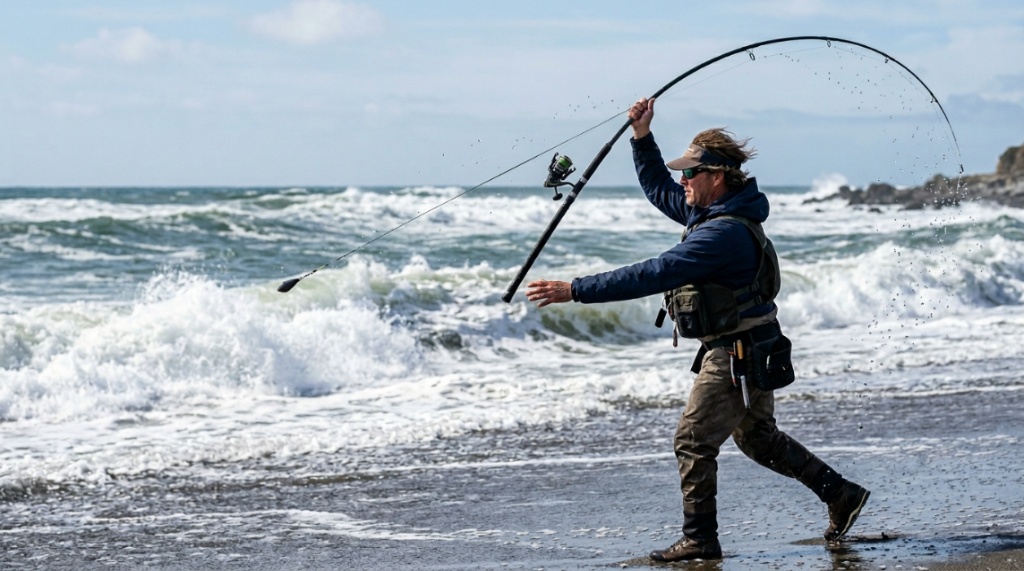
The pendulum cast or a modified overhead cast generates the most distance. It uses the rod’s flex to store and release energy efficiently, reducing the strain on the reel.
Here is a simple technique. Start with the lure hanging about 18 inches below the rod tip. Sweep the rod back smoothly, letting the lure swing past you. As the rod reaches the 10 o’clock position behind you, begin the forward stroke. Accelerate smoothly, not violently. Release the line just as the rod tip passes the 1 o’clock position in front of you. The key is timing: release too early and the lure goes high; release too late and it dives. Practice this rhythm. A budget reel cannot compensate for poor casting form, so your technique matters more than the price tag.
Common Casting Errors That Kill Distance
- Releasing the line too early (loft shot).
- Flicking the wrist instead of using the forearm.
- Stopping the rod abruptly at the end of the cast.
- Not following through with the rod tip pointing at the target.
How to Choose a Budget Reel That Casts Long
If you decide to buy a new reel, look for three features: a lightweight spool, at least one ball bearing in the line roller, and an aluminum frame. These reduce rotational mass and friction. For detailed recommendations, check the latest budget fishing reel reviews long casting reel to find models that balance cost with performance.
A budget reel with a graphite frame can flex under load, causing friction. An aluminum frame stays rigid. A smaller spool diameter (under 1.5 inches) also helps because it has less inertia to overcome. Avoid reels with plastic bushings in the drive train; look for at least one stainless steel bearing in the pinion gear. Reels from brands like KastKing, Piscifun, and Daiwa’s entry-level lineup offer good distance potential without breaking the bank.

Is Spooling Technique Overlooked by Beginners?
Absolutely. Improper spooling causes line twist and uneven lay, which creates friction during the cast. Line must be wound onto the spool under tension and in the same direction it comes off the filler spool.
If you spool line by simply placing the filler spool on the floor, you introduce twist. Instead, mount the filler spool on a pencil or a specialized line winder so the line comes off the side. Then, reel it onto the baitcaster spool under light tension—run the line through your fingers. The line should lay flat, not loose or overlapping. A poorly spooled reel will never cast its best, regardless of price. Rewind your line right now if you suspect it’s uneven.
Can You Modify a Cheap Reel for Better Casting?
Yes, with some careful DIY. Replacing the spool bearings with ceramic hybrid bearings (available for under $10) reduces friction significantly. Ceramic bearings are lighter and smoother than steel, and they spin freely with lighter oil.
Another modification is removing the centrifugal brake pins completely (if allowed) and relying only on magnetic brakes or thumb control. This is risky but can add distance if you have good thumb skills. Finally, polishing the line guide roller with a fine grit sandpaper can remove burrs that catch the line. However, these modifications void warranties and require mechanical confidence. For most anglers, proper setup and maintenance are safer and almost as effective.
When Should You Upgrade from a Budget Reel?
When the reel consistently backlashes despite correct settings, when the drag slips under light pressure, or when the gear train feels crunchy after cleaning, it is time to upgrade. A broken reel cannot cast well, and no amount of technique will fix mechanical failure.
If you fish more than twice a week or target large fish, invest in a $60-$80 reel with better internal construction. The distance gains from a smoother reel are immediate and sustainable. However, if you fish once a month and want to save money, the tips above will keep your current reel performing beyond its price class.
While optimizing your reel setup is crucial, the terminal tackle you throw matters just as much. Pairing a finely-tuned spool with aerodynamic Surf Fishing Rigs for Maximum Casting Distance will ensure your bait cuts through heavy headwinds effortlessly.
Frequently Asked Questions
Can I get the same casting distance with a $30 reel as a $200 reel?
Not exactly, but you can get close. With perfect setup, proper lubrication, and excellent thumb control, a $30 reel can achieve 80-90% of the distance of a $200 reel. The difference is consistency and durability under heavy use.
What is the best line for casting distance on a budget reel?
Braid offers the best distance due to its thin diameter and low friction. However, 10-12 pound monofilament or copolymer is more forgiving for beginners and works well on budget reels without digging in.
Should I use a heavier lure to get more distance?
Yes, but stay within the reel’s recommended range. A 3/8 to 5/8 ounce lure loads the rod well without overstraining the reel. Heavier lures can damage plastic gears on cheap reels.
How often should I lubricate my budget reel for best casting?
Oil the spool shaft and line roller every 5-10 fishing trips. Grease the main gear once per season. Clean the inside of the reel if you fish in dirty water or after a long storage period.
Does a longer rod always help casting distance?
Generally yes, but only if the rod action matches the lure weight. A 7-foot medium-fast rod is a good all-rounder for distance with a budget reel. Rods over 8 feet can be unwieldy for close-quarters fishing.
Can I use a monofilament backing on a budget reel for distance?
Yes, using a mono backing of 50-75 yards saves money and helps the braid lay flatter on the spool. The mono backing does not negatively affect distance if the braid sits on top smoothly.
Why does my budget reel backlash more in the wind?
Wind creates line drag, which slows the lure but not the spool, causing overrun. Increase your braking setting slightly on windy days, or use a heavier lure to cut through the wind.
Conclusion
Getting better casting distance with a budget fishing reel is not about luck—it is about understanding friction, spool tension, line choice, and casting technique. You do not need to spend a fortune to reach those far-away spots. By adjusting your spool tension correctly, using thinner line, lubricating the moving parts, and practicing a smooth pendulum cast, you can add significant yards to every throw. Remember to match your lure weight to your rod and reel, and keep your gear clean. If you eventually decide to buy a new reel, look for lightweight spools and aluminum frames. The methods in this article will serve you regardless of your budget. Now go outside, make one small adjustment, and see how far you can cast today.