

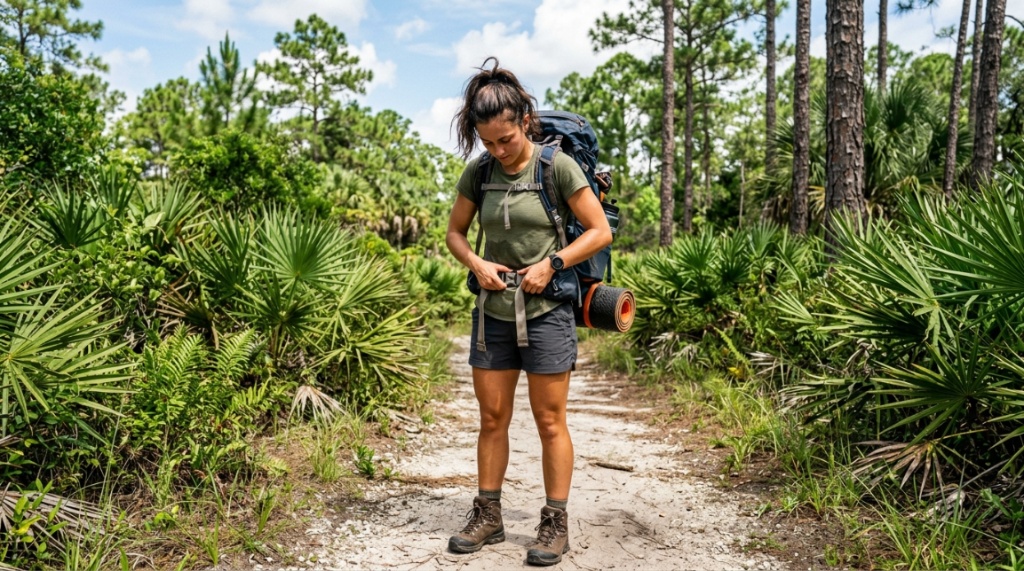
Florida camping is a different beast. You are not just dealing with long trails or mountain elevation. You are dealing with humidity that feels like a wet blanket, sudden afternoon downpours, and terrain that shifts from sandy scrub to swampy marsh in a few miles. For women, finding gear that actually fits a shorter torso and narrower shoulders without sacrificing durability is a serious challenge. The problem is that most backpacks are either too flimsy for the environment or built like tanks designed for a six-foot male frame. When you’re sweating through your shirt by 9 a.m., the last thing you need is a frame that digs into your hips or a zipper that jams from sand grit. Here’s how to cut through the noise and find a durable camping backpack for florida women that will actually survive the heat, the rain, and the trail.
Key Takeaways
- Prioritize fabrics with a high denier rating (like 420D or 630D ripstop nylon) to resist punctures from palmetto scrub and limestone rocks.
- Look for a hip belt and shoulder straps designed for a female anatomical shape, not just a smaller version of a men’s pack.
- Water resistance matters more than waterproofing; you want a pack that dries quickly and has a rain cover rather than a heavy waterproof shell that traps heat.
- Airflow suspension is critical. A trampoline-style back panel prevents swamp-back and reduces heat exhaustion risk in Florida’s climate.
- Forget the 70-liter behemoths. A 40-50 liter pack is more practical for Florida’s humid, short-distance hikes and shoulder-season camping.
Why Florida Puts a Unique Strain on Your Backpack
Most backpack buying guides assume you are hiking in Colorado or the Appalachians. Florida is fundamentally different. The environment actively tries to destroy your gear. The UV rays are intense enough to degrade cheap nylon quickly. The humidity causes mildew to form inside the main compartment overnight if you pack damp clothes. The sand gets into every zipper and buckle, acting like fine grit in a machine. And the vegetation—from saw palmetto to scrub oaks—tends to poke, scrape, and snag at your pack’s sides.
Durability in Florida is not just about the fabric weight. It is about construction quality. You need bartacked stress points where the shoulder straps meet the pack body. You need YKK zippers that resist sand ingress. You need a frame that won’t soften and bend out of shape in the 95-degree heat. A pack that works in the Sierra Nevada might fail within a year of constant Florida use because it simply wasn’t engineered for this specific kind of abrasive, wet, and hot environment.
Key Environmental Stressors to Consider
Let’s break down the specific factors that will test your pack’s durability:
- UV Degradation: Sunlight breaks down the chemical bonds in nylon and polyester. Over time, your pack’s outer fabric will become brittle and crack if it isn’t treated with UV inhibitors.
- Sand and Grit: Sand is abrasive. It works its way into zipper teeth and can cause them to separate. It also wears down the webbing on your hip belt.
- Sudden Rain Events: A 20-minute cloudburst is common. You need a pack that either has a robust coating or a reliable rain cover to keep your gear dry when you’re caught exposed.
- Humidity and Mold: If you store a damp pack in the trunk of your car, it will grow mold. Durable here also means using synthetic materials that resist mildew and are easy to clean,
For your daily outdoor adventures before hitting the trails, make sure you Choose the Right Sling Bag Size for Everyday Carry.
Anatomy of a Truly Durable Backpack for the Tropics
When you start looking at specs, ignore the marketing jargon like “heavy-duty” or “expedition-grade.” Look for specific, measurable features that indicate durability. A pack is not durable because it is heavy; it is durable because it is engineered correctly.
Fabric Denier and Types
Denier measures the thickness of the fabric threads. A higher number generally means a heavier, more abrasion-resistant fabric. For Florida, you want a baseline of 210D for the sides, but 420D or 630D for the bottom and front panel. The bottom of the pack takes the most abuse because you rest it on limestone, roots, and sand. Look for a laminated bottom or a double-layer construction. Cordura fabric is excellent, but many packs now use recycled ripstop nylon that is just as strong while being lighter. The ripstop pattern (the crosshatch grid) prevents small tears from spreading into large holes when you brush against a saw palmetto frond.
Frame and Suspension System
Women’s packs often have a frame that is too flexible because manufacturers assume women prefer a softer feel. In Florida, you need a frame that holds its shape. An internal aluminum stay—either one central stay or two peripheral stays—offers torsional rigidity. This prevents the pack from twisting on your hips when you are scrambling over roots. The hip belt is where 80% of the weight should rest. For durability, the hip belt needs a stiff inner core and a durable outer fabric that doesn’t stretch out after a few trips.
The Airflow Problem
Here is the trade-off: A close-fitting back panel gives you better weight transfer and stability. But in Florida’s heat, that creates a swamp on your back. You need a trampoline-style mesh back panel that holds the pack away from your spine. This is non-negotiable for comfort. The downside is that this suspended mesh is a weak point—it can get snagged on branches. Ensure the mesh is a high-tenacity nylon and is easily replaceable. Look for packs where the mesh attaches with a robust edge binding rather than cheap fabric folds.
How to Ensure a Proper Fit for a Female Torso
Buying a women’s-specific pack is not a marketing gimmick. Women have, on average, shorter torsos, a narrower shoulder width, and a different hip shape compared to men. A unisex pack will often sit too low on the shoulders and rub against the iliac crest of the hips. You need to measure your torso length—this is not your height—from the C7 vertebra (the bony bump at the base of your neck) to the top of your hip bones. Do this before you shop, because sizes like “Small/Medium” vary wildly between brands.
Adjusting Shoulder Straps and Load Lifters
Women’s packs generally use S-curved shoulder straps. These curve outward to go around the chest and avoid digging into the pectoral muscles. When you test a pack, tighten the load lifters (the straps at the top of your shoulders). These should create a 45-degree angle to pull the pack into your upper back. If the straps are straight and pad the front of your shoulders, the pack is too long for your torso or is not shaped for a female body. Durability of the straps is crucial—look for closed-cell foam that won’t compress to a flat slab after one year of heavy use. The foam should be firm, not soft.
Hip Belt Sizing
The hip belt should wrap around your hip bones, not your waist. A women’s hip belt has a more pronounced curve to it. It should be cut so the wings of the belt pull inward to cup the hip bones. If you have a straight waist, a men’s belt may fit, but for most women, the curved belt is essential. For durability, check that the webbing loops where the belt tightens are reinforced with multiple bar tacks. This is the first place cheap packs fail.
Size and Capacity: Why Bigger Is Not Better
Many first-time buyers think they need a 65-liter expedition pack. That is a mistake. A larger capacity encourages you to overpack, and overpack weight translates to a heavier load on your shoulders and hips. In Florida, you rarely need a winter sleeping bag or a full extra set of heavy fleece layers. You need lightweight quick-dry gear. A 40-50 liter pack is the sweet spot for 2-3 night trips in Florida’s state parks like Ocala National Forest or the Everglades. It forces you to be efficient and keeps your base weight down.
Smaller packs also tend to be more durable because the fabric stress is lower and there is less unsupported frame length. A tall, skinny 70L pack will flex and torquemore than a compact 45L pack when you are moving through thick palmetto scrub. Do not buy a pack for hypothetical “longer Alaska trips.” Buy for the environment you will actually be in 95% of the time, which is Florida’s hot climate.
Key Features to Look For and Common Mistakes to Avoid
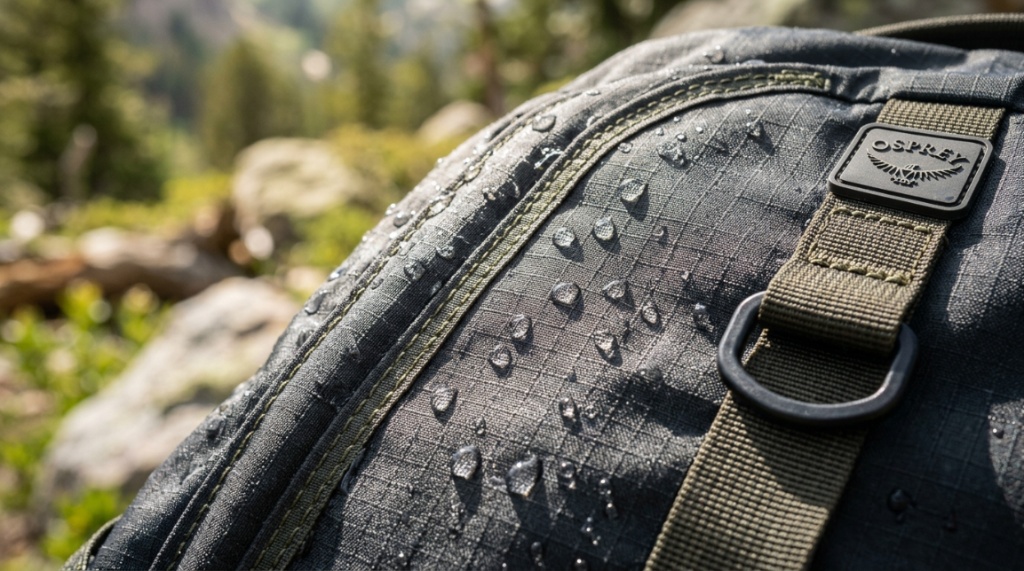
There is a checklist of specific features that make a pack durable in Florida’s conditions. Here is what to look for and what to avoid.
Features Worth Paying For
- Reinforced Lashing Points: You want daisy chains and compression straps that are stitched fully through the pack body, not just attached to a thin loop of fabric. These are useful for strapping on a wet tent or a water bottle.
- Quick-Dry Materials: The pack should not absorb water. Polyester and nylon are naturally water-resistant, but some coatings hold onto water. A pack that dries in an hour in the sun is a huge advantage.
- Dual Access: A front panel opening (like a duffel) makes it easier to find gear without having to dig to the bottom. It also means less stress on the top lid zipper, which is a common failure point.
- Replaceable Buckles: Check that the buckles are standard sizes (like 25mm or 38mm). This sounds odd, but if a buckle breaks, you want to be able to buy a replacement online without having to send the pack to the manufacturer. Durability includes repairability.
Common Mistakes That Ruin a Pack
You can buy the most expensive pack and still ruin it quickly if you make these errors. First, never store your pack in a stuff sack. This compresses the foam in the hip belt and shoulder straps, destroying their resilience. Always store it loose, ideally hung from a hook. Second, do not over-tighten the compression straps when the pack is empty. This pulls the frame into a bowed shape that can crack the plastic stays. Third, ignore the rain cover. It is not just for pouring rain; it is a shield against the sun and sand when you take a break. Use it consistently to protect the fabric.
Budget vs. Longevity: Making a Smart Investment
In the camping gear world, you get what you pay for, but you also pay a premium for brand names. A $300 pack is not necessarily twice as durable as a $200 pack. The differences are often in the fine details—the type of zipper, the quality of the sewing thread (Gore-Tex thread or bonded nylon), and the warranty. For a durable pack in Florida, you should expect to spend $180 to $300. Prices above this often buy you ultralight features that sacrifice durability.
Look for brands like Osprey (with their excellent All Mighty Guarantee), Gregory (great for women’s-specific fit), and Deuter (known for solid construction). But even entry-level options from REI Co-op or Kelty are fine if they use a #8 YKK zipper and a 420D fabric. Check the warranty. A lifetime warranty is the best indicator of durability—the manufacturer is putting their money where their mouth is. If a company only offers a 2-year warranty, they know the pack might not last much longer.
How to Test a Pack Before You Buy
You cannot check durability just by looking at a pack online. You need to physically inspect it, or at least do some rigorous checks. If the store has a floor model, do this:
- Load it with 20 pounds of sandbags or books.
- Put it on and simulate a lunge to see if the frame creaks or the hip belt flexes unnaturally.
- Open and close every zipper at least 20 times to feel if the zipper track is gritty or catches.
- Pinch the hip belt foam. If it is soft and mushy, it will compress permanently. It should feel dense and spring back immediately.
- Check the stitching on the shoulder strap attachment points. You should see a square or V-shaped pattern of bar tacks. If you just see a single line of stitching, pass.
If you buy online, use your credit card to purchase and be ready to return it if the fabric feels thin or the frame feels flimsy. Do not be scared to return a pack that doesn’t feel right in person.
Frequently Asked Questions
Is a waterproof backpack necessary for Florida?
No. A fully waterproof pack (like a dry bag style) is expensive, traps heat, and is less durable because the laminated seams can delaminate in the heat. Instead, choose a pack with a good water-repellent coating, a covered rain flap, and a separate rain cover that you can deploy in two minutes.
Can I use a men’s backpack if I have a short torso?
It is possible but rarely ideal. Men’s packs are longer and have straight shoulder straps. You will likely find that the hip belt sits too low and rubs against your hip bones, causing bruising. Even a small men’s pack is not shaped for a female curve. Stick to a women’s-specific model.
How frequently should I clean my pack in Florida?
After every trip. The sand and salt air will shorten the life of your zippers and buckles. Use a soft brush to sweep out the zipper tracks, and wipe down the pack body with water and a mild soap. Do not use a pressure washer—it forces water into the coating.
Is a 50-liter pack too big for a weekend trip?
No. 40-50 liters is actually ideal for a 2-3 night trip if you have compact sleeping gear. It gives you room for extra water (since water is key in the heat) and a dry bag for your wet clothes. It is easier to manage than a 60-liter pack.
What is the best color for a backpack in Florida?
Light colors like grey, yellow, or light blue are practical. Dark colors absorb heat, making the pack hotter to touch and potentially heating snacks or water tubes. A light color is also easier to spot if you set it down in dense vegetation.
Conclusion
Finding a durable camping backpack for Florida women is about adapting the gear to the environment, not just buying the most expensive option. You need a pack that resists UV rays, sheds water, and handles sand and scrub without falling apart. More importantly, it must fit your torso and hips correctly so that the weight sits on your bone structure, not your shoulders. Remember to prioritize airflow, choose a mid-size volume between 40-50 liters, and invest in a model with a solid guarantee. Do not rush this purchase. A good pack is your most important piece of camping gear. Take your time, test it with weight, and return it if it doesn’t feel like an extension of your body. Your back—and your future hiking trips—will thank you.