
You know that frustrating moment. You’re on your knees in your California garden, the sun beating down, and you’re faced with a stubborn thistle or a cluster of crabgrass that refuses to budge. You try a standard trowel, but it snaps. You try pulling, but the root breaks off, guaranteeing it will return with a vengeance. The problem isn’t your effort—it’s your tool. You need a specialized solution designed to tackle tough weeds efficiently, without wrecking your back or your soil. This is where a dedicated weeding knife comes in. It’s the sharp, precise, ergonomic weapon you need to win the battle against unwanted plants. But with so many options on the market, how do you find the best weeding knife california gardeners trust? This guide breaks down exactly what to look for, how to use it, and which features matter most for the unique soil and climate conditions found from San Diego to Eureka.
What Exactly is a Weeding Knife and Why Do You Need One?
A weeding knife, often called a hori-hori or soil knife, is a heavy-duty, sharp-bladed tool that combines the functions of a trowel, knife, and saw. Unlike simple hand forks, its design allows for deep root cutting, precise planting, and easy soil penetration. For California gardeners, this tool is not a luxury—it’s a necessity.
The Anatomy of a High-Quality Weeding Knife
Understanding the components helps you make an informed purchase. A standard knife has a blade, a handle, and a sheath. The blade is usually made of stainless steel or carbon steel, with a pointed tip for digging. The handle can be wood, plastic, or rubber-coated for grip. Finally, a sturdy sheath is essential for safety and longevity, especially when you’re working in a tool bag or truck.
Why a Standard Trowel Fails in California Soil
Many California gardens have heavy clay soil or dry, compacted earth—especially during the summer months. A standard trowel often bends or snaps under pressure. A weeding knife, however, uses a thicker, stronger blade that can cut through hardpan and clay, acting like a mini-shovel. Its sharp edge also slices through roots, ensuring the weed doesn’t grow back.
What Features Should You Look for in a California Weeding Knife?
Choosing the right model hinges on matching the tool to your specific tasks and physical needs. You should prioritize blade material, handle comfort, and overall durability. The best knife feels like an extension of your arm.
Stainless Steel vs. Carbon Steel: Which Blade Material Wins?
Stainless steel is rust-resistant, which is ideal if you live near the coast or leave your tools outside. Carbon steel, conversely, is incredibly sharp and holds an edge well, but it requires meticulous care to prevent rusting. If you have acidic soil or work in foggy conditions, stainless steel is simpler; if you want ultimate slicing power, carbon steel is your choice.
Serrated vs. Straight Edge: Making the Cut
Most premium weeding knives feature a dual-edge design: one side is straight, and the other is serrated. The straight edge is perfect for clean cuts and digging, while the serrated edge acts like a saw, making it easier to cut through woody stems and tough roots. When choosing, ensure the serration is aggressive enough to handle fibrous material without getting stuck.
Ergonomic Handles: Protecting Your Hands and Wrists
Since you’ll be gripping the tool for extended periods, the handle material matters. Look for a handle that fits your grip comfortably and is designed to reduce strain. Wooden handles are classic, but they can be slippery when wet. Rubber-coated or contoured plastic handles offer superior grip and reduce blisters, which is a significant advantage during a long weeding session.
How Do You Use a Weeding Knife Effectively for Different Weed Types?
Using this tool correctly is the secret to speeding up your gardening chores. It’s not about hacking at the soil; it’s about leverage and precision. You’ll find that with a few simple techniques, you can uproot even the most tenacious weeds quickly.
Step-by-Step: Removing Taproot Weeds (Like Dandelions)
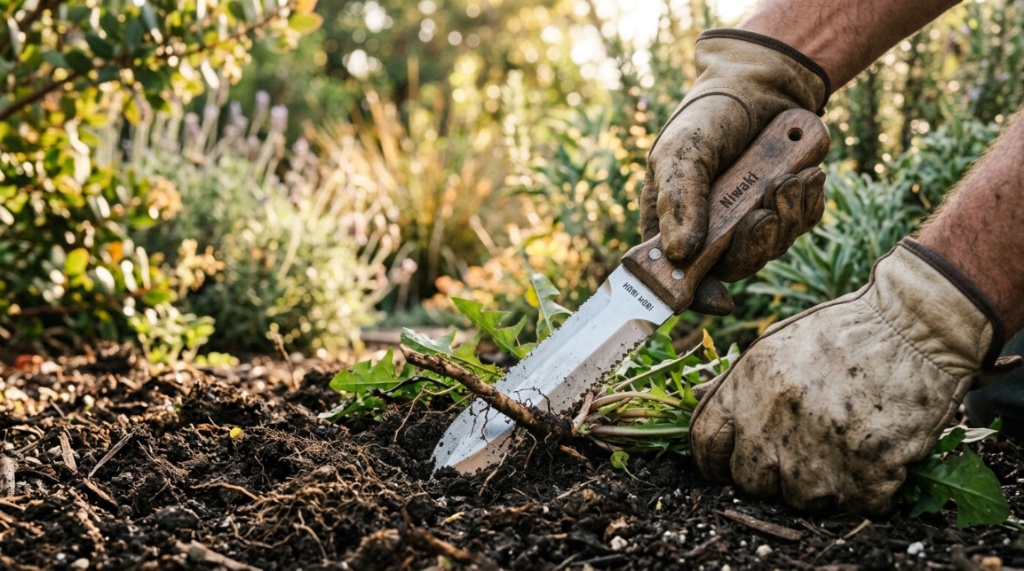
For weeds with long taproots, insert the knife vertically next to the taproot, using the pointed tip to loosen the soil around it. Once you feel the root loosen, use the blade as a lever to pry the entire root system out. This technique ensures you remove the whole root, preventing regrowth.
Techniques for Grassy Weeds and Creeping Vines
Grassy weeds, like crabgrass, can be challenging because they grow in clusters. Use the serrated edge to slice just below the soil surface, severing the roots. For creeping vines, use the knife to cut through the vine at its base and then run the blade along the surface to disconnect the roots from the soil.
Using Your Knife for Planting and Dividing
This tool isn’t just for removal. The sharp blade is perfect for creating furrows for seeds, transplanting seedlings, and dividing perennials. When dividing, push the knife through the root ball in a sawing motion to create clean sections, minimizing damage to the plant.
When is the Best Time to Weed in California’s Climate?
Timing your weeding sessions can make the job significantly easier. The ideal time is after a light rain or a deep watering—the soil is moist, and roots come out more easily. In California, early morning or late evening is also preferable to avoid the harsh midday sun and to reduce moisture loss from exposed soil,To ensure your yard stays pristine all year round, you need more than just a specialized tool for your garden beds. Make sure to Pick the Right Home Improvement Tools Easily before starting any major landscaping or outdoor renovation project.
Weeding Schedule for Dry Southern California
In the arid south, weeds often thrive in the mild winter and spring. Tackle weeds early in the spring before they flower and set seed. During the dry summer, avoid deep digging as it can disrupt soil moisture. Instead, use the knife to slice weeds off just below the surface, acting as a cultivator to prevent germination.
Managing Weeds in Northern California’s Wet Winters
The cooler, wetter climate of Northern California promotes lush weed growth. The best time to weed here is during a dry spell in the winter or early spring. The moist soil makes it easy to use the pointed tip to pop out entire roots. However, avoid working in waterlogged soil, as this can damage soil structure.
Which Weeding Knife Design is Most Durable for Heavy Use?
Durability is about the full-tang construction and the quality of the metal. A knife where the blade runs the entire length of the handle through the grip is inherently stronger than a blade that is glued into a handle. For those tackling tough, rocky terrain, durability is non-negotiable.
Full-Tang Construction vs. Fixed Handle
A full-tang design is the gold standard for professional-grade tools. It offers superior balance and prevents the handle from snapping off under pressure. If you are digging in rocky soil, this construction ensures the tool won’t break mid-task. A fixed handle is often lighter but can be a point of failure.
Understanding Blade Thickness and Rock Resistance
Look for a blade thickness of around 2.5mm to 3mm. This thickness provides enough strength to pry rocks without bending, yet is thin enough to move through the soil smoothly. A thicker blade is also less likely to snap when you use the knife for prying heavy root balls or lifting sod.
Can a Weeding Knife Replace Other Garden Hand Tools?
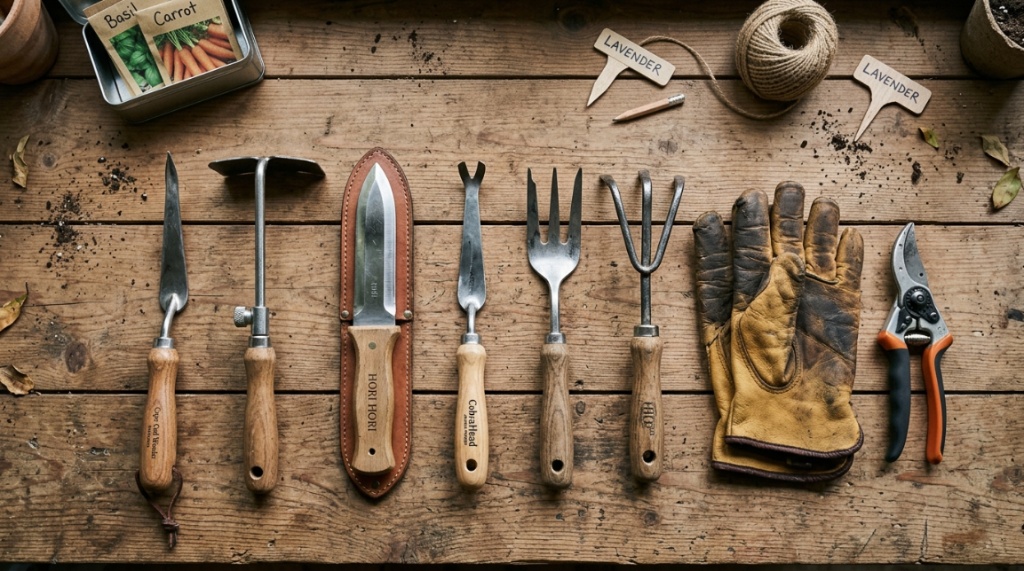
Yes, in many cases, it can consolidate your tool collection. A high-quality soil knife can replace a trowel, a weeder, and even a small hand saw for pruning. This makes it perfect for gardeners who want to travel light or work with hand tools exclusively.
Comparing Weeding Knives to Trowels and Hand Forks
When compared side-by-side, the weeding knife is superior for leverage and cutting. A trowel is only for scooping, and a hand fork is for loosening. The knife does all of this plus offers a sharp slicing edge. For most tasks, the knife is all you’ll need to grab from the shed.
Using the Knife for Soil Aeration and Edging
You can use the strong blade to poke holes in the soil for aeration, allowing water and oxygen to reach roots. The straight edge can also be used to create clean lines along garden beds, acting as a mini edger. This versatility reduces the amount of equipment you need to buy and maintain.
How to Maintain Your Weeding Knife for Longevity
A little maintenance goes a long way in extending the life of your tool. Simple habits like cleaning and oiling after each use prevent rust and ensure the blade remains sharp. Neglecting your tools can lead to them becoming more of a hindrance than a help.
Cleaning and Sanitizing After Use
After weeding, scrap off any caked-on dirt and rinse the blade with water. It is crucial to sanitize the blade when dividing plants to prevent the spread of disease. Wipe the blade with rubbing alcohol to kill bacteria and fungi before moving to the next plant.
Sharpening Techniques to Keep the Edge Razor Sharp
Use a flat file or a whetstone to maintain the blade’s sharpness. For the serrated edge, use a sharpening rod. Run the file along the edge at a consistent angle, typically 20 degrees, to restore the cutting edge. A sharp knife is safer and more effective than a dull one, as it requires less force.
Rust Prevention: Cleaning and Oiling the Blade
To prevent rust, dry the blade completely after washing. Apply a light coat of mineral oil or camellia oil to the blade and pivot area. If you have a carbon steel blade, this step is essential; lemon juice or vinegar can be used to remove existing rust spots before oiling.
What is the Ideal Weight and Size for Portability and Comfort?
Your weeding knife should feel balanced in your hand—not too heavy to be tiring and not so light that it feels flimsy. The length is also important; a longer blade can reach deeper roots, while a shorter blade offers better control. Your handle size and grip strength dictate the ideal weight.
Optimal Total Length for Deep Root Removal
A blade length of about 7 inches is standard and effective. However, if you have deep-rooted weeds, look for a knife with a longer blade, up to 10 inches. Keep in mind that a longer blade adds weight. For most California landscaping, a size of 6-7 inches is versatile enough for both planting and weeding.
Handle Grip Size and Weight Distribution
Test the handle for comfort. It should feel secure in your grip, whether you’re holding it like a dagger or a trowel. A handle with a slight curve is ergonomically superior. Also, check how the weight is distributed; the balance point should be near the handle, not the tip, to reduce wrist fatigue. For a deeper dive into specific models that meet these exacting standards, you can see detailed comparisons and reviews that highlight how these features perform in real-world gardening scenarios. If you’re ready to see the top performers of the season, I recommend researching the top rated tools; this resource on the best weeding knife california has already analyzed dozens of options, saving you the guesswork.
Is an Expensive Weeding Knife Worth the Investment?
Generally, yes. A premium weeding knife made from high-quality steel with a solid handle will last for decades, whereas a budget version might bend or rust after a single season. The investment pays off in durability and comfort. a $20 knife that breaks is more expensive long-term than a $50 knife that lasts forever.
The Cost-Benefit Analysis of High-End Steel
Japanese stainless steel, such as AUS-8, is known for its hardness and edge retention. Tools made with this steel cost more but require less frequent sharpening. Cheaper blades are often stamped from softer steel, which means they dull quickly and are prone to bending. For the serious gardener, the upfront cost is justified by the performance.
Budget Alternatives That Still Deliver
You don’t have to spend a fortune. Several mid-range knives offer excellent value, with solid stainless steel blades and decent handles. The key is to avoid the absolute cheapest options that use thin, flexible metal. Checking reviews for benchmarks on durability is your best strategy for staying within budget.
How Does Blade Thickness Affect Weeding in Hard Clay Soil?
In California’s clay-heavy areas, blade thickness is critical. A knife that is too thin will bend when you try to pry a root out of hardpan. A robust, thicker blade provides the rigidity needed to transfer leverage directly to the root. This makes the task less strenuous on your wrists and hands.
Choosing the Right Blade for Rocky Terrain
If your soil has lots of rocks, a thicker blade is imperative. The knife will grind against stones, and a thinner edge will chip or fold. Look for a blade with a high Rockwell hardness rating, but be aware that a harder blade can be more brittle. A good middle ground is a hardness rating between 50-55 HRC.
Gauging Steels for Maximum Prying Strength
High-carbon stainless steel offers the best combination of toughness and rust resistance. Tools with a full-tang construction ensure the strength from the blade is transferred to the handle. This prevents the tool from snapping at the connection point, which is a common failure point in lesser-quality tools.
What Are Common Mistakes to Avoid When Using a Weeding Knife?
To get the most out of your tool, avoid these frequent errors. Many gardeners use the tool incorrectly and then wonder why it’s not working. By refining your technique, you can protect both yourself and your garden.
Using the Tool as a Pry Bar in Dry Soil
One of the most common mistakes is trying to pry out weeds in bone-dry soil. This puts excessive stress on the blade and handle. Always water the area first or wait for rain. Forcing the tool can snap the blade or injure your wrist. Patience and moisture are your allies.
Neglecting to Clean the Blade Between Plants
Failing to clean the blade can transfer soil-borne diseases. This is especially dangerous in a vegetable garden. Wipe the blade with a cloth and sanitizer between different plant species. This simple step can prevent a catastrophic disease outbreak.
Frequently Asked Questions
Can I use a weeding knife on concrete or pavers?
Yes, a weeding knife is excellent for removing weeds from cracks in driveways and patios. The pointed tip fits into narrow gaps, allowing you to slice through the roots without damaging the concrete. Just be careful not to hit hard stone, which can dull the blade.
Is a weeding knife better than a hoe for large gardens?
For large open areas, a long-handled hoe is more efficient because you can work standing up and cover more ground. However, a weeding knife is superior for precise work, such as weeding closely around desirable plants or in raised beds, where a big hoe is impractical.
How often should I sharpen my weeding knife?
You should sharpen your knife when it feels dull to the touch. For average weekly use, sharpening every 4-6 weeks is usually sufficient. If you hit rocks often, you may need to touch up the edge more frequently. Frequent light sharpening helps maintain the blade.
Are wooden handles better than rubber-coated handles?
Wooden handles are aesthetically pleasing and durable, but they can become slippery when wet. Rubber-coated handles provide a more secure grip and are easier on the hands during long sessions. The choice depends on your personal comfort. If you have arthritis, rubber is usually recommended.
What is the difference between a hori-hori and a weeding knife?
There is no difference; hori-hori is simply the Japanese term for a soil knife or weeding knife. The hori-hori traditionally has a concave blade, which makes it stronger. In modern usage, the names are interchangeable, referring to the same versatile garden tool.
Conclusion
Finding the right weeding knife is about understanding your garden’s specific needs—your soil type, the weeds you face, and your own comfort. We’ve covered the critical features, from blade material to handle ergonomics, and the techniques to use your tool effectively. Remember that a high-quality, durable knife is an investment in your garden’s health and your personal enjoyment. The right tool transforms weeding from a tedious chore into a quick, satisfying task. Armed with this knowledge, you can confidently assess your options and select a knife that will serve you for years to come. Don’t settle for a tool that breaks, and don’t start another season struggling. Assess your garden’s terrain, prioritize a sharp, full-tang blade, and make the switch today. Your back and your garden will thank you.